
canna 'Phasion'
Also known as: Information to be completed
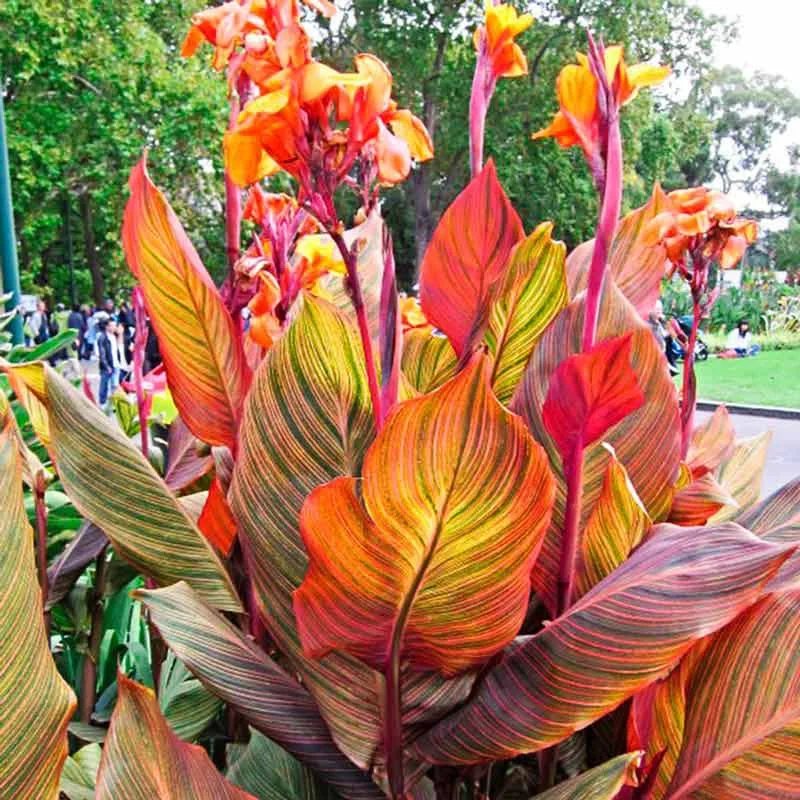
Vigorous, distinctive, clump-forming perennial to 1.5m tall, with paddle-shaped, dark purple-green leaves striped with pale yellow and pink, ageing to shades of pink and orange, and large deep orange flowers, produced in summer and early autumn
Scientific classification
- Species
- canna 'Phasion' (Canna 'Phasion')
- Genus
- Canna
- Family
- Cannaceae
- Information to be completed
- Toxicity
- Herbaceous Perennial · Conservatory Greenhouse
- Plant type
- 1-1.5 metres
- Height
- 0.5-1 metres
- Spread
- Deciduous
- Foliage
- Bushy · Clump forming
- Habit
- Spring · Summer · Autumn
- Season of interest
- Full sun
- Sunlight
- Information to be completed
- Ideal temperature









canna 'Phasion' pictures
Distribution of canna 'Phasion'
Distribution map
Information to be completed
Information to be completed
Culture
Information to be completed
Toxicity
Information to be completed
Quick identification of canna 'Phasion'
Information to be completed
canna 'Phasion' care guide
- Regular ample irrigation, keep soil evenly damp through warm growing time
- Watering
- Full sun
- Sunlight
- Information to be completed
- Ideal temperature

Watering
Regular ample irrigation, keep soil evenly damp through warm growing time
Fertilizing
 Fertilizing
Diluted canna feed biweekly throughout full summer bloom cycle
Pruning
 Pruning
Leave to die back in autumn, deadhead flowers to prolong flowering
Propagation
 Propagation
Propagate by division of rhizomes in spring
Growing
 Growing
As a patio plant grow in pots of loamless compost in a sheltered site in full sun. Plants can also be planted into a sunny border. Water freely and apply a high potassium feed every 2-3 weeks in the growing season. Lift the rhizomes in autumn when frost blackens the foliage. Store over winter in barely moist compost in frost-free conditions. See canna cultivation for further information
People also ask
Information to be completed
Common pests and diseases
Diseases
May be susceptible to canna viruses
Pests
May be susceptible to slugs and snails, caterpillars, glasshouse red spider mite and aphids
Explore the plant health library →




