
starflower scabious
Also known as: drumstick scabious
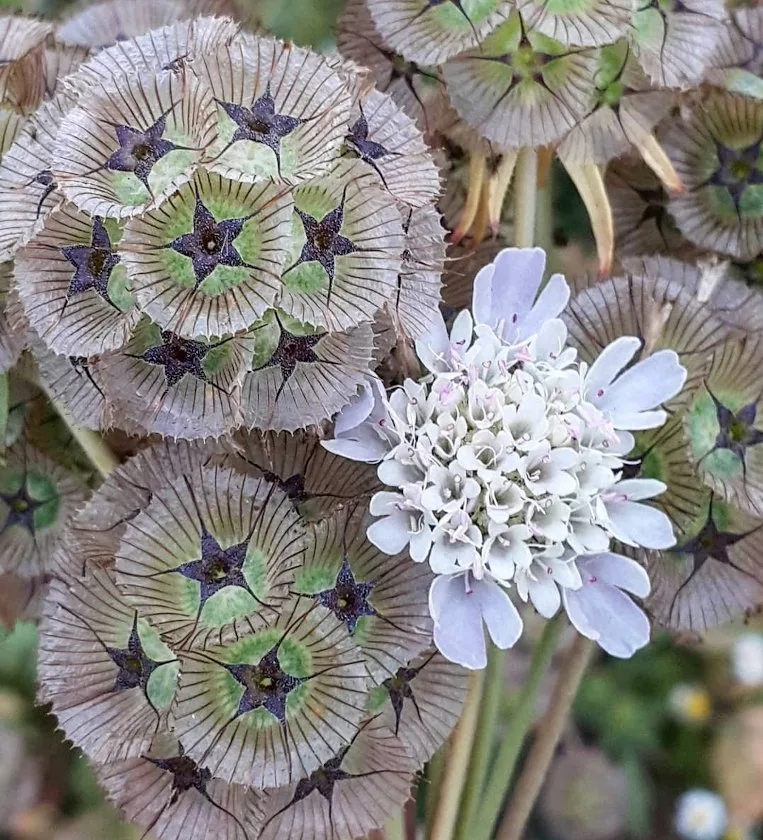
S. stellata is an erect, branching annual up to 45cm tall, with lance-shaped or pinnately lobed leaves. Solitary, pale blue, spherical flower heads to 3cm across, are followed by papery, silvery cream seed-heads
Scientific classification
- Species
- starflower scabious (Scabiosa stellata)
- Genus
- Scabiosa
- Family
- Caprifoliaceae
- Order
- Dipsacales
- Class
- Magnoliopsida
- Phylum
- Tracheophyta
- Information to be completed
- Toxicity
- Annual Biennial
- Plant type
- 0.1-0.5 metres
- Height
- 0.1-0.5 metres
- Spread
- Deciduous
- Foliage
- Bushy
- Habit
- Spring · Summer · Autumn
- Season of interest
- Full sun
- Sunlight
- Information to be completed
- Ideal temperature









starflower scabious pictures
Distribution of starflower scabious
Distribution map
- Native
- Introduced
- Cultivated
Source:WCVP v16 · Royal Botanic Gardens, Kew · CC BY 3.0 · Boundaries:WGSRPD / TDWG
starflower scabious care guide
- Water moderately, allow the soil to dry between waterings to avoid rot.
- Watering
- Full sun
- Sunlight

Watering
Water moderately, allow the soil to dry between waterings to avoid rot.
Fertilizing
 Fertilizing
Apply a general-purpose fertilizer once in spring and again after flowering.
Pruning
 Pruning
No pruning needed
Propagation
 Propagation
Propagate by seed sown in gentle heat in early spring
Growing
 Growing
Grow in moderately fertile, well-drained, neutral to slightly alkaline soil in full sun
Common pests and diseases
Diseases
Generally disease free
Pests
Generally pest-free
Explore the plant health library →




