
cranesbill 'Orion'
Also known as: Information to be completed
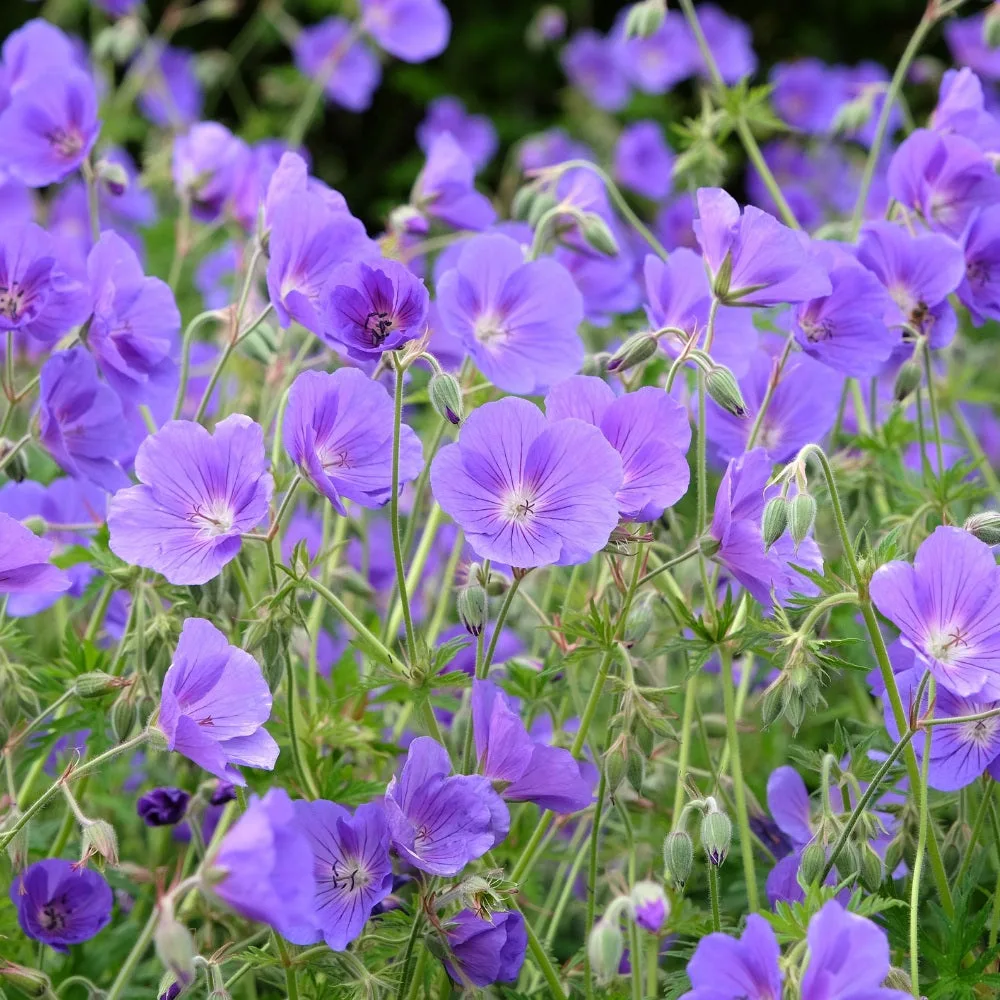
A spreading perennial, ideal for groundcover, with deeply lobed mid-green basal leaves in 7 divisions. Masses of very large, cup-shaped, lavender-blue flowers have purple veins, a white centre and almost round, overlapping petals borne over a long period during summer. A seedling of 'Brookside'
Scientific classification
- Species
- cranesbill 'Orion' (Geranium 'Orion')
- Genus
- Geranium
- Family
- Geraniaceae
- Information to be completed
- Toxicity
- Herbaceous Perennial
- Plant type
- 0.1-0.5 metres
- Height
- 0.5-1 metres
- Spread
- Deciduous
- Foliage
- Clump forming
- Habit
- Spring · Summer
- Season of interest
- Full sun · Partial shade
- Sunlight
- Information to be completed
- Ideal temperature









cranesbill 'Orion' pictures
Distribution of cranesbill 'Orion'
Distribution map
Information to be completed
Information to be completed
Culture
Information to be completed
Toxicity
Information to be completed
Quick identification of cranesbill 'Orion'
Information to be completed
cranesbill 'Orion' care guide
- Moderate regular watering, allowing brief slight drying between soakings
- Watering
- Full sun · Partial shade
- Sunlight
- Information to be completed
- Ideal temperature

Watering
Moderate regular watering, allowing brief slight drying between soakings
Fertilizing
 Fertilizing
Balanced perennial feed every four weeks from spring through summer
Pruning
 Pruning
Remove flowered stems and old leaves to encourage the production of fresh leaves and flowers
Propagation
 Propagation
Propagate by division between early autumn and early spring or cut back plants after flowering in summer then divide, replant and water well
Growing
 Growing
Grow in moderately fertile well-drained soil in full sun or partial shade. Most soils, unless waterlogged, in either sun or shade are tolerated
People also ask
Information to be completed
Common pests and diseases
Diseases
Downy mildews and a virus are occasional problems. Powdery mildews in dry conditions may be troublesome
Pests
May be damaged by vine weevil larvae, Geranium sawfly larvae, capsid bug or slugs and snails
Explore the plant health library →




