
common oak 'Irtha'
Also known as: Information to be completed
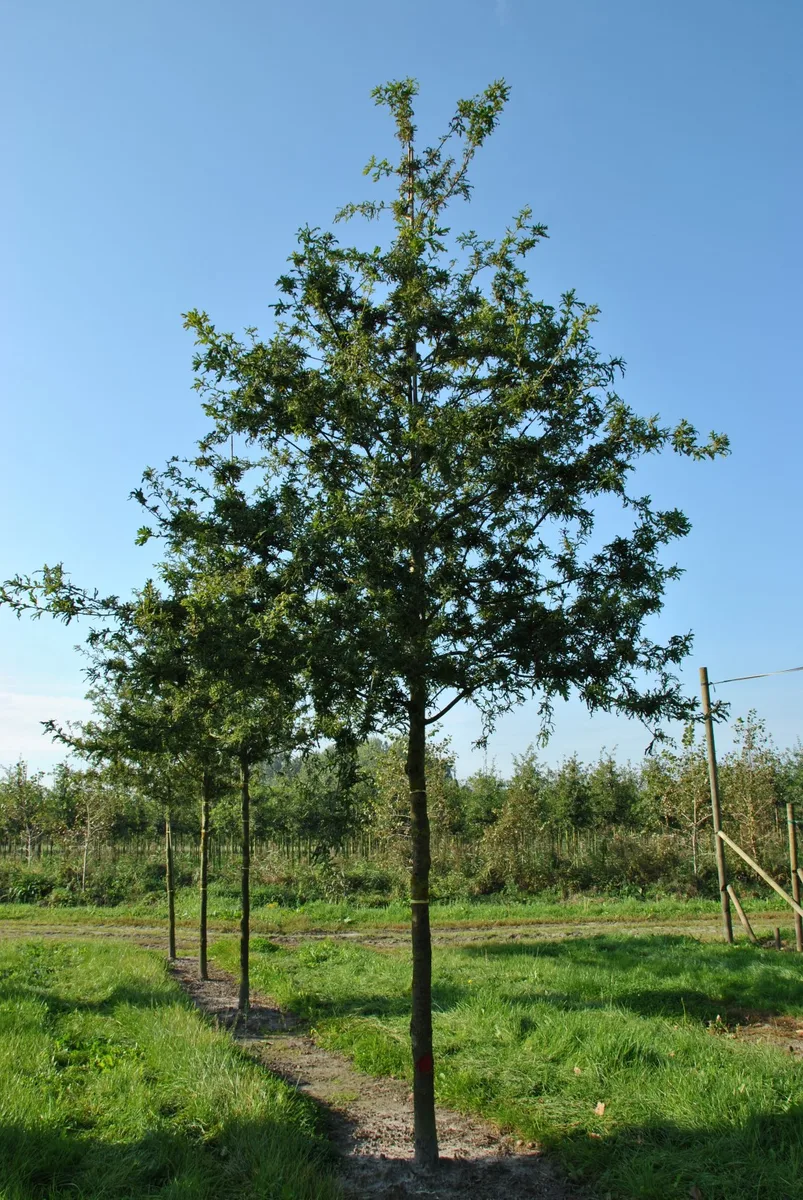
A very unusual form of small deciduous tree, slowly reaching approximately 10m. The leaves are much reduced and a bit twisted, giving a kind of ribbony appearance. They form clusters at the branch ends which, with the fresh yellow-green leaves in spring, look a bit like blossom. The real flowers are inconspicuous but become acorns which show clearly amongst the leaves.
Scientific classification
- Species
- common oak 'Irtha' (Quercus robur 'Irtha')
- Genus
- Quercus
- Family
- Fagaceae
- Information to be completed
- Toxicity
- Trees
- Plant type
- 8-12 metres
- Height
- 4-8 metres
- Spread
- Deciduous
- Foliage
- Information to be completed
- Habit
- Autumn · Spring · Summer
- Season of interest
- Full sun
- Sunlight
- Information to be completed
- Ideal temperature









common oak 'Irtha' pictures
Distribution of common oak 'Irtha'
Distribution map
Information to be completed
Information to be completed
Culture
Information to be completed
Toxicity
Information to be completed
Quick identification of common oak 'Irtha'
Information to be completed
common oak 'Irtha' care guide
- Deep watering during dry spells, allowing slight surface drying between soakings
- Watering
- Full sun
- Sunlight
- Information to be completed
- Ideal temperature

Watering
Deep watering during dry spells, allowing slight surface drying between soakings
Fertilizing
 Fertilizing
Balanced shrub or tree feed once each early spring
Pruning
 Pruning
Little pruning is needed. Remove diseased, damaged, crowded or crossing shoots and unwanted growth. Timing depends on the plant: generally late winter or early spring; plants prone to bleeding and deciduous magnolias need different timing, and deciduous azaleas and lilacs are pruned after flowering.
Propagation
 Propagation
Propagate by hardwood cuttings in autunm
Growing
 Growing
Suited to small-medium gardens. Grows in any well-drained but moisture-retentive soil in good light. For more information see tree cultivation.
People also ask
Information to be completed
Common pests and diseases
Diseases
May be susceptible to powdery mildews and honey fungus
Pests
May be susceptible to oak processionary moth, aphids, caterpillars, leaf-mining moths and oak gall wasps
Explore the plant health library →




