
Primula flaccida
Also known as: Information to be completed
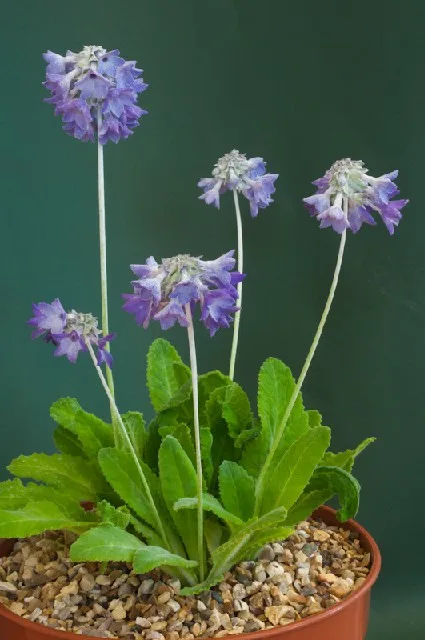
A deciduous perennial with rosettes of mid-green, shiny, toothed, ovate leaves. Clusters of short-lived, fragrant, lavender blue-purple, downward-facing tubular flowers appear on tall thin stems in May and June
Scientific classification
- Species
- Primula flaccida (Primula flaccida)
- Genus
- Primula
- Family
- Primulaceae
- Information to be completed
- Toxicity
- Alpine Rockery · Herbaceous Perennial
- Plant type
- Information to be completed
- Height
- Information to be completed
- Spread
- Deciduous
- Foliage
- Clump forming
- Habit
- Spring · Summer · Autumn
- Season of interest
- Full shade · Partial shade
- Sunlight
- Information to be completed
- Ideal temperature









Primula flaccida pictures
Distribution of Primula flaccida
Distribution map
Information to be completed
Information to be completed
Culture
Information to be completed
Toxicity
Information to be completed
Quick identification of Primula flaccida
Information to be completed
Primula flaccida care guide
- Moderate regular watering, allowing brief slight drying between soakings
- Watering
- Full shade · Partial shade
- Sunlight
- Information to be completed
- Ideal temperature

Watering
Moderate regular watering, allowing brief slight drying between soakings
Fertilizing
 Fertilizing
Balanced perennial feed every four weeks from spring through summer
Pruning
 Pruning
No pruning required
Propagation
 Propagation
Easy to grow from seed, and will set seed if grown in groups. Propagate by division in autumn or after flowering
Growing
 Growing
Grow in full shade or partial shade in moderately fertile, moist but well-drained, humus-rich soil
People also ask
Information to be completed
Common pests and diseases
Diseases
May be susceptible to primula leaf spot, primula brown core and grey moulds
Pests
May be susceptible to aphids, vine weevil, slugs, leaf and bud eelworms, leaf-mining flies and glasshouse red spider mite
Explore the plant health library →




