
dwarf juniper
Also known as: Information to be completed
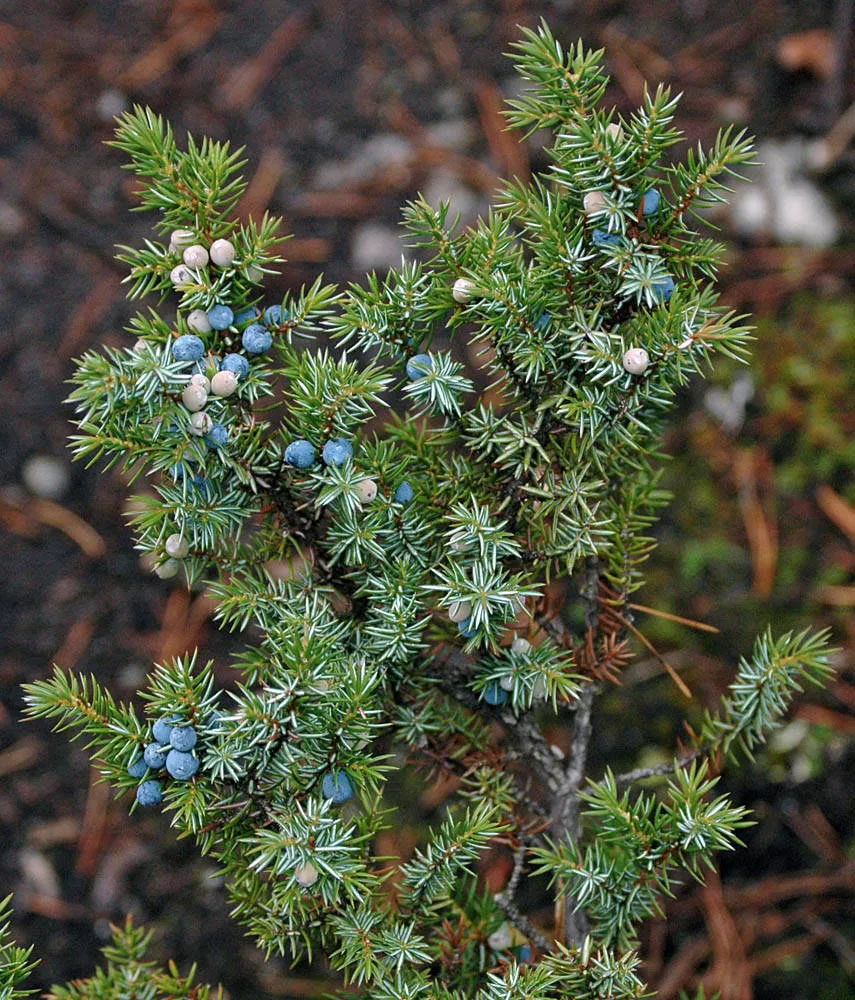
Robust, slow-growing, prostrate, spreading conifer forming a mat of densely-packed stems bearing upturned or upcurved small, dark green, needle-like leaves up to 1.5cm long
Scientific classification
- Species
- dwarf juniper (Juniperus communis var. saxatilis)
- Genus
- Juniperus
- Family
- Cupressaceae
- Order
- Pinales
- Class
- Pinopsida
- Phylum
- Pinophyta
- Skin allergen, wear gloves and other protective equipment when handling]
- Toxicity
- Conifers · Shrubs
- Plant type
- 0.1-0.5 metres
- Height
- 0.5-1 metres
- Spread
- Evergreen
- Foliage
- Matforming
- Habit
- Spring · Summer · Autumn · Winter
- Season of interest
- Full sun · Partial shade
- Sunlight
- Information to be completed
- Ideal temperature









dwarf juniper pictures
Distribution of dwarf juniper
Distribution map
- Native
- Introduced
- Cultivated
Source:WCVP v16 · Royal Botanic Gardens, Kew · CC BY 3.0 · Boundaries:WGSRPD / TDWG
Toxicity
Skin allergen, wear gloves and other protective equipment when handling]
dwarf juniper care guide
- Deep occasional watering with excellent drainage, less once established
- Watering
- Full sun · Partial shade
- Sunlight

Watering
Deep occasional watering with excellent drainage, less once established
Fertilizing
 Fertilizing
Light conifer feed once yearly in early spring only
Pruning
 Pruning
No pruning required
Propagation
 Propagation
Propagate by semi-hardwood cuttings
Growing
 Growing
Grow in any well-drained soil including dry, chalky or sandy soils in full sun or light dappled shade. Good ground hugging conifer, ideal for exposed coastal areas. See conifer cultivation for further advice
Common pests and diseases
Diseases
May be susceptible to phytophthora, canker and honey fungus. See also Conifers: brown patches
Pests
May be susceptible to aphids, juniper scale and caterpillars
Explore the plant health library →




