
African lily 'Arctic Star'
Also known as: Information to be completed
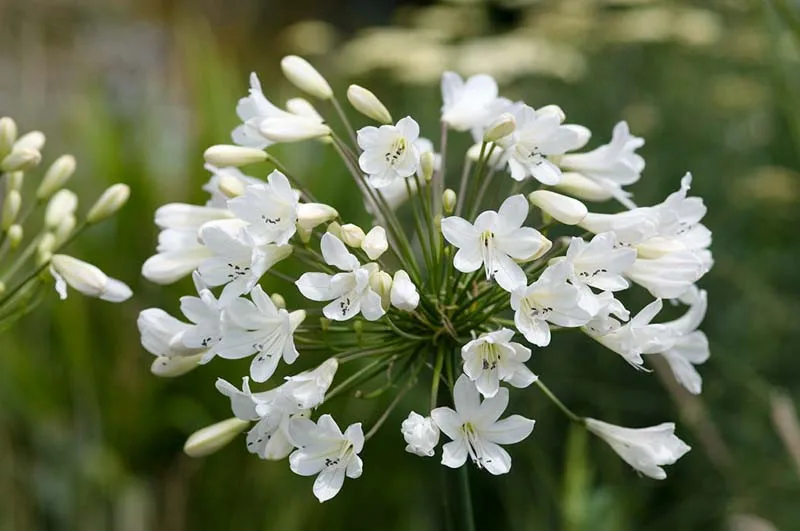
A clump-forming, herbaceous perennial to about 90cm, with relatively wide, dark grey-green, strap-shaped leaves. Rounded flowerheads, 25cm across, with funnel-shaped, pure white flowers, are produced in mid- to late summer, followed by decorative seed heads
Scientific classification
- Species
- African lily 'Arctic Star' (Agapanthus 'Arctic Star')
- Genus
- Agapanthus
- Family
- Asparagaceae
- Order
- Asparagales
- Class
- Liliopsida
- Phylum
- Magnoliophyta
- Harmful if eaten. Wear gloves and other protective equipment when handling
- Toxicity
- Herbaceous Perennial
- Plant type
- 0.5-1 metres
- Height
- 0.5-1 metres
- Spread
- Deciduous
- Foliage
- Clump forming
- Habit
- Spring · Summer · Autumn · Winter
- Season of interest
- Full sun
- Sunlight
- Information to be completed
- Ideal temperature









African lily 'Arctic Star' pictures
Toxicity
Harmful if eaten. Wear gloves and other protective equipment when handling
African lily 'Arctic Star' care guide
- Water regularly in growth, keeping soil lightly moist but well drained
- Watering
- Full sun
- Sunlight

Watering
Water regularly in growth, keeping soil lightly moist but well drained
Fertilizing
 Fertilizing
Balanced feed monthly from spring through midsummer growth
Pruning
 Pruning
In late autumn remove any remaining leaves; seedheads can be left as they look attractive over winter
Propagation
 Propagation
Propagate by division every three to four years in spring
Growing
 Growing
Grow in fertile, moist but well-drained soil in full sun or grow in a container. In cold areas, mulch well overwinter and take containers under cover. See agapanthus cultivation
Common pests and diseases
Diseases
May be susceptible to a virus disease
Pests
May be susceptible to slugs and snails and agapanthus gall midge
Explore the plant health library →




