
Musa sikkimensis
Also known as: Information to be completed
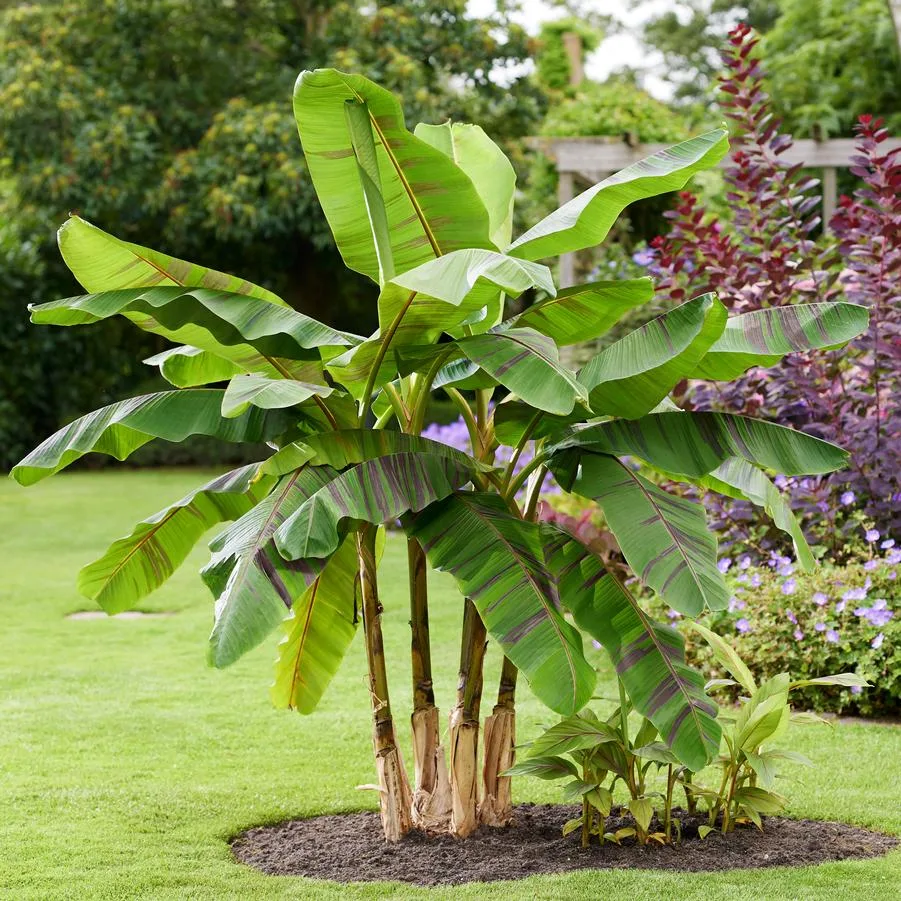
A suckering perennial with large, oblong leaves to 2m long emerging from a red-tinged pseudostem. Young leaves are flushed reddish purple beneath and have red midribs. Mature plants may bear yellow flowers enclosed in purple bracts in summer; these can be followed by angular, yellowish fruits
Scientific classification
- Species
- Musa sikkimensis (Musa sikkimensis)
- Genus
- Musa
- Family
- Musaceae
- Order
- Zingiberales
- Class
- Liliopsida
- Phylum
- Magnoliophyta
- Information to be completed
- Toxicity
- Bedding · Conservatory Greenhouse
- Plant type
- 2.5-4 metres
- Height
- 1.5-2.5 metres
- Spread
- Evergreen
- Foliage
- Suckering
- Habit
- Spring · Summer · Autumn · Winter
- Season of interest
- Full sun
- Sunlight
- Information to be completed
- Ideal temperature









Musa sikkimensis pictures
Distribution of Musa sikkimensis
Distribution map
- Native
- Introduced
- Cultivated
Source:WCVP v16 · Royal Botanic Gardens, Kew · CC BY 3.0 · Boundaries:WGSRPD / TDWG
Musa sikkimensis care guide
- Moderate regular watering, avoid prolonged drought or waterlogging
- Watering
- Full sun
- Sunlight

Watering
Moderate regular watering, avoid prolonged drought or waterlogging
Fertilizing
 Fertilizing
Balanced feed in spring and light repeat in growth season
Pruning
 Pruning
No pruning required
Propagation
 Propagation
Propagate by sowing pre-soaked seed in spring. Separate suckers in early spring, removing older leaves
Growing
 Growing
Under glass, grow in loam-based potting compost in full light, with shade from hot sun. Water freely while in growth and apply a balanced liquid fertiliser every month; keep just moist in winter. Repot every 1 or 2 years in spring. Outdoors grow in sheltered site in humus-rich soil and provide winter protection. See banana cultivation
Common pests and diseases
Diseases
Generally disease-free
Pests
May be susceptible to glasshouse red spider mite, mealybugs and aphids
Explore the plant health library →




