
Byzantine meadow saffron 'Innocence'
Also known as: Information to be completed
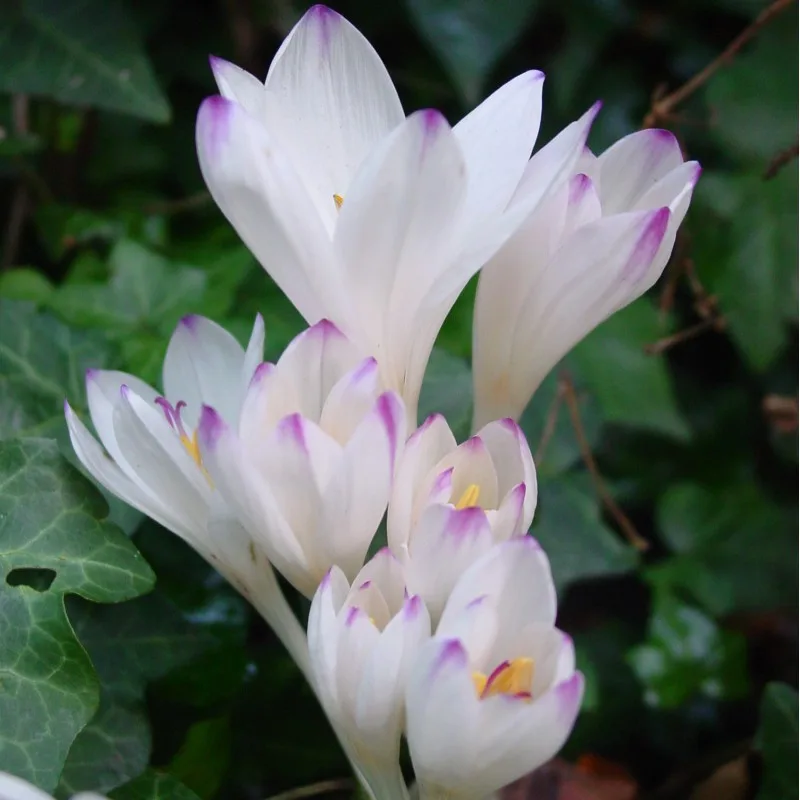
A vigorous cormous perennial with ribbed, straplike basal leaves that emerge in spring and die back in summer. White goblet-shaped flowers, sometimes with purple tints at the tips of the petals, appear in early autumn
Scientific classification
- Species
- Byzantine meadow saffron 'Innocence' (Colchicum × byzantinum 'Innocence')
- Genus
- Colchicum
- Family
- Colchicaceae
- Order
- Liliales
- Class
- Liliopsida
- Phylum
- Tracheophyta
- TOXIC if eaten. Wear gloves and other protective equipment when handling
- Toxicity
- Bulbs
- Plant type
- 0.1-0.5 metres
- Height
- 0.1-0.5 metres
- Spread
- Deciduous
- Foliage
- Columnar upright
- Habit
- Spring · Autumn
- Season of interest
- Full sun
- Sunlight
- Information to be completed
- Ideal temperature









Byzantine meadow saffron 'Innocence' pictures
Toxicity
TOXIC if eaten. Wear gloves and other protective equipment when handling
Byzantine meadow saffron 'Innocence' care guide
- Water moderately during growth, keep drier during summer dormancy.
- Watering
- Full sun
- Sunlight

Watering
Water moderately during growth, keep drier during summer dormancy.
Fertilizing
 Fertilizing
Apply a bulb fertilizer in early spring and again after flowering.
Pruning
 Pruning
No pruning required
Propagation
 Propagation
Propagate by seed, sown in containers in an open frame as soon as ripe, or by division, separating corms when they are dormant in summer
Growing
 Growing
Grow in a sunny position in deep, fertile soil that does not dry out. Intolerant of waterlogging. See bulb cultivation for more detailed advice
Common pests and diseases
Diseases
May be susceptibe to colchicum smuts, grey moulds and tulip grey bulb rot
Pests
May be susceptible to slugs
Explore the plant health library →




