
druid's weed
Also known as: kiss-and-go; mistletoe; thunder besom; all-heal
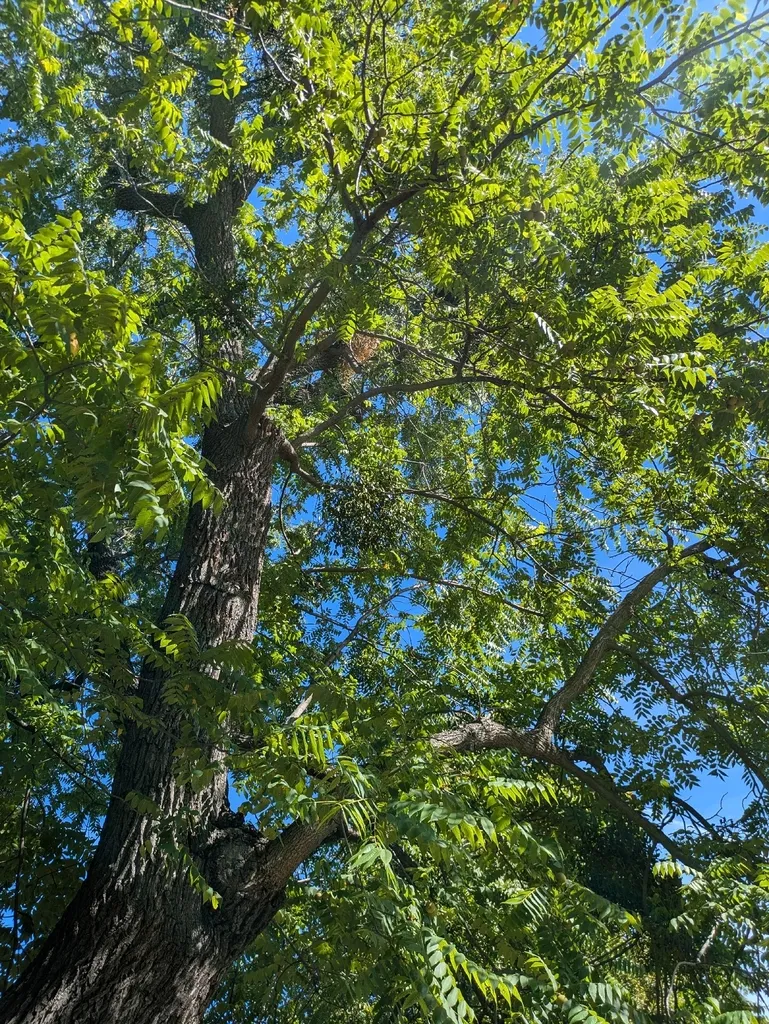
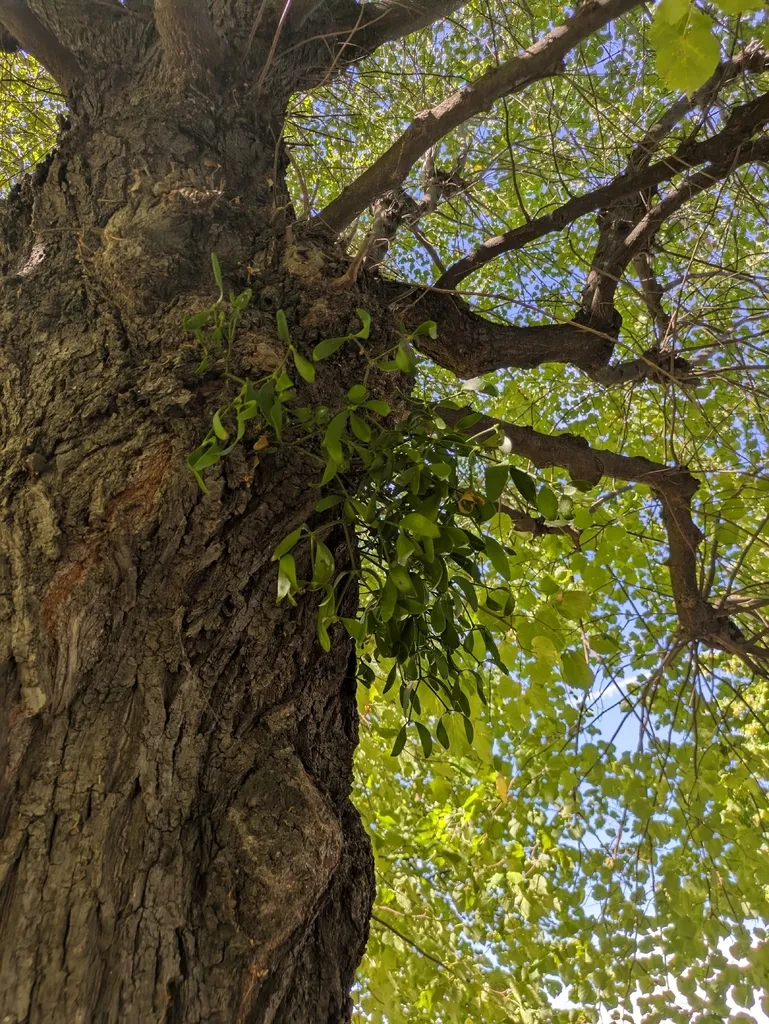
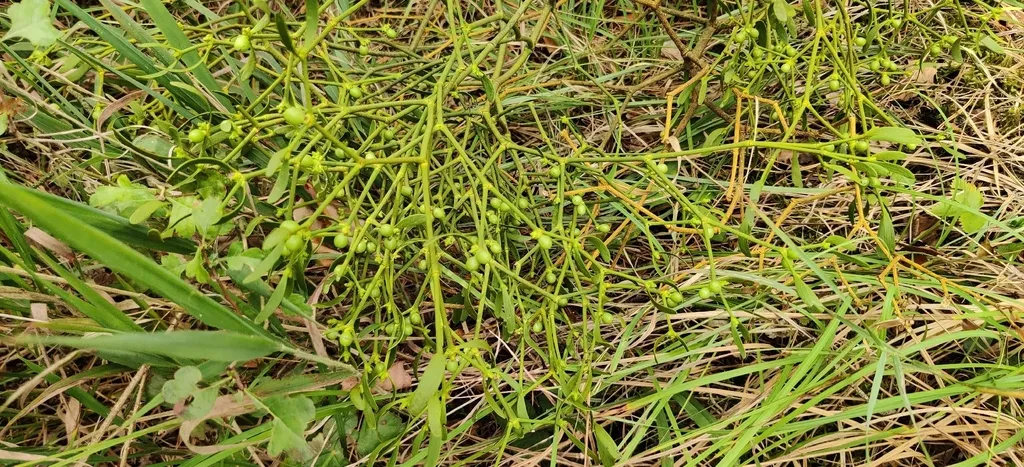
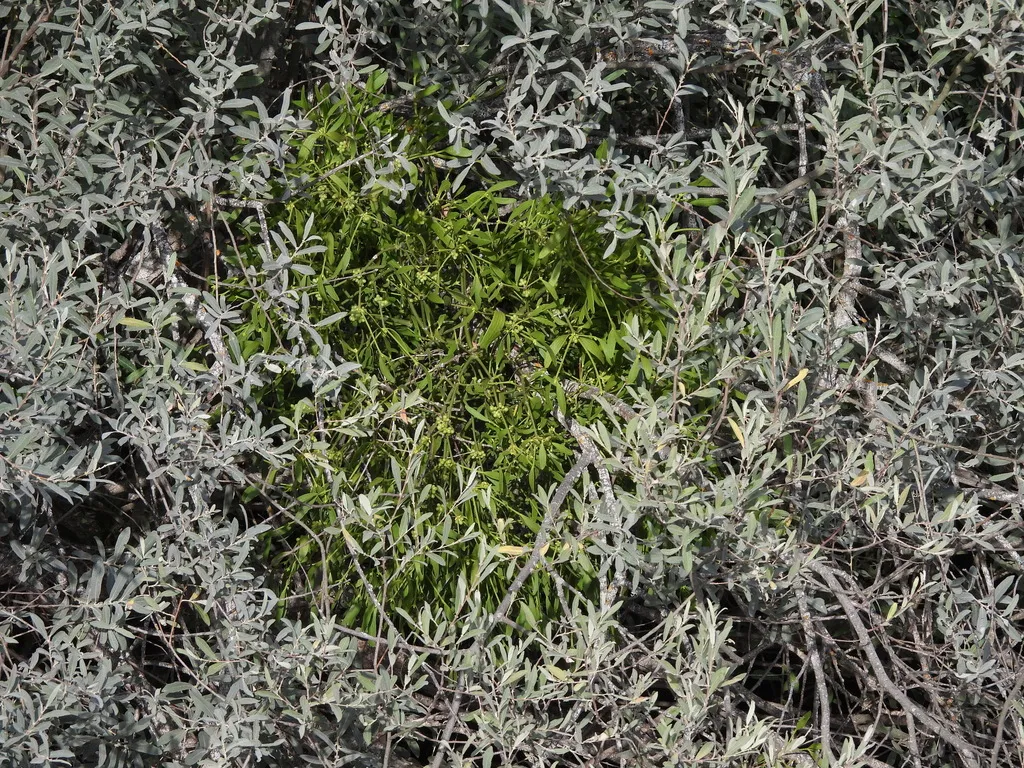
A woody, evergreen shrub that is partially parasitic (hemi-parasitic; it takes water and nutrients from its host but carries out its own photosynthesis). Yellowy-green leaves are held in pairs on branching stems, and tiny yellowish flowers are produced in spring. These are followed (on female plants) by round, white berries. Mistletoe is native to the UK with the centre of poulation being central and southern England; it is rare in Scotland and Ireland. In winter it is easy spot as a shrubby, spherical mass in its host tree, which is most commonly apple. Seeds are dispersed by birds (thrushes and blackcaps), with the blackcap wiping its beak clean on a branch, and the seed passing through the digestive system of the thrush to attach and germinate
Scientific classification
- Species
- druid's weed (Viscum album)
- Genus
- Viscum
- Family
- Santalaceae
- Order
- Santalales
- Class
- Magnoliopsida
- Phylum
- Magnoliophyta
- Harmful if eaten. Wear gloves and other protective equipment when handling
- Toxicity
- Information to be completed
- Plant type
- 0.5-1 metres
- Height
- 0.5-1 metres
- Spread
- Evergreen
- Foliage
- Bushy
- Habit
- Spring · Summer · Autumn · Winter
- Season of interest
- Full sun · Partial shade
- Sunlight
- Information to be completed
- Ideal temperature









druid's weed pictures
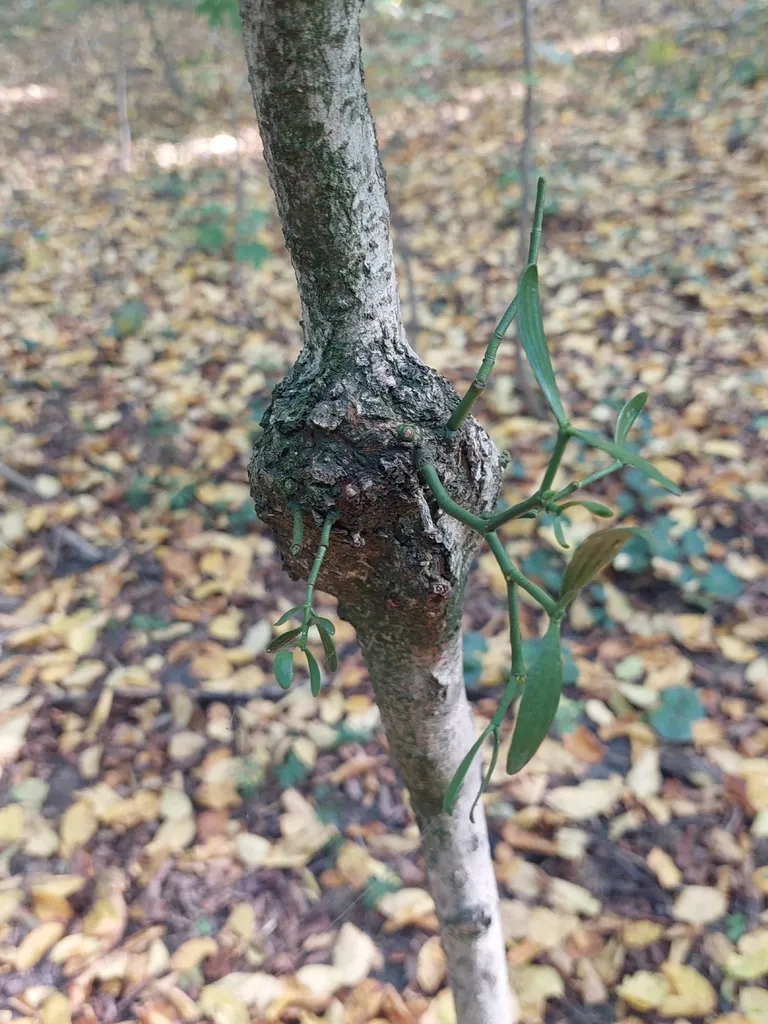
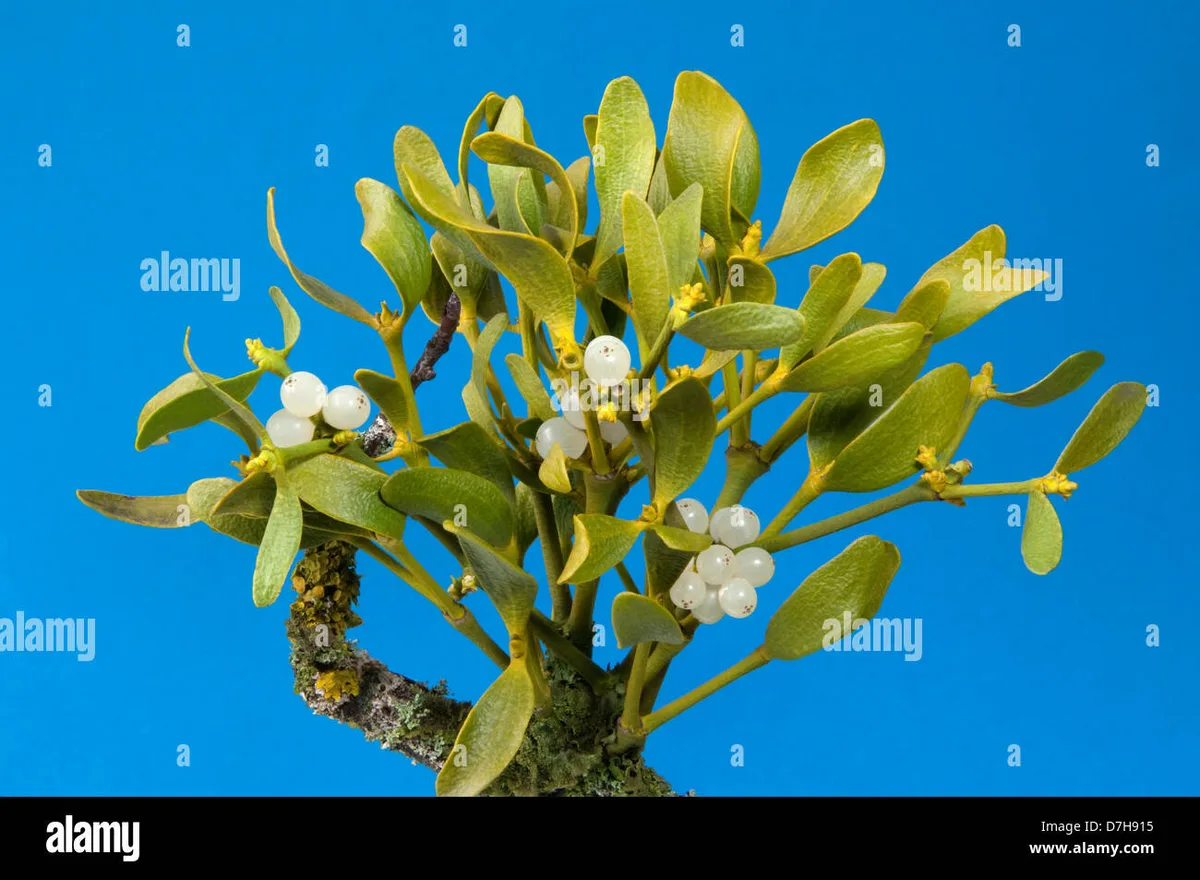
Distribution of druid's weed
Distribution map
- Native
- Introduced
- Cultivated
Source:WCVP v16 · Royal Botanic Gardens, Kew · CC BY 3.0 · Boundaries:WGSRPD / TDWG
Toxicity
Harmful if eaten. Wear gloves and other protective equipment when handling
druid's weed care guide
- Moderate regular watering, allowing brief slight drying between soakings
- Watering
- Full sun · Partial shade
- Sunlight

Watering
Moderate regular watering, allowing brief slight drying between soakings
Fertilizing
 Fertilizing
Balanced perennial feed every four weeks from spring through summer
Pruning
 Pruning
No pruning required
Propagation
 Propagation
Propagate by squeezing the seeds from the berries, and using the glue-like jelly within, stick the seeds directly onto younger branches of the desired host tree (there is no need to lift a flap of bark). Tiny seed leaves may appear within weeks, but it can be 3 years or more before young plants with leaves develop
Growing
 Growing
Grow on a suitable host tree; apple, lime, hawthorn and poplar are most common, although hundreds of other tree species will support mistletoe
Common pests and diseases
Diseases
Generally disease-free
Pests
Generally pest-free
Explore the plant health library →




