
astilbe 'Queen of Holland'
Also known as: Information to be completed
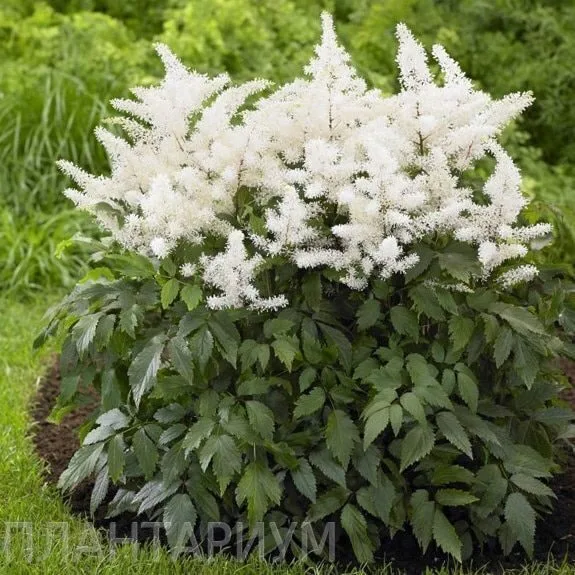
A clump-forming perennial to about 50cm tall, with glossy, mid-green, divided foliage. Small, fluffy, creamy-white flowers appear in rather chunky, branching sprays in early summer
Scientific classification
- Species
- astilbe 'Queen of Holland' (Astilbe 'Queen of Holland')
- Genus
- Astilbe
- Family
- Saxifragaceae
- Order
- Saxifragales
- Class
- Magnoliopsida
- Phylum
- Magnoliophyta
- Information to be completed
- Toxicity
- Bogs · Herbaceous Perennial
- Plant type
- 0.1-0.5 metres
- Height
- 0.5-1 metres
- Spread
- Deciduous
- Foliage
- Clump forming
- Habit
- Spring · Summer · Autumn
- Season of interest
- Full sun · Partial shade
- Sunlight
- Information to be completed
- Ideal temperature









astilbe 'Queen of Holland' pictures
astilbe 'Queen of Holland' care guide
- Constantly damp soil, never allow root zone to dry out completely
- Watering
- Full sun · Partial shade
- Sunlight

Watering
Constantly damp soil, never allow root zone to dry out completely
Fertilizing
 Fertilizing
Weak all-purpose plant feed every two weeks from spring through mid summer
Pruning
 Pruning
Can cut back after flowering, or delay until spring as faded flower spikes can remain attractive in autumn and winter
Propagation
 Propagation
Propagate by division in late winter or early spring, pot divisions under glass and plant out in late spring
Growing
 Growing
Grow in moist but well-drained or boggy soil in dappled shade, or in indirect sun where the soil remains moisture-retentive in summer. Drought intolerant, may be damaged in hot sun. Good for waterside planting. See Astilbe cultivation
Common pests and diseases
Diseases
May be susceptible to Powdery mildews and leaf scorch in hot sun
Pests
May be susceptible to vine weevil
Explore the plant health library →




