
viper's bugloss 'Blue Bedder'
Also known as: Information to be completed
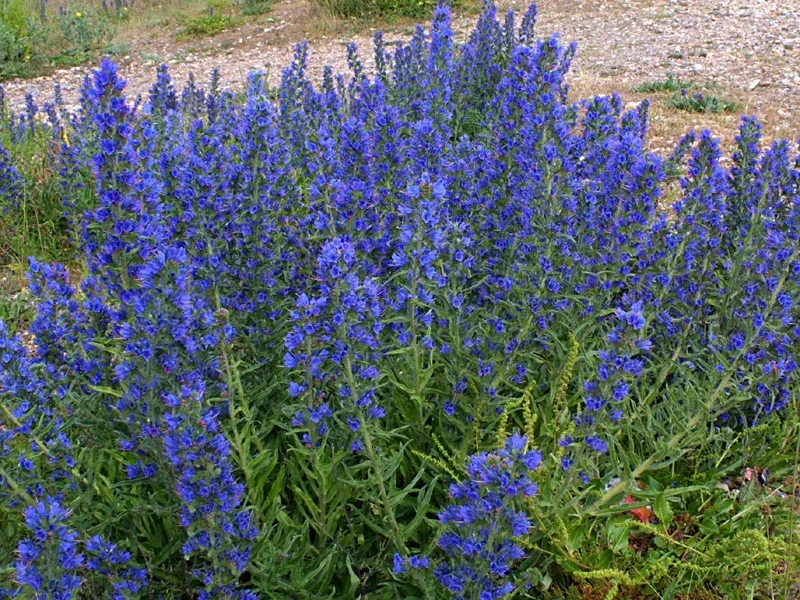
A vigorous cultivar, at 45cm it is rather shorter than the species, multi-branched, with short, crowded spikes of violet-blue flowers, magenta flushed when fading, and pink buds. Very attractive to pollinating insects
Scientific classification
- Species
- viper's bugloss 'Blue Bedder' (Echium vulgare 'Blue Bedder')
- Genus
- Echium
- Family
- Boraginaceae
- Order
- Boraginales
- Class
- Magnoliopsida
- Phylum
- Magnoliophyta
- Skin irritant. Wear gloves and other protective equipment when handling
- Toxicity
- Annual Biennial
- Plant type
- 0.1-0.5 metres
- Height
- 0.1-0.5 metres
- Spread
- Deciduous
- Foliage
- Bushy
- Habit
- Spring · Summer
- Season of interest
- Full sun
- Sunlight
- Information to be completed
- Ideal temperature









viper's bugloss 'Blue Bedder' pictures
Distribution of viper's bugloss 'Blue Bedder'
Distribution map
- Native
- Introduced
- Cultivated
Source:WCVP v16 · Royal Botanic Gardens, Kew · CC BY 3.0 · Boundaries:WGSRPD / TDWG
Toxicity
Skin irritant. Wear gloves and other protective equipment when handling
viper's bugloss 'Blue Bedder' care guide
- Moderate regular watering, avoid prolonged drought and stagnant waterlogging
- Watering
- Full sun
- Sunlight

Watering
Moderate regular watering, avoid prolonged drought and stagnant waterlogging
Fertilizing
 Fertilizing
Balanced perennial feed every four weeks spring through summer growth
Pruning
 Pruning
No pruning required but flowering can be extended to four months if plants are deadheaded
Propagation
 Propagation
Propagate by seed outdoors at 13-16°C (41-45°F), in late summer and overwinter as seedlings
Growing
 Growing
Grow outdoors in moderately fertile, well-drained soil in full sun
Common pests and diseases
Diseases
Generally disease-free
Pests
May be susceptible to slugs or glasshouse whitefly and glasshouse red spider mite under glass
Explore the plant health library →




