
Nigella damascena 'Mulberry Rose'
Also known as: Information to be completed
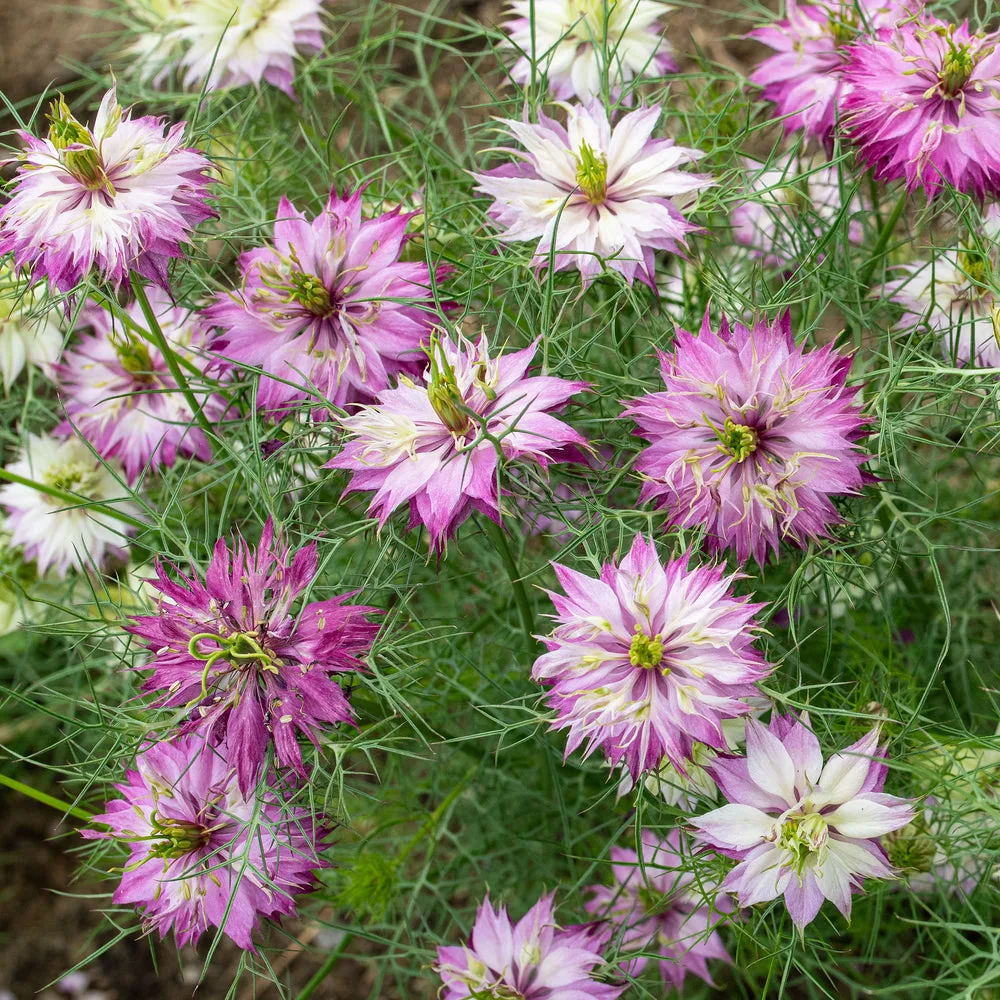
A single-stemmed or branching annual to 60cm tall with finely divided, bright green leaves. In summer it produces flowers to 4.5cm across in shades of pale to rosy pink; these are followed by decorative, inflated seed capsules. Both the flowers and seed capsules can be used for floral arrangements. A good plant for pollinating insects
Scientific classification
- Species
- Nigella damascena 'Mulberry Rose' (Nigella damascena 'Mulberry Rose')
- Genus
- Nigella
- Family
- Ranunculaceae
- Order
- Ranunculales
- Class
- Magnoliopsida
- Phylum
- Magnoliophyta
- Information to be completed
- Toxicity
- Annual Biennial
- Plant type
- 0.5-1 metres
- Height
- 0.1-0.5 metres
- Spread
- Deciduous
- Foliage
- Columnar upright
- Habit
- Spring · Summer
- Season of interest
- Full sun
- Sunlight
- Information to be completed
- Ideal temperature









Nigella damascena 'Mulberry Rose' pictures
Distribution of Nigella damascena 'Mulberry Rose'
Distribution map
- Native
- Introduced
- Cultivated
Source:WCVP v16 · Royal Botanic Gardens, Kew · CC BY 3.0 · Boundaries:WGSRPD / TDWG
Nigella damascena 'Mulberry Rose' care guide
- Allow top layer dry between watering, avoid overly wet soil
- Watering
- Full sun
- Sunlight

Watering
Allow top layer dry between watering, avoid overly wet soil
Fertilizing
 Fertilizing
Weak liquid flower feed every three weeks in warm growing months
Pruning
 Pruning
No pruning required
Propagation
 Propagation
Propagate by sowing seed in situ in mid-spring or autumn
Growing
 Growing
Grow in any well-drained soil in full sun
Common pests and diseases
Diseases
Generally disease-free
Pests
Generally pest-free
Explore the plant health library →




