
leek 'Carlton'
Also known as: Information to be completed
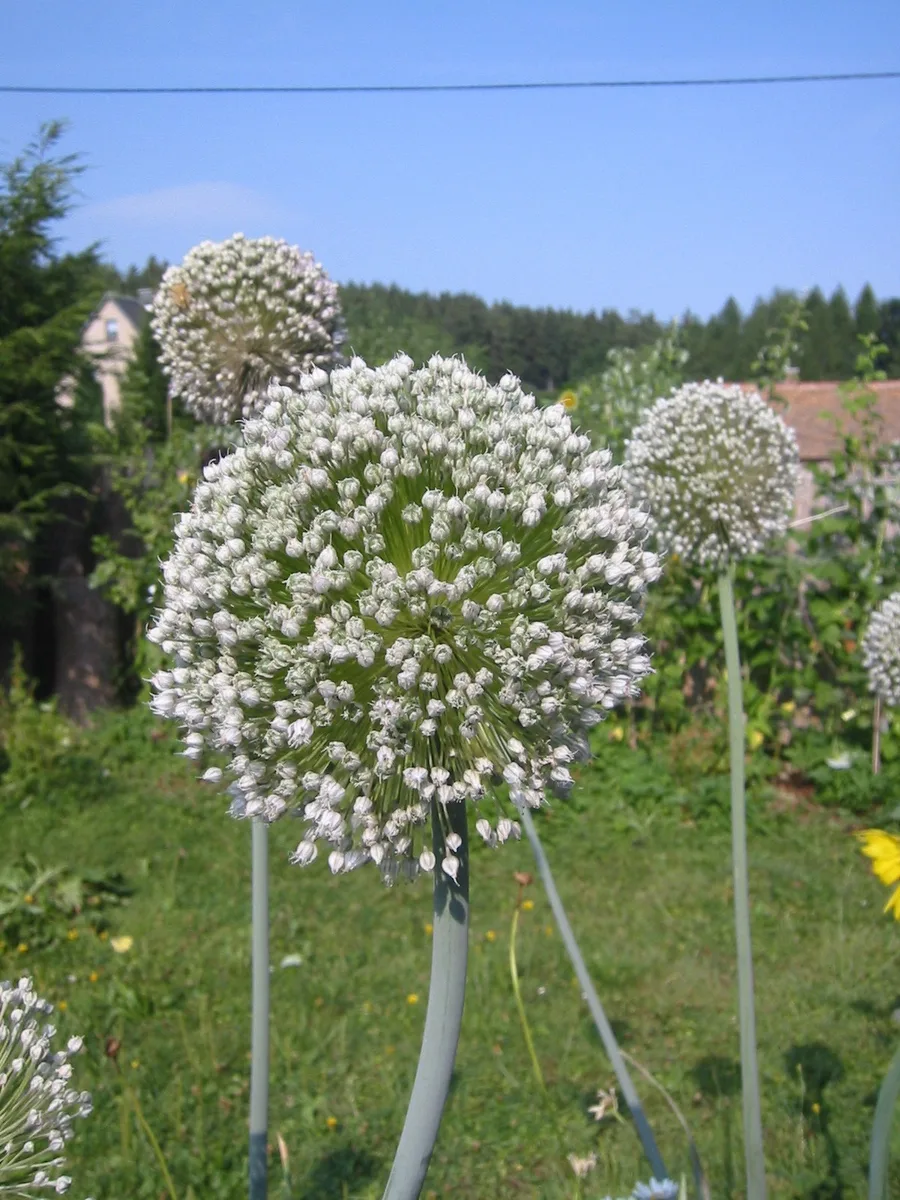
F1 hybrid with mid-green to dark green leaves, which germinates and grows quickly to give a good yield of stems about 30cm long and 4cm across, which can be harvested early, from late summer to autumn; may tend to bolt more than some cultivars, but has a greater proportion of blanched stems Leeks re herbaceous perennials usually grown as annual vegetables, with upright stems which can be blanched white, and green or blue-green leaves about 30-50cm long; plants may flower by bolting in their first year, or the following year if left overwinter, with stems up to 1.5m high topped by rounded flowerheads 5-9cm across of hundreds of star-like pale pink to white flowers which are visited by bees, in summer
Scientific classification
- Species
- leek 'Carlton' (Allium porrum 'Carlton')
- Genus
- Allium
- Family
- Amaryllidaceae
- Order
- Asparagales
- Class
- Liliopsida
- Phylum
- Magnoliophyta
- Information to be completed
- Toxicity
- Herbaceous Perennial · Herbs - Culinary
- Plant type
- 0.5-1 metres
- Height
- 0.1-0.5 metres
- Spread
- Evergreen
- Foliage
- Clump forming
- Habit
- Spring · Summer · Autumn · Winter
- Season of interest
- Full sun · Partial shade
- Sunlight
- Information to be completed
- Ideal temperature









leek 'Carlton' pictures
leek 'Carlton' care guide
- Regular watering spring growth, reduce irrigation autumn leaf dieback
- Watering
- Full sun · Partial shade
- Sunlight

Watering
Regular watering spring growth, reduce irrigation autumn leaf dieback
Fertilizing
 Fertilizing
Weak bulb liquid feed applied once before spring leaf emergence phase
Pruning
 Pruning
No pruning required
Propagation
 Propagation
Propagate by seed sown under cover in late winter, or outside in late spring or early summer; 'Carlton' is an F1 hybrid, so seed collected from plants will not come true
Growing
 Growing
Sow seed, under cover in late winter or early spring or outside in late spring, about 1cm deep in moist but well-drained soil that is rich in organic matter, preferably in full sun though they will tolerate partial shade; thin seedlings to 15cm apart, or, to get the classic white stems, lift and re-plant seedlings from spring to early summer in holes 15cm deep at 15cm spacings, and harvest from late summer or early autumn to winter; for more advice, see leek cultivation
Common pests and diseases
Diseases
May be susceptible to leek rust, onion white rot, downy mildews, foot and root rots, fungal leaf spots, and smuts
Pests
May be susceptible to slugs and snails, leek moth, onion fly, and onion thrips
Explore the plant health library →




