
peppermint 'Black Mitcham'
Also known as: Information to be completed
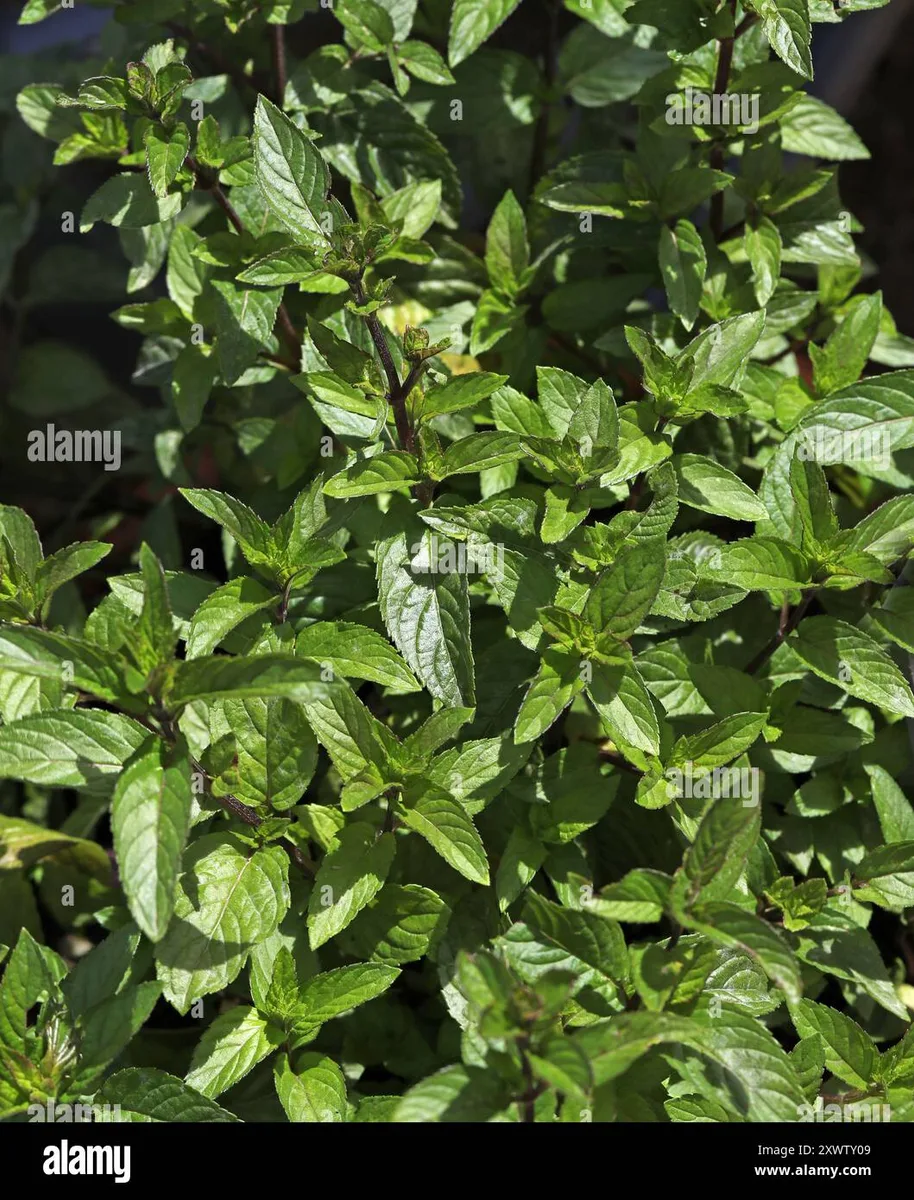
A spreading perennial to 40cm tall and 90cm wide with strongly aromatic, oval, pointed and toothed dark green leaves flushed with bronze and dark red. Small, pale purple flowers form dense terminal spikes from summer into autumn
Scientific classification
- Species
- peppermint 'Black Mitcham' (Mentha × piperita 'Black Mitcham')
- Genus
- Mentha
- Family
- Lamiaceae
- Order
- Lamiales
- Class
- Magnoliopsida
- Phylum
- Tracheophyta
- Information to be completed
- Toxicity
- Herbs - Culinary · Herbaceous Perennial
- Plant type
- 0.1-0.5 metres
- Height
- 0.5-1 metres
- Spread
- Deciduous
- Foliage
- Suckering
- Habit
- Spring · Summer · Autumn
- Season of interest
- Full sun
- Sunlight
- Information to be completed
- Ideal temperature









peppermint 'Black Mitcham' pictures
Distribution of peppermint 'Black Mitcham'
Distribution map
- Native
- Introduced
- Cultivated
Source:WCVP v16 · Royal Botanic Gardens, Kew · CC BY 3.0 · Boundaries:WGSRPD / TDWG
peppermint 'Black Mitcham' care guide
- Moderate regular watering, avoid prolonged drought or waterlogging
- Watering
- Full sun
- Sunlight

Watering
Moderate regular watering, avoid prolonged drought or waterlogging
Fertilizing
 Fertilizing
Balanced feed in spring and light repeat in growth season
Pruning
 Pruning
Cut back old stems at the end of the year to ground level
Propagation
 Propagation
Divide plants in spring or autumn. Softwood cuttings may be taken in spring. Pieces of rhizome can be potted up at any time in the growing season and grown on until established then planted out
Growing
 Growing
Grow in a poor, moist soil in full sun. May have the potential to become a nuisance; restrict its spread by planting in deep containers and plunging them into the soil, or by growing in small, contained beds. See mint cultivation fo more information
Common pests and diseases
Diseases
May be susceptible to powdery mildews and rust diseases
Pests
Generally pest free
Explore the plant health library →




