
Forrest's roscoea
Also known as: Information to be completed
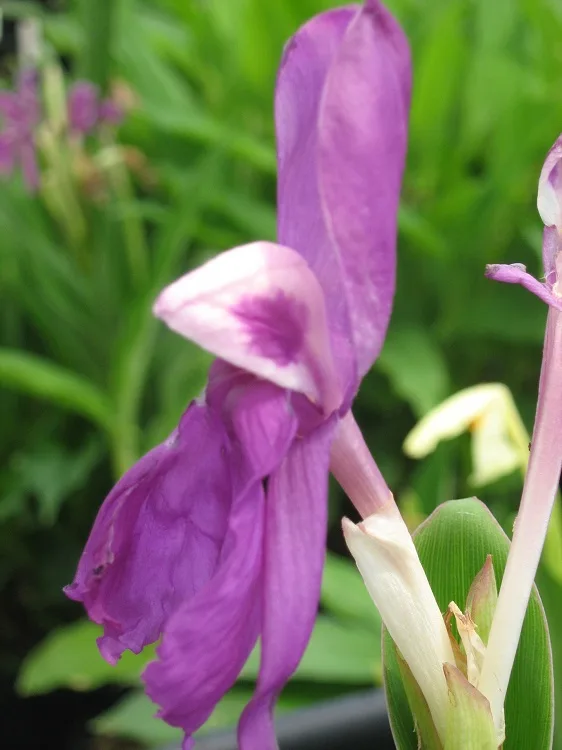
R. forrestii is a perennial growing to 20-30cm with fairly broad, mid-green leaves, clasping the stem. Pale yellow flowers in terminal bunches are produced from early to midsummer
Scientific classification
- Species
- Forrest's roscoea (Roscoea forrestii)
- Genus
- Roscoea
- Family
- Zingiberaceae
- Information to be completed
- Toxicity
- Herbaceous Perennial
- Plant type
- 0.1-0.5 metres
- Height
- 0.1-0.5 metres
- Spread
- Deciduous
- Foliage
- Columnar upright
- Habit
- Spring · Summer
- Season of interest
- Partial shade
- Sunlight
- Information to be completed
- Ideal temperature









Forrest's roscoea pictures
Distribution of Forrest's roscoea
Distribution map
China
Information to be completed
Culture
Information to be completed
Toxicity
Information to be completed
Quick identification of Forrest's roscoea
Information to be completed
Forrest's roscoea care guide
- Keep rich woodland soil evenly moist, never baked dry in summer
- Watering
- Partial shade
- Sunlight
- Information to be completed
- Ideal temperature

Watering
Keep rich woodland soil evenly moist, never baked dry in summer
Fertilizing
 Fertilizing
Light balanced feed monthly during spring and summer growth
Pruning
 Pruning
Remove faded flowers, the rest of the plant will die down naturally
Propagation
 Propagation
Propagate by seed in pots in a cold frame as soon as seed is ripe. Propagate by division of tubers in spring when growth is starting
Growing
 Growing
Grow in humus-rich, moderately fertile, moist but well-drained soil. A cool, sheltered site in partial shade is ideal; in very cold areas apply a deep winter mulch. If growing from a tuber, plant 15cm deep
People also ask
Information to be completed
Common pests and diseases
Diseases
Generally disease free but a virus may be a problem
Pests
May be attacked by slugs and vine weevil
Explore the plant health library →




