
Yoshino cherry
Also known as: Japanese flowering cherry; Potomac cherry; Tokyo cherry
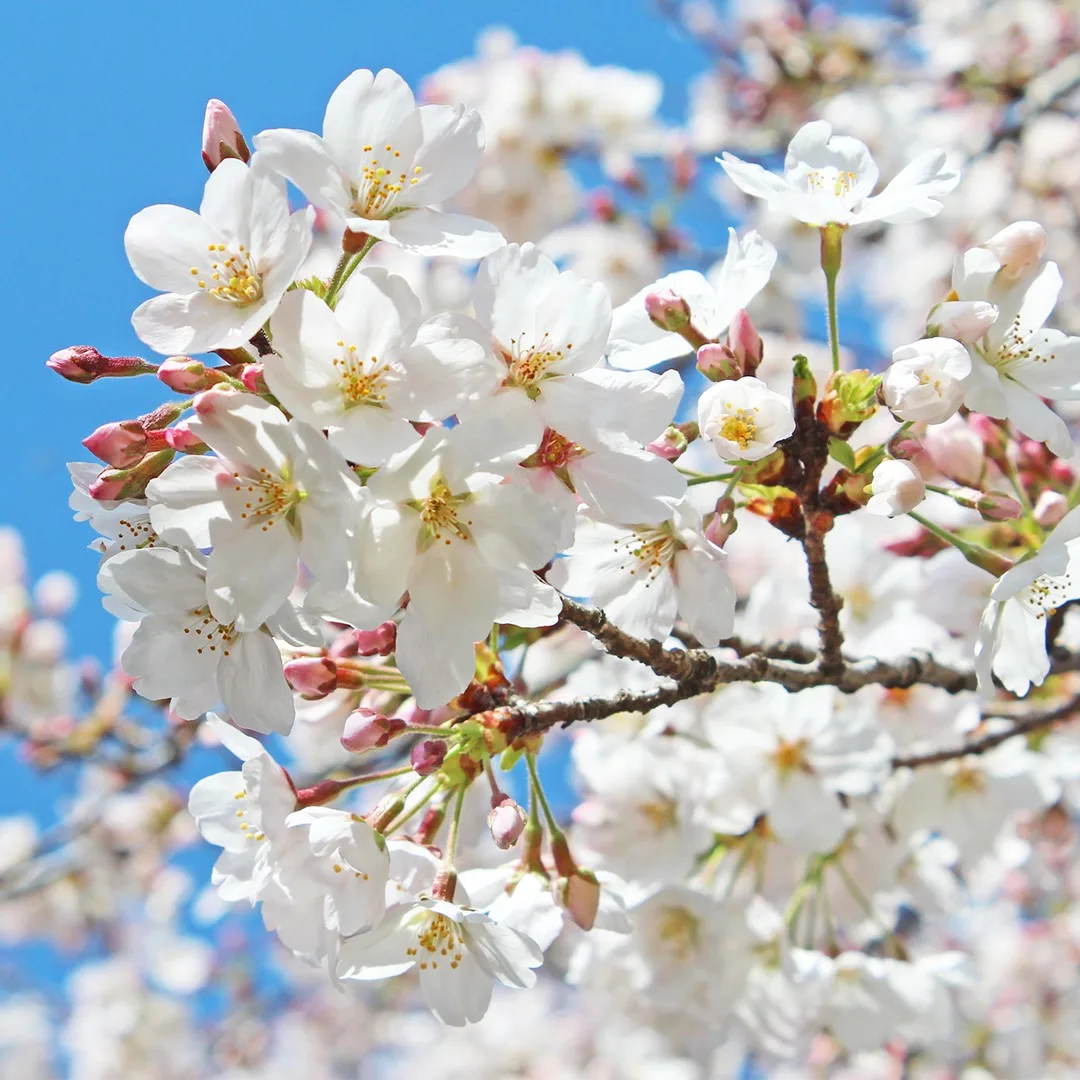
A small, deciduous Japanese flowering cherry tree or shrub with broad-spreading branches and ovate leaves emerging a coppery-bronze colour in spring to contrast with the blossom, turning dark green then finally red-orange in the autumn. Large, single flowers are almond-scented, blush white or tinged pink with a darker centre, and appear prior to the foliage in spring, followed by shiny black fruits loved by birds. First cultivated in the early 20th Century, it is said to be the most widely-planted flowering cherry tree in Japan
Scientific classification
- Species
- Yoshino cherry (Prunus × yedoensis 'Somei-Yoshino')
- Genus
- Prunus
- Family
- Rosaceae
- Order
- Rosales
- Class
- Magnoliopsida
- Phylum
- Magnoliophyta
- Information to be completed
- Toxicity
- Shrubs · Trees
- Plant type
- Higher than 12 metres
- Height
- wider than 8 metres
- Spread
- Deciduous
- Foliage
- Information to be completed
- Habit
- Autumn · Spring · Summer
- Season of interest
- Full sun
- Sunlight
- Information to be completed
- Ideal temperature









Yoshino cherry pictures
Distribution of Yoshino cherry
Distribution map
- Native
- Introduced
- Cultivated
Source:WCVP v16 · Royal Botanic Gardens, Kew · CC BY 3.0 · Boundaries:WGSRPD / TDWG
Yoshino cherry care guide
- Deep water during dry spells, especially when young
- Watering
- Full sun
- Sunlight

Watering
Deep water during dry spells, especially when young
Fertilizing
 Fertilizing
Balanced fruit or tree feed in early spring
Pruning
 Pruning
Little pruning is needed. Remove diseased, damaged, crowded or crossing shoots and unwanted growth. If silver leaf disease is a concern, prune in midsummer.
Propagation
 Propagation
Propagate by softwood cuttings in early summer with bottom heat
Growing
 Growing
Grow in moderately fertile, moist but well-drained soil in full sun. Dislikes heavy, wet soils. Tolerant of pollution. May require staking. See tree cultivation and staking trees for further advice
Common pests and diseases
Diseases
May be susceptible to peach leaf curl, cherry leaf scorch, silver leaf, bacterial canker, blossom wilt and honey fungus
Pests
May be susceptible to caterpillars, leaf-mining moths, cherry blackfly and bullfinches
Explore the plant health library →




