
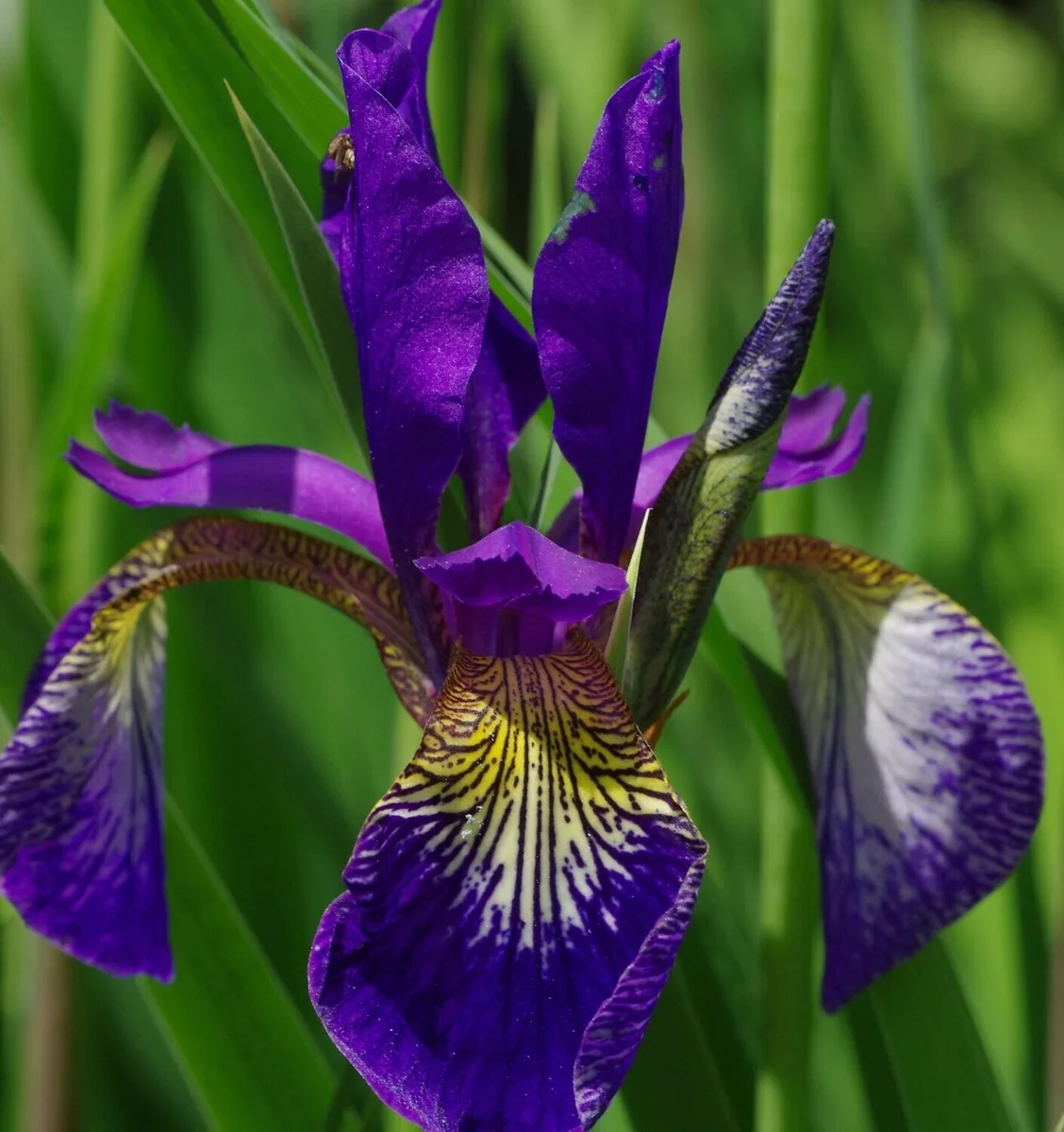
Siberian iris 'Tropic Night'
Also known as: Information to be completed
Has delicate purple-blue flowers with white and yellow markings that are borne above clumps of linear foliage for several weeks in early summer
Scientific classification
- Species
- Siberian iris 'Tropic Night' (Iris 'Tropic Night')
- Genus
- Iris
- Family
- Iridaceae
- Harmful if eaten. Wear gloves and other protective equipment when handling
- Toxicity
- Herbaceous Perennial · Bogs
- Plant type
- 1-1.5 metres
- Height
- 0.5-1 metres
- Spread
- Deciduous
- Foliage
- Clump forming
- Habit
- Spring · Summer · Autumn
- Season of interest
- Full sun · Partial shade
- Sunlight
- Information to be completed
- Ideal temperature









Siberian iris 'Tropic Night' pictures
Distribution of Siberian iris 'Tropic Night'
Distribution map
Information to be completed
Information to be completed
Culture
Information to be completed
Toxicity
Harmful if eaten. Wear gloves and other protective equipment when handling
Quick identification of Siberian iris 'Tropic Night'
Information to be completed
Siberian iris 'Tropic Night' care guide
- Medium moisture in growth, then drier once flowering fully finishes
- Watering
- Full sun · Partial shade
- Sunlight
- Information to be completed
- Ideal temperature

Watering
Medium moisture in growth, then drier once flowering fully finishes
Fertilizing
 Fertilizing
Diluted iris feed every three to four weeks during spring bloom
Pruning
 Pruning
Deadhead after flowering. Cut back foliage in autumn
Propagation
 Propagation
Divide clumps in early spring or autumn
Growing
 Growing
This cultivar is suited for cultivation in both herbaceous borders and informal pond-side settings. Grow in moist but well-drained neutral to slightly acid loam in full sun or partial shade
People also ask
Information to be completed
Common pests and diseases
Diseases
May be susceptible to aphid borne virus diseases
Pests
May be susceptible to slugs and snails
Explore the plant health library →




