
wonderful puya
Also known as: Information to be completed
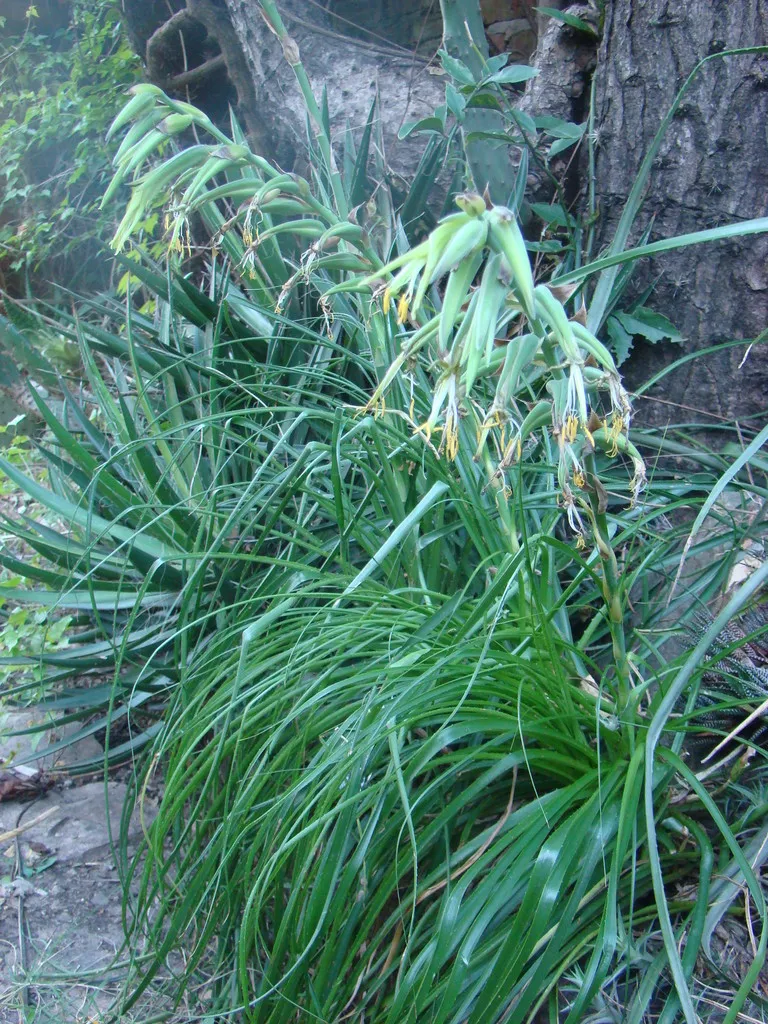
P.mirabilis is a bromeliad, producing loose, evergreenrosettes of long, narrow, stiff and leathery, pale grey-green or bronzy-green leaves edged with fine teeth. Mature rosettes produces stout flower stems,with yellow-green, bell-shaped flowers up to 10cm long, followed by green fruit containing winged seeds
Scientific classification
- Species
- wonderful puya (Puya mirabilis)
- Genus
- Puya
- Family
- Bromeliaceae
- Information to be completed
- Toxicity
- Conservatory Greenhouse · Herbaceous Perennial
- Plant type
- 0.5-1 metres
- Height
- 0.5-1 metres
- Spread
- Evergreen
- Foliage
- Bushy
- Habit
- Spring · Summer · Autumn · Winter
- Season of interest
- Full sun
- Sunlight
- Information to be completed
- Ideal temperature









wonderful puya pictures


Distribution of wonderful puya
Distribution map
Argentina and Bolivia
Information to be completed
Culture
Information to be completed
Toxicity
Information to be completed
Quick identification of wonderful puya
Information to be completed
wonderful puya care guide
- Moderate regular watering, allowing brief slight drying between soakings
- Watering
- Full sun
- Sunlight
- Information to be completed
- Ideal temperature

Watering
Moderate regular watering, allowing brief slight drying between soakings
Fertilizing
 Fertilizing
Balanced perennial feed every four weeks from spring through summer
Pruning
 Pruning
No pruning required
Propagation
 Propagation
Propagate by seed at 19-24°C as soon as ripe
Growing
 Growing
Grow in a container in terrestrial bromeliad compost. Water moderately when in active growth in mid-spring to late summer and apply a low nitrogen fertiliser every 6-8 weeks. Can stand outdoors in a sheltered, sunny position in summer; otherwise grow in good light in a warm greenhouse
People also ask
Information to be completed
Common pests and diseases
Diseases
May be susceptible to root rots in wet soils
Pests
May be susceptible to scale insects
Explore the plant health library →




