
plover's eggs
Also known as: Information to be completed
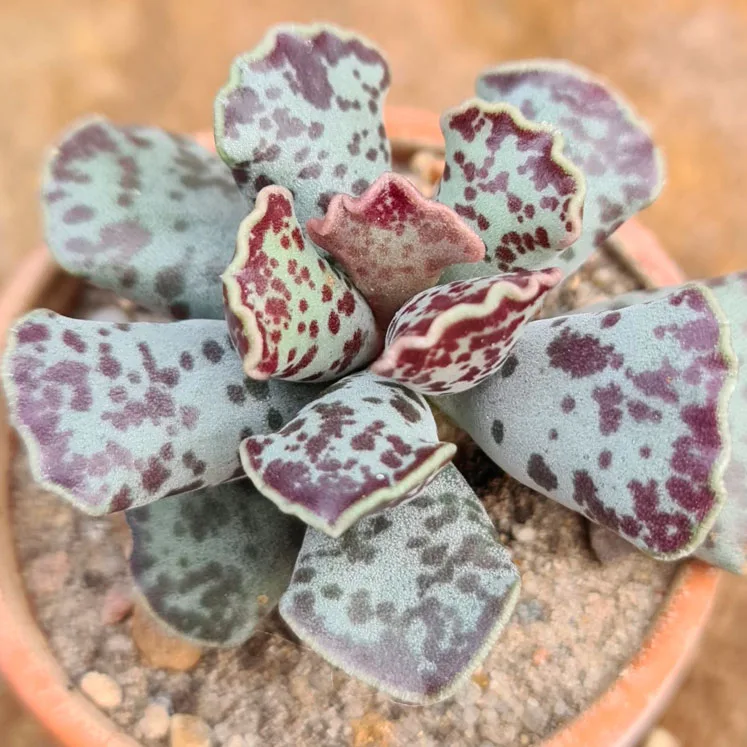
A slow-growing, branching succulent with greyish-brown stems and fleshy, grey-green leaves speckled with purple, often wavy at the tips. Produces upright spikes of small, tubular pink flowers in summer

Scientific classification
- Species
- plover's eggs (Adromischus cooperi)
- Genus
- Adromischus
- Family
- Crassulaceae
- Information to be completed
- Toxicity
- Cactus Succulent
- Plant type
- Up to 10 cm
- Height
- 0.1-0.5 metres
- Spread
- Evergreen
- Foliage
- Clump forming
- Habit
- Spring · Summer · Autumn · Winter
- Season of interest
- Full sun
- Sunlight
- Information to be completed
- Ideal temperature









plover's eggs pictures
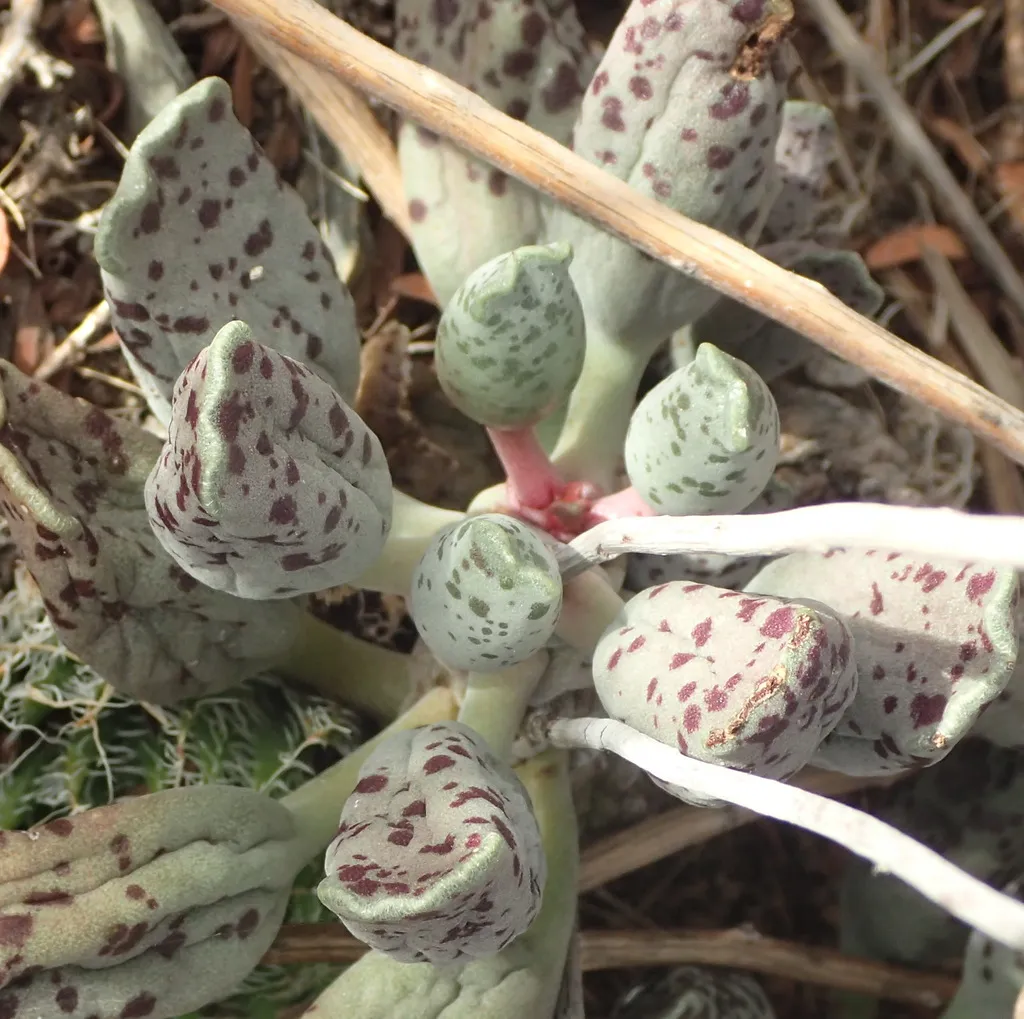
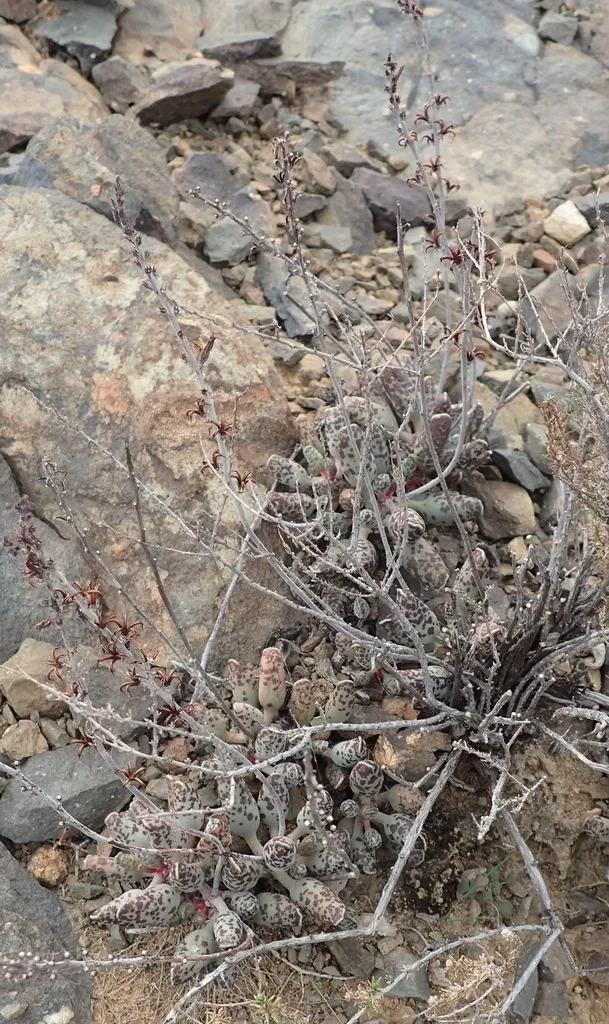
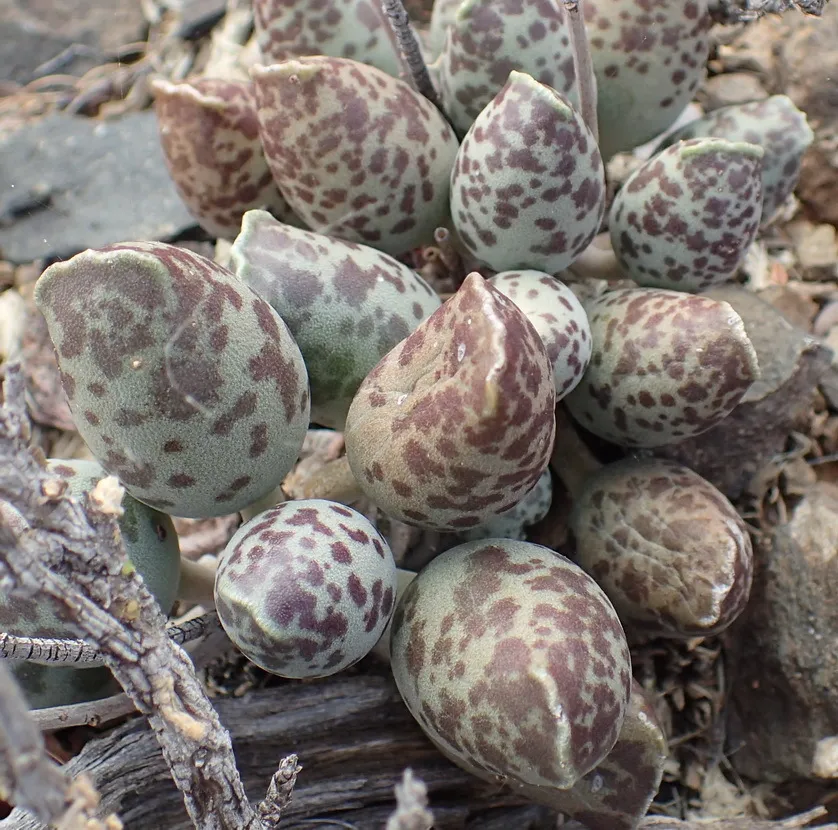
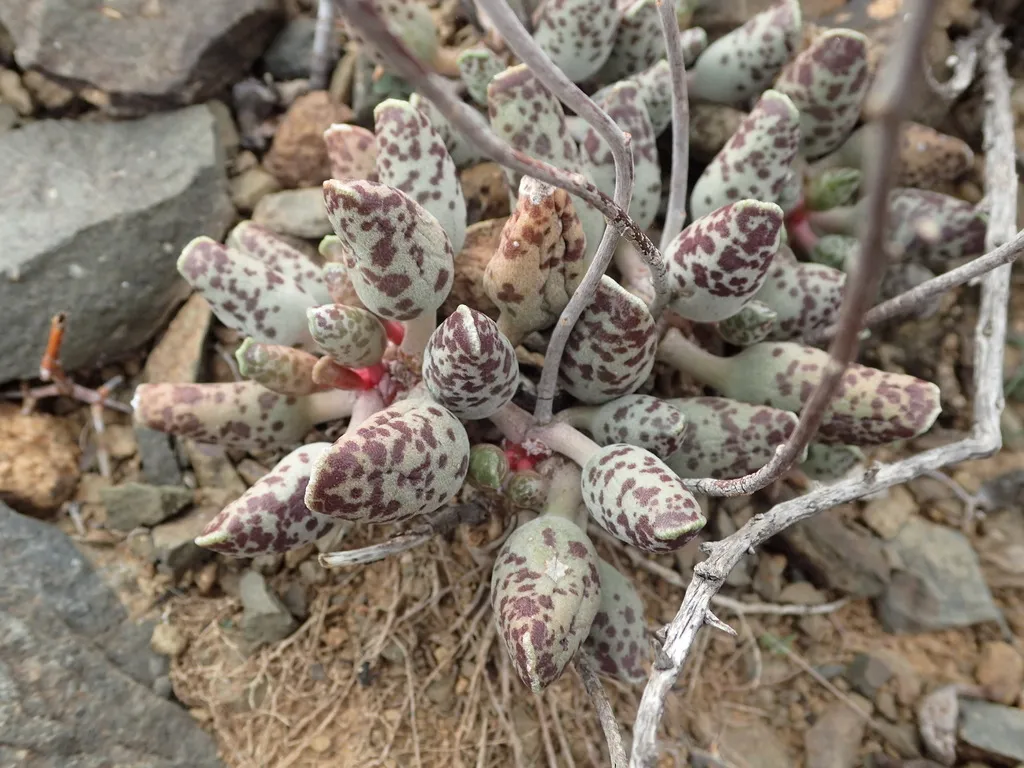
Distribution of plover's eggs
Distribution map
Southern Africa (Cape)
Information to be completed
Culture
Information to be completed
Toxicity
Information to be completed
Quick identification of plover's eggs
Information to be completed
plover's eggs care guide
- Water minimally once substrate fully dry, suspend watering in cold winter
- Watering
- Full sun
- Sunlight
- Information to be completed
- Ideal temperature

Watering
Water minimally once substrate fully dry, suspend watering in cold winter
Fertilizing
 Fertilizing
Extremely diluted succulent fertilizer once per warm growing month
Pruning
 Pruning
Remove faded flower stems
Propagation
 Propagation
Propagate by seed sown at 19-24°C (66-75°F) in spring, or by stem or leaf cuttings in summer
Growing
 Growing
Grow under glass in a sharply draining cactus compost, in full sunlight with good ventilation, or outdoors where winter temperatures are consistently above 7°C (45°F). Water during the growing season only when the soil has become dry, withhold water altogether in the winter months. See houseplant cacti and succulent cultivation for more detailed advice
People also ask
Information to be completed
Common pests and diseases
Diseases
Generally disease-free
Pests
May be susceptible to mealybugs and greenfly
Explore the plant health library →




