
bean (runner) 'Scarlet Emperor'
Also known as: Information to be completed
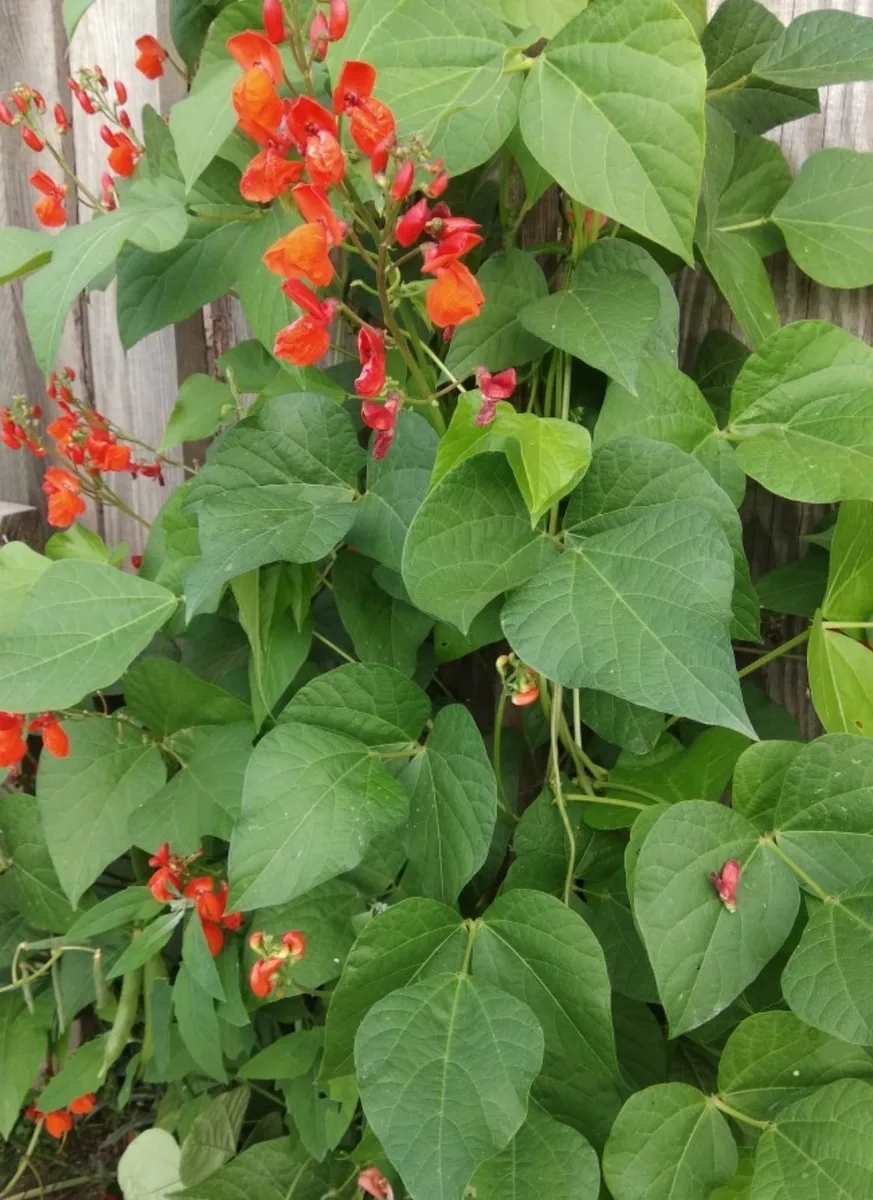
A vigorous, twining climber grown as an annual, with bright green, heart-shaped leaves and orange-red flowers from early summer These are followed, from mid-summer, by straight, smooth, green pods up to 30cm long, eaten as runner beans while still immature
Scientific classification
- Species
- bean (runner) 'Scarlet Emperor' (Phaseolus coccineus 'Scarlet Emperor')
- Genus
- Phaseolus
- Family
- Fabaceae
- Order
- Fabales
- Class
- Magnoliopsida
- Phylum
- Magnoliophyta
- Raw pods/beans harmful if eaten. Wear gloves and other protective equipment when handling
- Toxicity
- Annual Biennial
- Plant type
- 1.5-2.5 metres
- Height
- 0.1-0.5 metres
- Spread
- Deciduous
- Foliage
- Climbing
- Habit
- Spring · Summer · Autumn
- Season of interest
- Full sun
- Sunlight
- Information to be completed
- Ideal temperature









bean (runner) 'Scarlet Emperor' pictures
Distribution of bean (runner) 'Scarlet Emperor'
Distribution map
- Native
- Introduced
- Cultivated
Source:WCVP v16 · Royal Botanic Gardens, Kew · CC BY 3.0 · Boundaries:WGSRPD / TDWG
Toxicity
Raw pods/beans harmful if eaten. Wear gloves and other protective equipment when handling
bean (runner) 'Scarlet Emperor' care guide
- Keep soil evenly moist during active growth and cropping
- Watering
- Full sun
- Sunlight

Watering
Keep soil evenly moist during active growth and cropping
Fertilizing
 Fertilizing
Balanced vegetable feed through active growth season
Pruning
 Pruning
Remove shoot tips once they reach the top of the support
Propagation
 Propagation
Propagate by seed. See sowing vegetable seeds
Growing
 Growing
Start from seed in a heated greenhouse or warm windowsill, and plant outside once all risk of frost has passed in a sunny, sheltered site. Incorporate bulky organic material into the soil before planting, and keep the soil moist when plants are flowering to ensure the beans set. Plants need substantial supports. See runner-bean cultivation for further advice
Common pests and diseases
Diseases
May be susceptible to foot rot
Pests
May be susceptible to black bean aphids. Young plants also need protection from slugs and snails
Explore the plant health library →




