
bean (runner) 'Red Rum'
Also known as: Information to be completed
A runner bean with red flowers followed by tasty, straight, smooth, fleshy pods, on average about 22cm long and 1.5cm wide when picked, and stringless when young, and if seeds are allowed to develop they are pink mottled with black; its flowers will set even at fairly high temperatures, it crops early, and gives a high yield. Runner beans, Phaseolus coccineus, are nitrogen-fixing herbaceous perennials, usually grown as annuals, which climb by twining stems up to 4m high, with leaves divided into three ovate to heart-shaped green leaflets up to 15cm long, and racemes of many white, pink, red, or two-tone flowers, up to 3cm long, from midsummer, which are pollinated by bees and followed by edible seedpods from late summer until the first frosts.
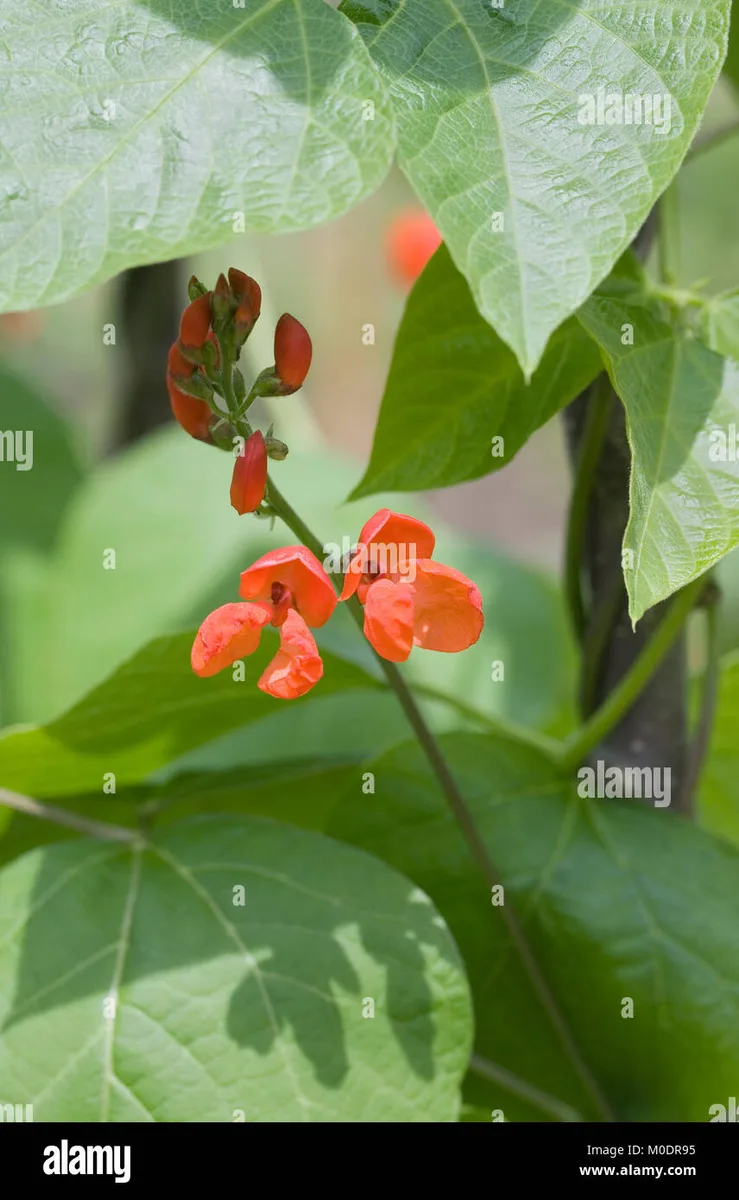
Scientific classification
- Species
- bean (runner) 'Red Rum' (Phaseolus coccineus 'Red Rum')
- Genus
- Phaseolus
- Family
- Fabaceae
- Raw pods/beans harmful if eaten. Wear gloves and other protective equipment when handling
- Toxicity
- Herbaceous Perennial · Annual Biennial
- Plant type
- 2.5-4 metres
- Height
- 0.1-0.5 metres
- Spread
- Deciduous
- Foliage
- Climbing
- Habit
- Summer · Autumn
- Season of interest
- Full sun
- Sunlight
- Information to be completed
- Ideal temperature









bean (runner) 'Red Rum' pictures
Distribution of bean (runner) 'Red Rum'
Distribution map
Information to be completed
Information to be completed
Culture
Information to be completed
Toxicity
Raw pods/beans harmful if eaten. Wear gloves and other protective equipment when handling
Quick identification of bean (runner) 'Red Rum'
Information to be completed
bean (runner) 'Red Rum' care guide
- Keep soil consistently moist for steady leafy growth without drought stress
- Watering
- Full sun
- Sunlight
- Information to be completed
- Ideal temperature

Watering
Keep soil consistently moist for steady leafy growth without drought stress
Fertilizing
 Fertilizing
Nitrogen-rich vegetable feed every two to three weeks in active growth
Pruning
 Pruning
No pruning required
Propagation
 Propagation
Propagate by seed. See sowing vegetable seeds
Growing
 Growing
Sow seed 5cm deep, either directly outside in early summer, or under glass in early spring then plant out in early summer, after all danger of frost has passed, in full sun and in well-drained but humus-rich, moisture-retentive, preferably near-neutral soil, provide support such as hazel poles or bamboo canes, keep well-watered, and pick pods regularly, before the seeds swell, to ensure a continuous crop; for more advice, see runner-bean cultivation
People also ask
Information to be completed
Common pests and diseases
Diseases
May be susceptible to runner bean and French bean rust, halo blight and occasionally bean anthracnose, foot and root rots, grey mould, Sclerotinia, virus diseases, and wilts but generally disease-free
Pests
May be susceptible to black bean aphids. Young plants also need protection from slugs and snails
Explore the plant health library →




