
Ranunculus flammula subsp. minimus
Also known as: Information to be completed
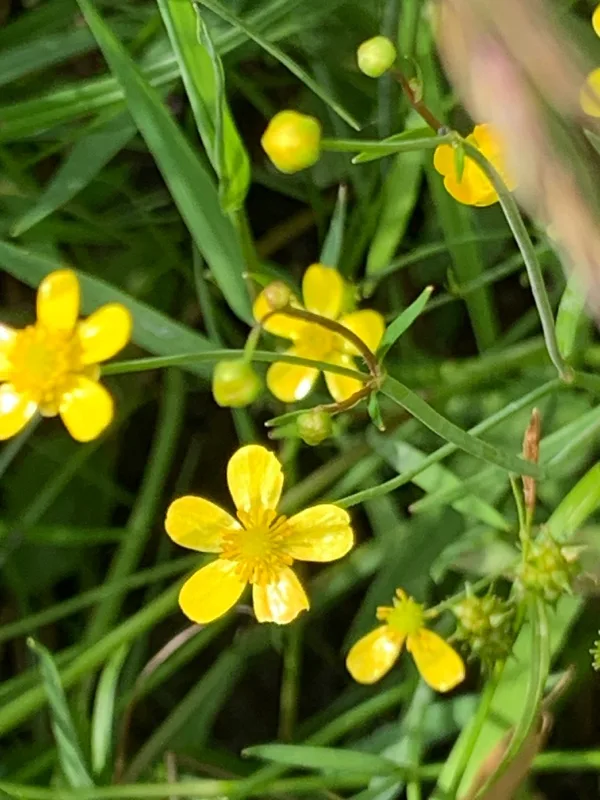
A compact, marginal aquatic perennial up to 30cm in height, with upright, green spear-shaped leaves tinged with purple when young, and bearing bright yellow, cup-shaped flowers, 1.5cm across in summer through to autumn.
Scientific classification
- Species
- Ranunculus flammula subsp. minimus (Ranunculus flammula subsp. minimus)
- Genus
- Ranunculus
- Family
- Ranunculaceae
- Harmful if eaten, skin irritant. Wear gloves and other protective equipment when handling]
- Toxicity
- Aquatic · Bogs
- Plant type
- 0.1-0.5 metres
- Height
- 0.1-0.5 metres
- Spread
- Deciduous
- Foliage
- Clump forming
- Habit
- Spring · Summer · Autumn
- Season of interest
- Full sun
- Sunlight
- Information to be completed
- Ideal temperature









Ranunculus flammula subsp. minimus pictures
Distribution of Ranunculus flammula subsp. minimus
Distribution map
- Native
- Introduced
- Cultivated
Source:WCVP v16 · Royal Botanic Gardens, Kew · CC BY 3.0 · Boundaries:WGSRPD / TDWG
Culture
Information to be completed
Toxicity
Harmful if eaten, skin irritant. Wear gloves and other protective equipment when handling]
Quick identification of Ranunculus flammula subsp. minimus
Information to be completed
Ranunculus flammula subsp. minimus care guide
- Aquatic marginal plant, root zone submerged in shallow fresh water layer
- Watering
- Full sun
- Sunlight
- Information to be completed
- Ideal temperature

Watering
Aquatic marginal plant, root zone submerged in shallow fresh water layer
Fertilizing
 Fertilizing
Aquatic plant slow-release tab feed inserted every five warm weeks
Pruning
 Pruning
Cut back after flowering
Propagation
 Propagation
Propagate by seed sown as soon as ripe, or by division in spring or late summer
Growing
 Growing
Grow in still or slow moving water with 0-5cm water over the crown
People also ask
Information to be completed
Common pests and diseases
Diseases
May be susceptible to powdery mildews, a rust and grey moulds
Pests
May be susceptible to aphids, slugs and snails damage
Explore the plant health library →




