
whorled restio
Also known as: Information to be completed
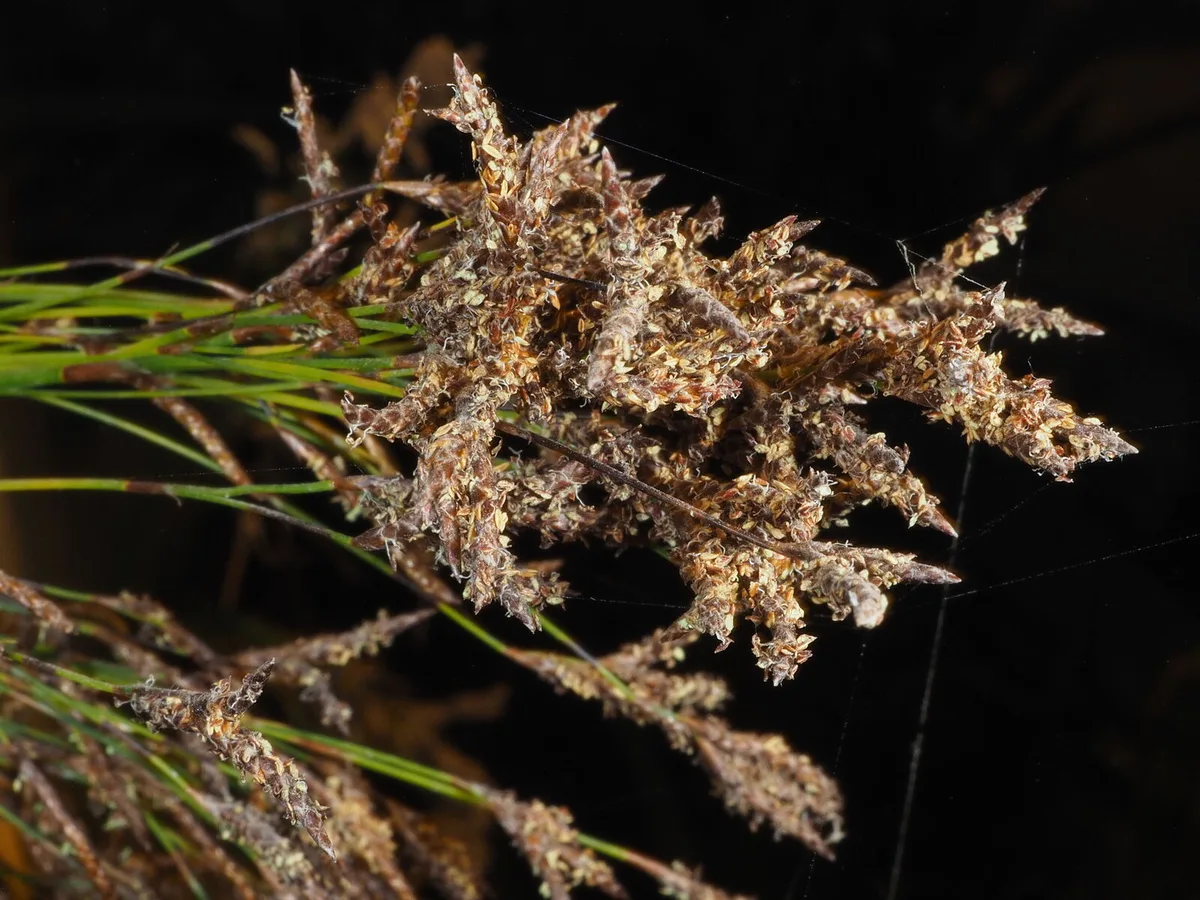
A tufted, reed-like perennial with erect to arching dark green, almost woody stems with whorls of thread-like green leaves or modified branches growing from each node, giving a fountain effect. Stems grow to 2m in height, forming clumps to 1.5m wide. Male and female plants are separate (dioecious). White female flowers are borne on masses of thin stems in spring, followed by grey-brown shiny nutlets in autumn. Male flowers are yellow-green, maturing through bronze to grey

Scientific classification
- Species
- whorled restio (Restio subverticillatus)
- Genus
- Restio
- Family
- Restionaceae
- Information to be completed
- Toxicity
- Grass Like
- Plant type
- 1.5-2.5 metres
- Height
- 1-1.5 metres
- Spread
- Evergreen
- Foliage
- Bushy
- Habit
- Spring · Summer · Autumn · Winter
- Season of interest
- Full sun
- Sunlight
- Information to be completed
- Ideal temperature









whorled restio pictures
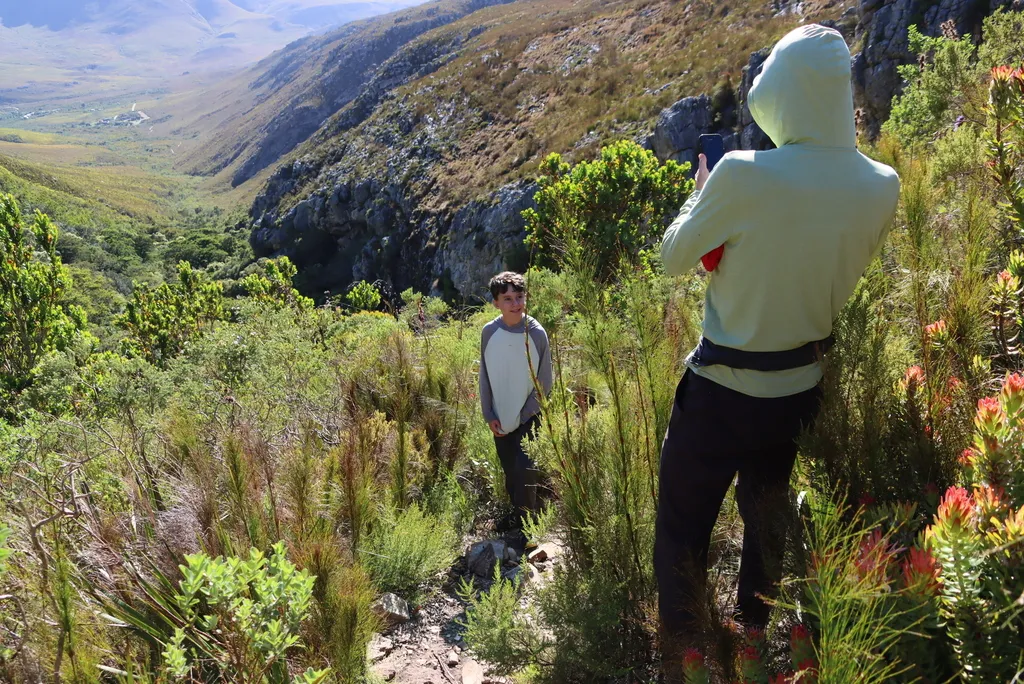
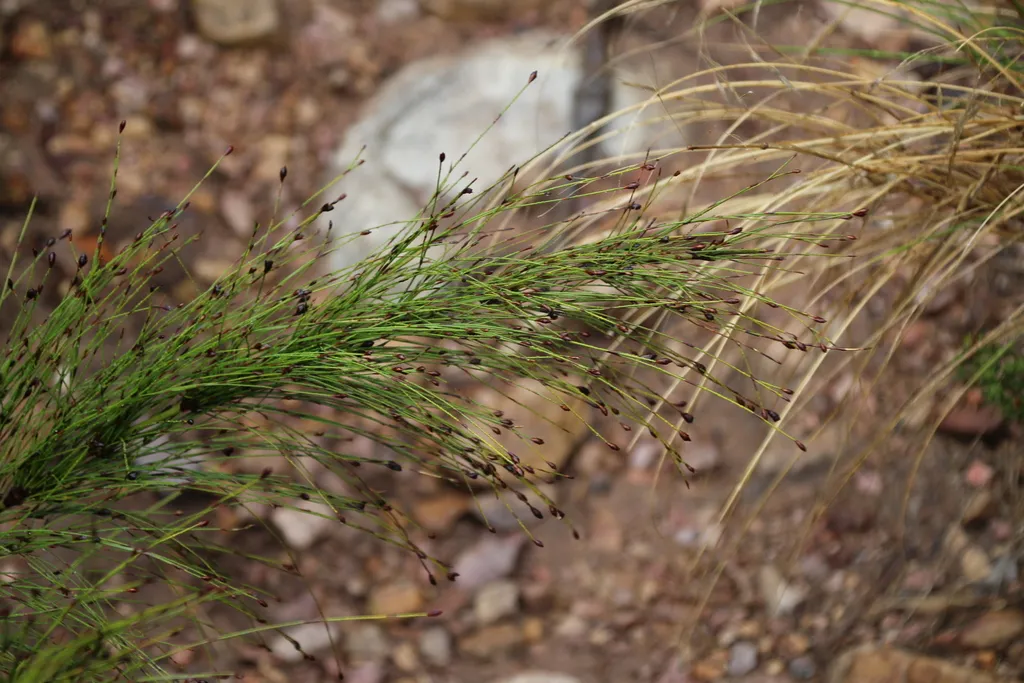
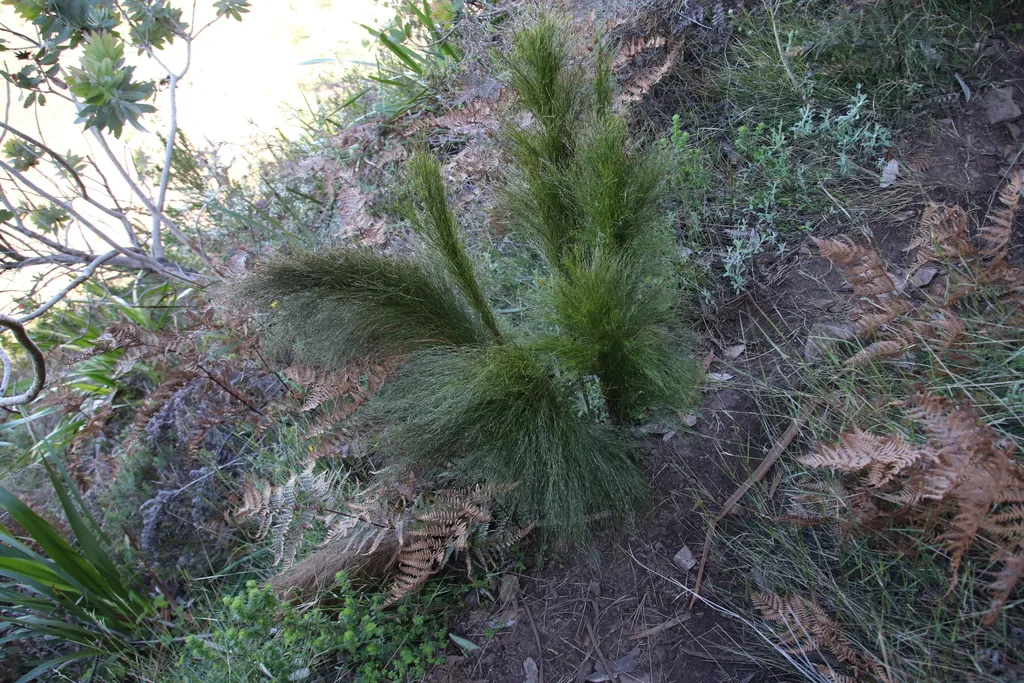
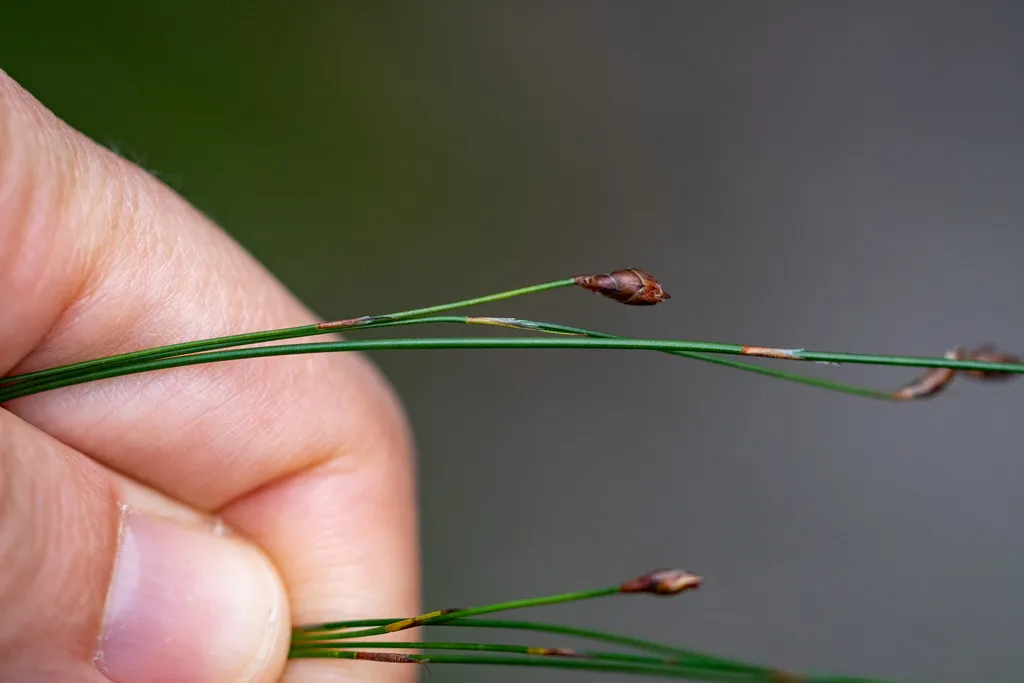
Distribution of whorled restio
Distribution map
South Africa (Cape)
Information to be completed
Culture
Information to be completed
Toxicity
Information to be completed
Quick identification of whorled restio
Information to be completed
whorled restio care guide
- Moderate regular watering, allowing brief slight drying between soakings
- Watering
- Full sun
- Sunlight
- Information to be completed
- Ideal temperature

Watering
Moderate regular watering, allowing brief slight drying between soakings
Fertilizing
 Fertilizing
Balanced perennial feed every four weeks from spring through summer
Pruning
 Pruning
Little or no pruning required
Propagation
 Propagation
Propagate by seed in containers at 16-18°C (61-64F) after soaking the seed for 24 hours
Growing
 Growing
Under glass, grow in loam-based compost (JI No2) in full light. Water moderately and provide low humidity. In winter water sparingly. Outdoors, grow in moderately fertile, well-drained preferably acidic soil in full sun. In frost prone areas, plant out after last frosts and then lift and bring under cover in the autumn
People also ask
Information to be completed
Common pests and diseases
Diseases
Genrally trouble free
Pests
Prone to glasshouse red spider mite and glasshouse whitefly when grown under glass
Explore the plant health library →




