
Cypripedium Philipp gx
Also known as: Information to be completed
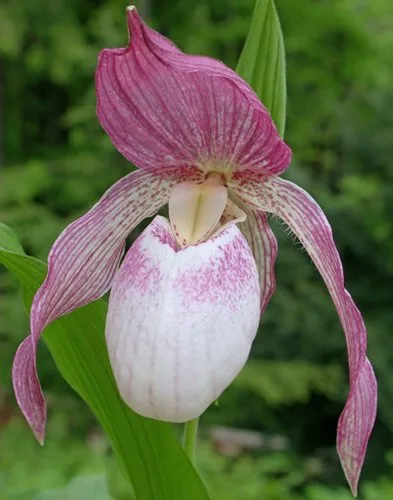
A hardy, deciduous garden orchid producing a clump of upright, 50-70cm tall with three to six, large, bright-green leaves. The leaves are up to 20cm long and 7cm wide. broadly oval, with distinct parallel veins. The flowers are dark pink-purple, 8-9cm large, held well above the foliage in late spring and early summer
Scientific classification
- Species
- Cypripedium Philipp gx (Cypripedium Philipp gx)
- Genus
- Cypripedium
- Family
- Orchidaceae
- Order
- Asparagales
- Class
- Liliopsida
- Phylum
- Magnoliophyta
- Skin allergen. Wear gloves and other protective equipment when handling
- Toxicity
- Herbaceous Perennial
- Plant type
- 0.5-1 metres
- Height
- 0.1-0.5 metres
- Spread
- Deciduous
- Foliage
- Clump forming · Columnar upright
- Habit
- Spring · Summer · Autumn
- Season of interest
- Partial shade
- Sunlight
- Information to be completed
- Ideal temperature









Cypripedium Philipp gx pictures
Toxicity
Skin allergen. Wear gloves and other protective equipment when handling
Cypripedium Philipp gx care guide
- Cool evenly moist substrate, do not let terrestrial orchid roots dry out
- Watering
- Partial shade
- Sunlight

Watering
Cool evenly moist substrate, do not let terrestrial orchid roots dry out
Fertilizing
 Fertilizing
Extremely diluted lady's slipper feed biweekly warm growing months
Pruning
 Pruning
No pruning required, allow foliage to die down naturally
Propagation
 Propagation
Propagate by division from large, established clumps in early spring and replant immediately. Some of the soil from the root ball, which contains beneficial fungi, should be planted with each division
Growing
 Growing
Grow in moist, free-draining soil, poor in organic matter; ideally in a sheltered site with dappled or partial shade. Some early morning sun is allowed. Provide an annual winter mulch of fresh leaf mould (oak or beech is preferred). If grown in pots, use 1-part organic matter to 2-parts of inorganic matter in the compost mix. Use gritty sand or crushed clay pebbles to improve drainage, but ensure that plants in pots do not completely dry out during actively growing season. Protect the new shoot from slug damage in spring
Common pests and diseases
Diseases
May be susceptible to grey moulds
Pests
May be susceptible to slugs
Explore the plant health library →




