
weeping fig 'Reginald'
Also known as: Information to be completed
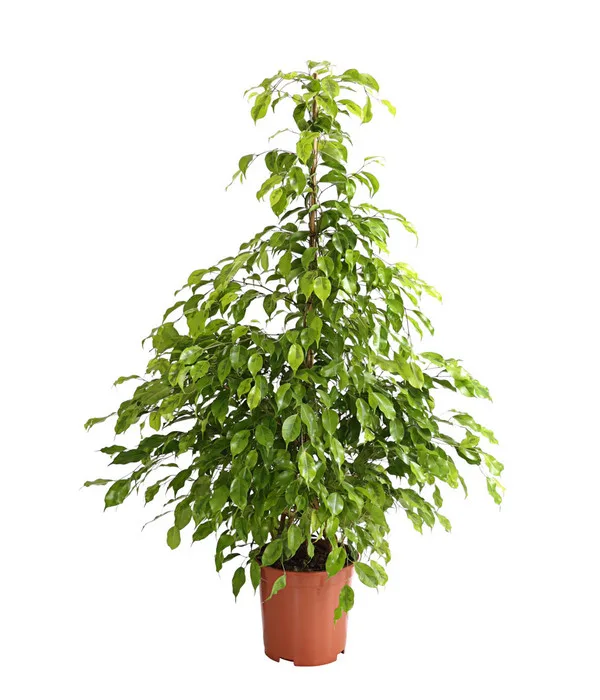
An evergreen, weeping fig tree to 4m tall (but usually less), with yellow-green leaves that have irregular dark green markings around the midrib. The brightest colour is on young foliage when positioned in good light
Scientific classification
- Species
- weeping fig 'Reginald' (Ficus benjamina 'Reginald')
- Genus
- Ficus
- Family
- Moraceae
- Order
- Rosales
- Class
- Magnoliopsida
- Phylum
- Tracheophyta
- Skin allergen, harmful if eaten. Wear gloves and other protective equipment when handling]
- Toxicity
- Houseplants · Trees
- Plant type
- 1.5-2.5 metres
- Height
- 0.5-1 metres
- Spread
- Evergreen
- Foliage
- Bushy
- Habit
- Spring · Summer · Autumn · Winter
- Season of interest
- Full sun · Partial shade
- Sunlight
- Information to be completed
- Ideal temperature









weeping fig 'Reginald' pictures
Distribution of weeping fig 'Reginald'
Distribution map
- Native
- Introduced
- Cultivated
Source:WCVP v16 · Royal Botanic Gardens, Kew · CC BY 3.0 · Boundaries:WGSRPD / TDWG
Toxicity
Skin allergen, harmful if eaten. Wear gloves and other protective equipment when handling]
weeping fig 'Reginald' care guide
- Water when pot surface dries, avoid saturating delicate root system
- Watering
- Full sun · Partial shade
- Sunlight

Watering
Water when pot surface dries, avoid saturating delicate root system
Fertilizing
 Fertilizing
Weak all-purpose foliage feed monthly spring and summer seasons
Pruning
 Pruning
No pruning required, but overly long shoots may be shortened in late winter
Propagation
 Propagation
Propagate by semi-ripe cuttings
Growing
 Growing
Grow in loam-based compost in bright, indirect light. Water moderately during the growing season and apply a high-nitrogen fertiliser monthly; water sparingly in winter. See ornamental fig cultivation
Common pests and diseases
Diseases
May be susceptible to honey fungus
Pests
May be susceptible to glasshouse red spider mite, thrips, mealybugs and scale insects under glass
Explore the plant health library →




