
mountain ash 'Wisley Gold'
Also known as: Information to be completed
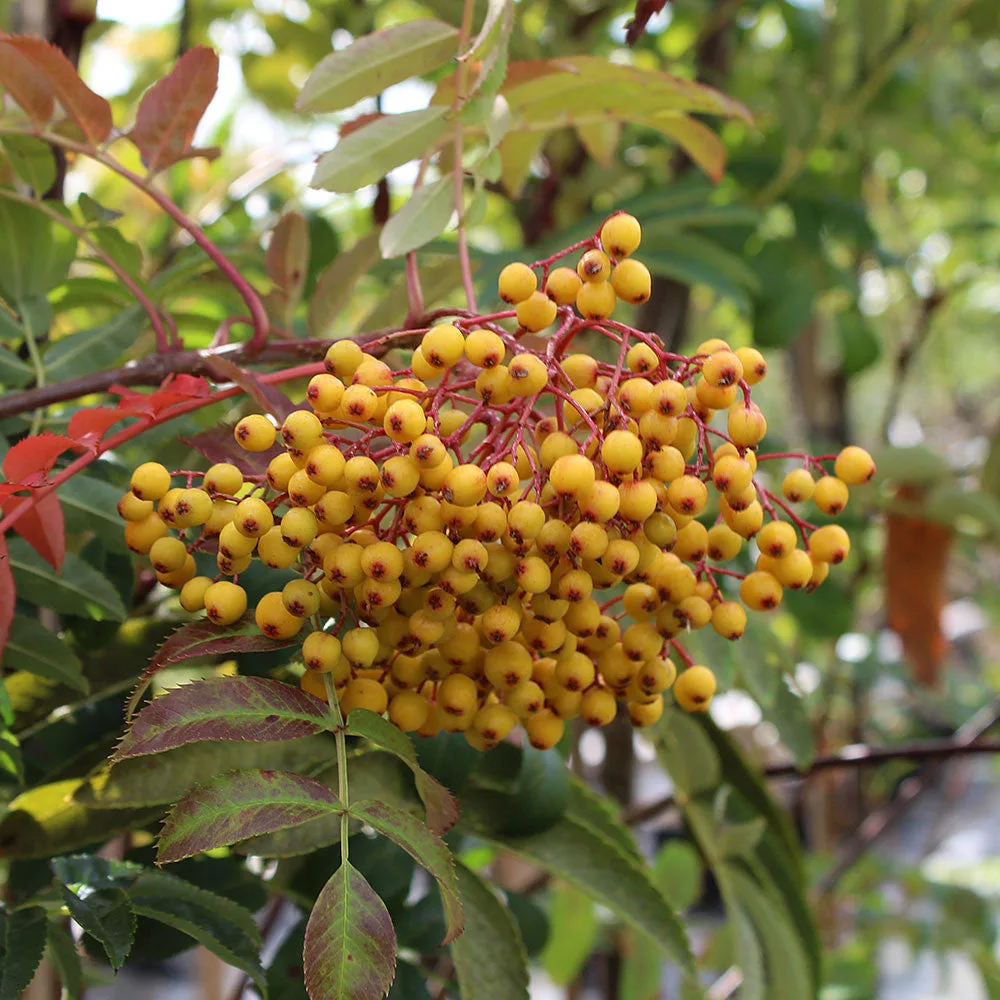
A small deciduous tree with pinnate leaves and sprays of small white flowers in spring, followed by clusters of long-lasting yellow berries
Scientific classification
- Species
- mountain ash 'Wisley Gold' (Sorbus 'Wisley Gold')
- Genus
- Sorbus
- Family
- Rosaceae
- Order
- Rosales
- Class
- Magnoliopsida
- Phylum
- Magnoliophyta
- Fruit are ornamental - not to be eaten. Wear gloves and other protective equipment when handling
- Toxicity
- Trees
- Plant type
- 4-8 metres
- Height
- 2.5-4 metres
- Spread
- Deciduous
- Foliage
- Bushy
- Habit
- Spring · Summer · Autumn
- Season of interest
- Full sun · Partial shade
- Sunlight
- Information to be completed
- Ideal temperature









mountain ash 'Wisley Gold' pictures
Toxicity
Fruit are ornamental - not to be eaten. Wear gloves and other protective equipment when handling
mountain ash 'Wisley Gold' care guide
- Deep watering during dry spells, allowing slight surface drying between soakings
- Watering
- Full sun · Partial shade
- Sunlight

Watering
Deep watering during dry spells, allowing slight surface drying between soakings
Fertilizing
 Fertilizing
Balanced shrub or tree feed once each early spring
Pruning
 Pruning
Little pruning is needed. Remove diseased, damaged, crowded or crossing shoots and unwanted growth. Timing depends on the plant: generally late winter or early spring; plants prone to bleeding and deciduous magnolias need different timing, and deciduous azaleas and lilacs are pruned after flowering.
Propagation
 Propagation
Propagate by softwood cuttings in early summer or chip budding in summer or grafting in winter
Growing
 Growing
Grow in moderately fertile, humus-rich soil. Tolerant of atmospheric pollution; ideal specimen tree in small garden
Common pests and diseases
Diseases
May be susceptible to fireblight, apple canker, silver leaf and honey fungus
Pests
May be susceptible to aphids, blister mites, scale insects, glasshouse red spider mite and sawflies
Explore the plant health library →




