
Maesa montana
Also known as: Information to be completed
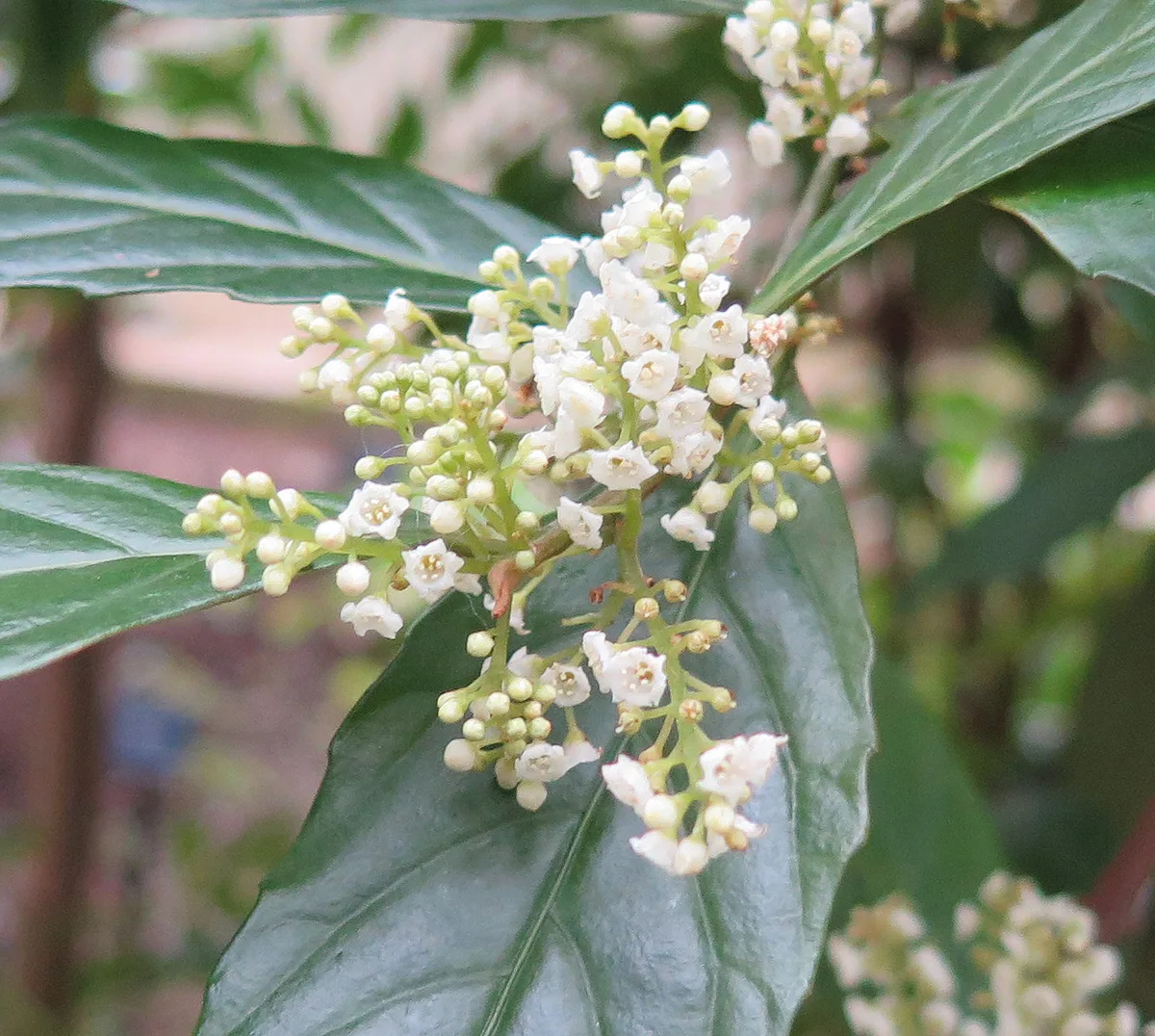
A half-hardy evergreen shrub or multi-stemmed tree to around 3m high, with elliptic, toothed, glossy dark green leaves. Young shoots are coated with fine white hairs. Long, loose spikes of small white flowers are produced in the leaf axils in spring, followed by small white berries with orange spots
Scientific classification
- Species
- Maesa montana (Maesa montana)
- Genus
- Maesa
- Family
- Primulaceae
- Order
- Ericales
- Class
- Magnoliopsida
- Phylum
- Magnoliophyta
- Information to be completed
- Toxicity
- Shrubs · Trees
- Plant type
- 2.5-4 metres
- Height
- 1.5-2.5 metres
- Spread
- Evergreen
- Foliage
- Columnar upright
- Habit
- Spring · Summer · Autumn · Winter
- Season of interest
- Full sun · Partial shade
- Sunlight
- Information to be completed
- Ideal temperature









Maesa montana pictures
Distribution of Maesa montana
Distribution map
- Native
- Introduced
- Cultivated
Source:WCVP v16 · Royal Botanic Gardens, Kew · CC BY 3.0 · Boundaries:WGSRPD / TDWG
Maesa montana care guide
- Deep moderate irrigation, allow mild soil dryness before rewatering fully
- Watering
- Full sun · Partial shade
- Sunlight

Watering
Deep moderate irrigation, allow mild soil dryness before rewatering fully
Fertilizing
 Fertilizing
General balanced tree feed applied once each early spring growing year
Pruning
 Pruning
Little pruning is needed. Remove diseased, damaged, crowded or crossing shoots and unwanted growth. Timing depends on the plant: generally late winter or early spring; plants prone to bleeding and deciduous magnolias need different timing, and deciduous azaleas and lilacs are pruned after flowering.
Propagation
 Propagation
Propagate by seed, sown at 18-24°C as soon as ripe
Growing
 Growing
May be grown outdoors in frost-free areas, in moist but well drained soil in a sheltered, sunny spot. In colder areas, grow in a warm or temperate greenhouse, or in containers that can be overwintered indoors, in loam-based compost with added grit. Position in full light with shade from hot sun, water moderately in growth and sparingly in winter
Common pests and diseases
Diseases
Generally disease-free
Pests
Generally pest-free
Explore the plant health library →




