
Cape sundew 'Albino'
Also known as: Information to be completed
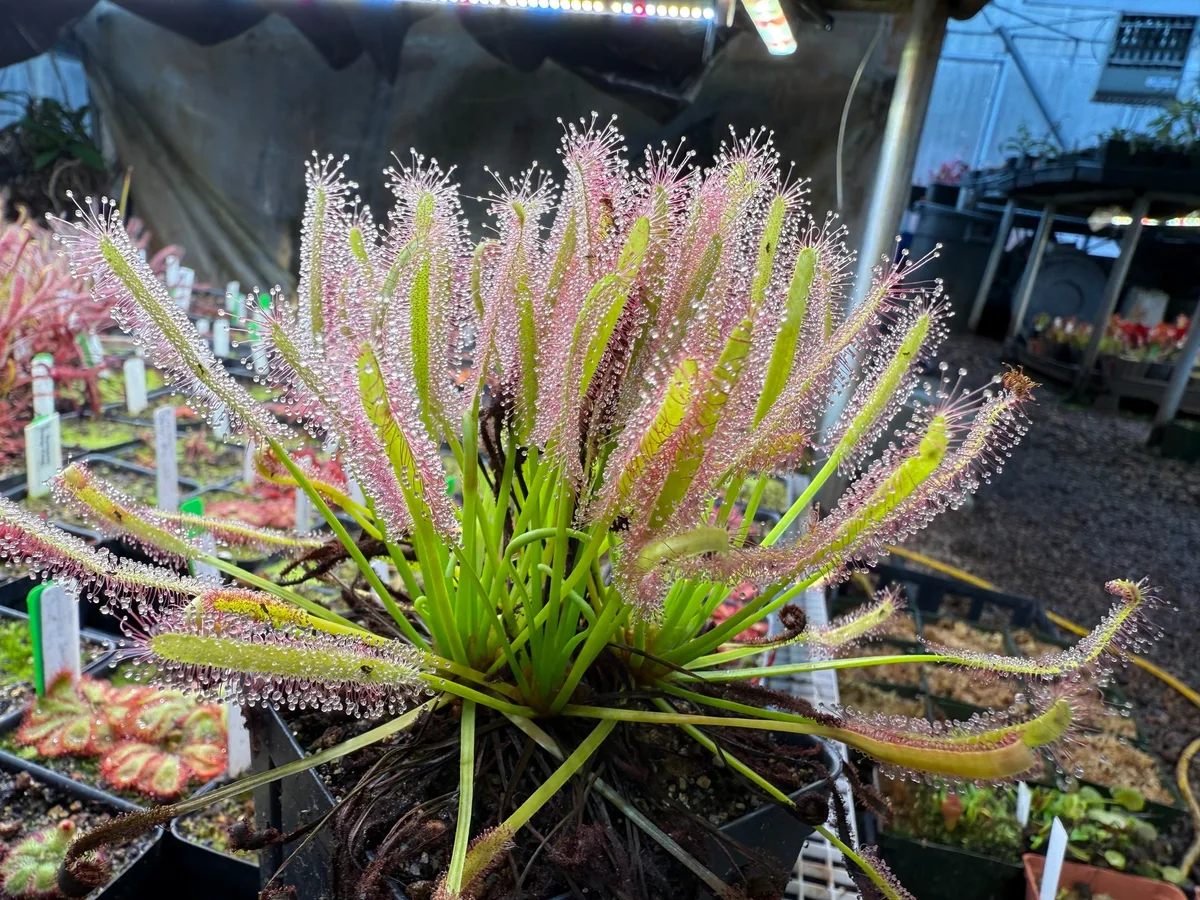
An insectivorous perennial forming a rosette of slender leaves to 6cm long, covered in glandular green or red hairs which trap and digest insects. White flowers to 2cm across are borne on stalks to 30cm tall from spring to autumn, and sometimes winter
Scientific classification
- Species
- Cape sundew 'Albino' (Drosera capensis 'Albino')
- Genus
- Drosera
- Family
- Droseraceae
- Order
- Caryophyllales
- Class
- Magnoliopsida
- Phylum
- Magnoliophyta
- Information to be completed
- Toxicity
- Information to be completed
- Plant type
- 0.1-0.5 metres
- Height
- 0.1-0.5 metres
- Spread
- Evergreen
- Foliage
- Matforming
- Habit
- Spring · Summer · Autumn · Winter
- Season of interest
- Full sun
- Sunlight
- Information to be completed
- Ideal temperature









Cape sundew 'Albino' pictures
Distribution of Cape sundew 'Albino'
Distribution map
- Native
- Introduced
- Cultivated
Source:WCVP v16 · Royal Botanic Gardens, Kew · CC BY 3.0 · Boundaries:WGSRPD / TDWG
Cape sundew 'Albino' care guide
- Moderate regular watering, avoid prolonged drought or waterlogging
- Watering
- Full sun
- Sunlight

Watering
Moderate regular watering, avoid prolonged drought or waterlogging
Fertilizing
 Fertilizing
Balanced feed in spring and light repeat in growth season
Pruning
 Pruning
No pruning required
Propagation
 Propagation
Propagate by seed sown at 10-13°C as soon as ripe. Take cuttings from young, fully-developed leaves, or take root cuttings when dormant
Growing
 Growing
Grow in spent, peat-free ericaceous or specialist carnivorous plant compost in a sunny position, either under glass or in a bog garden. If pot grown, stand the containers in trays of rain water to keep the growing medium wet. Water only with soft (ideally rain) water; fertilising is unnecessary. See carnivorous plant cultivation for further information
Common pests and diseases
Diseases
Generally disease-free
Pests
Generally pest-free
Explore the plant health library →




