
camellia 'Winter's Snowman'
Also known as: Information to be completed
A large, evergreen shrub with small, glossy, dark green leaves; the young leaves are bronze-red. Fragrant, white semi-double flowers appear from late autumn to early winter
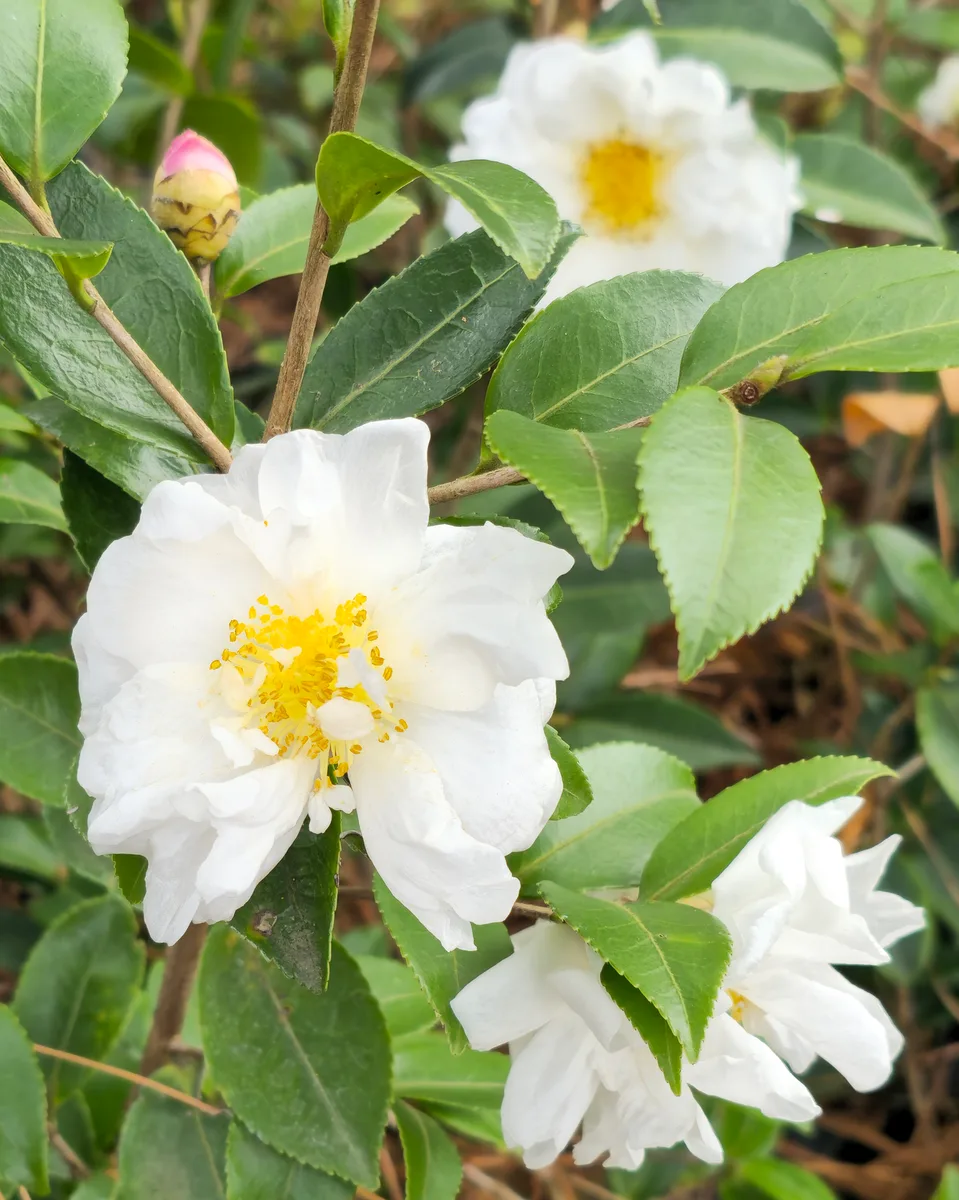
Scientific classification
- Species
- camellia 'Winter's Snowman' (Camellia sasanqua 'Winter's Snowman')
- Genus
- Camellia
- Family
- Theaceae
- Order
- Ericales
- Class
- Magnoliopsida
- Phylum
- Magnoliophyta
- Information to be completed
- Toxicity
- Shrubs
- Plant type
- 1.5-2.5 metres
- Height
- 1.5-2.5 metres
- Spread
- Evergreen
- Foliage
- Bushy
- Habit
- Spring · Summer · Autumn · Winter
- Season of interest
- Full shade · Full sun · Partial shade
- Sunlight
- Information to be completed
- Ideal temperature









camellia 'Winter's Snowman' pictures
camellia 'Winter's Snowman' care guide
- Consistently damp acidic soil, drain excess irrigation water quickly
- Watering
- Full shade · Full sun · Partial shade
- Sunlight

Watering
Consistently damp acidic soil, drain excess irrigation water quickly
Fertilizing
 Fertilizing
Weak camellia acid feed biweekly before winter flowering season
Pruning
 Pruning
Usually little pruning is needed. Lightly shape if necessary, removing dead, damaged or diseased shoots. Prune after flowering.
Propagation
 Propagation
Propagate by leaf bud or semi-hardwood cuttings; propagate by grafting in late winter
Growing
 Growing
Suitable for woodland and acidic soils. Position in a site sheltered from cold, dry winds and early morning sun as buds and flowers may be damaged by cold winds and late frosts see camellia cultivation
Common pests and diseases
Diseases
May be susceptible to honey fungus, phytophthora root rot, camellia gall, camellia leaf blight, camellia yellow mottle virus and flowers may be infected by camellia petal blightMay be susceptible to honey fungus, phytophthora root rot, camellia gall, camellia leaf blight and camellia yellow mottle virus
Pests
May be susceptible to camellia gall, aphids, cushion scale and vine weevil
Explore the plant health library →




