
Iris 'Frans Hals'
Also known as: Information to be completed
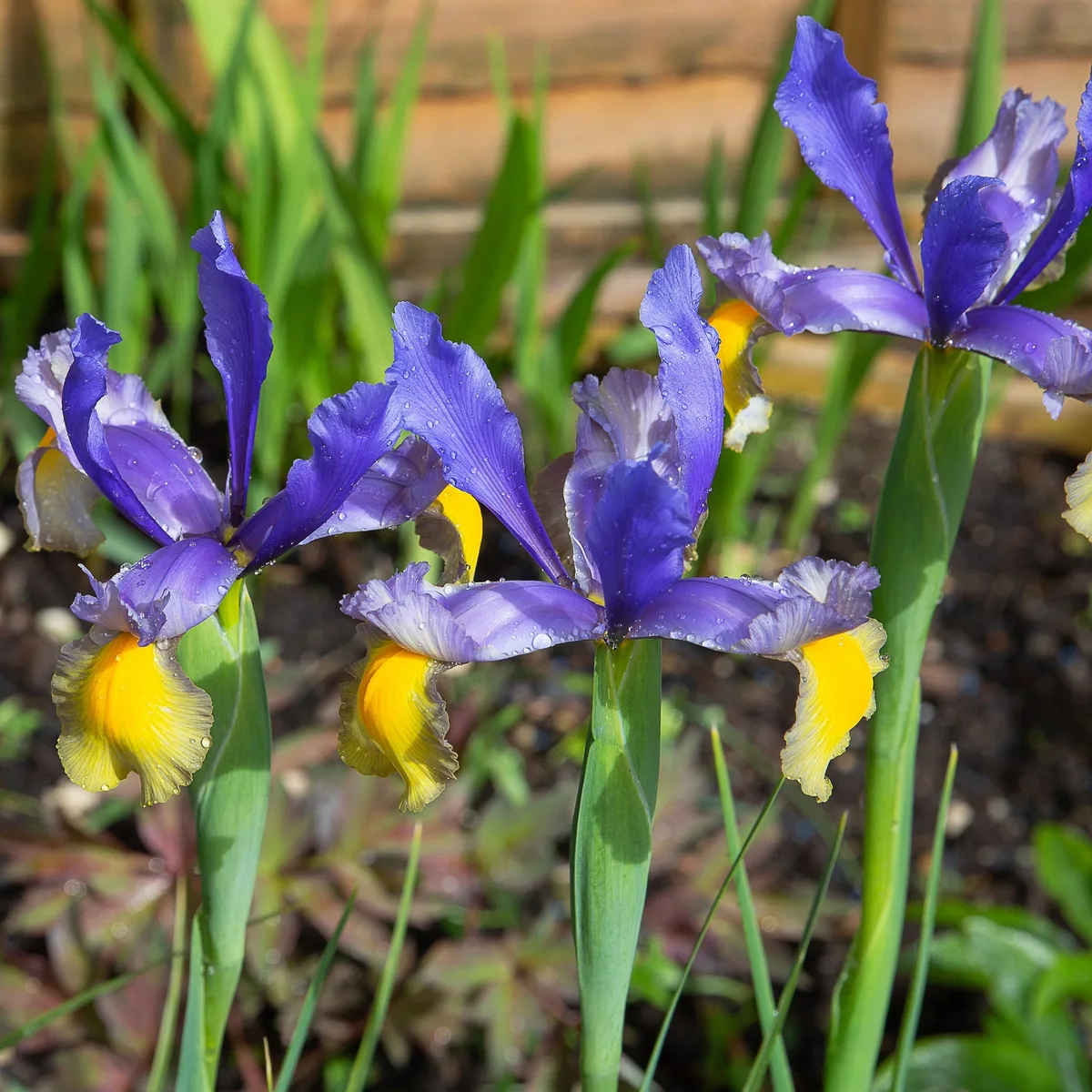
A bulbous perennial, growing to 60cm tall, with upright, strap-like, green leaves and tall, sturdy stems bearing striking flowers with deep violet-purple standards and golden-yellow falls. Perfect for cut flowers and container growing
Scientific classification
- Species
- Iris 'Frans Hals' (Iris 'Frans Hals')
- Genus
- Iris
- Family
- Iridaceae
- Harmful if eaten. Wear gloves and other protective equipment when handling
- Toxicity
- Herbaceous Perennial · Bulbs
- Plant type
- 0.5-1 metres
- Height
- 0.1-0.5 metres
- Spread
- Deciduous
- Foliage
- Columnar upright
- Habit
- Spring · Summer · Autumn
- Season of interest
- Full sun
- Sunlight
- Information to be completed
- Ideal temperature









Iris 'Frans Hals' pictures
Distribution of Iris 'Frans Hals'
Distribution map
Information to be completed
Information to be completed
Culture
Information to be completed
Toxicity
Harmful if eaten. Wear gloves and other protective equipment when handling
Quick identification of Iris 'Frans Hals'
Information to be completed
Iris 'Frans Hals' care guide
- Water thoroughly when top substrate partially dries out each irrigation
- Watering
- Full sun
- Sunlight
- Information to be completed
- Ideal temperature

Watering
Water thoroughly when top substrate partially dries out each irrigation
Fertilizing
 Fertilizing
Diluted iris flowering feed every three weeks spring growing months
Pruning
 Pruning
Cut back old flower stems after flowering and remove dying foliage in autumn
Propagation
 Propagation
Propagate by division, separating bulb offsets from midsummer to early autumn
Growing
 Growing
Grow in any moderately fertile, neutral to alkaline, well drained soil in full sun. Plant bulbs at twice their height in late summer or early autumn and feed with a high potash fertiliser after flowering. See bulb iris cultivation for more information
People also ask
Information to be completed
Common pests and diseases
Diseases
May be susceptible to leaf spots, ink disease, rust diseases, bulb rot and viruses; see Iris diseases for more details
Pests
May be susceptible to slugs and snails
Explore the plant health library →




