
sea spurge
Also known as: Information to be completed
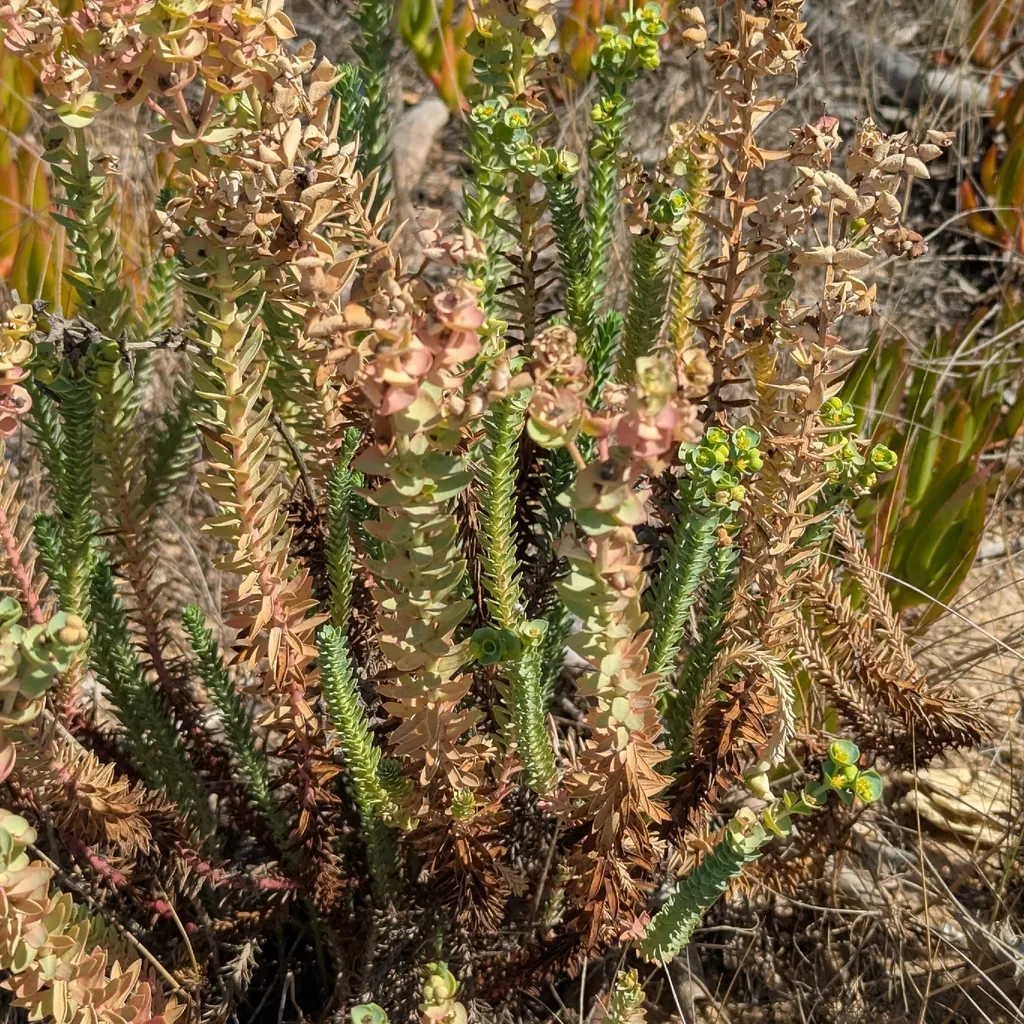
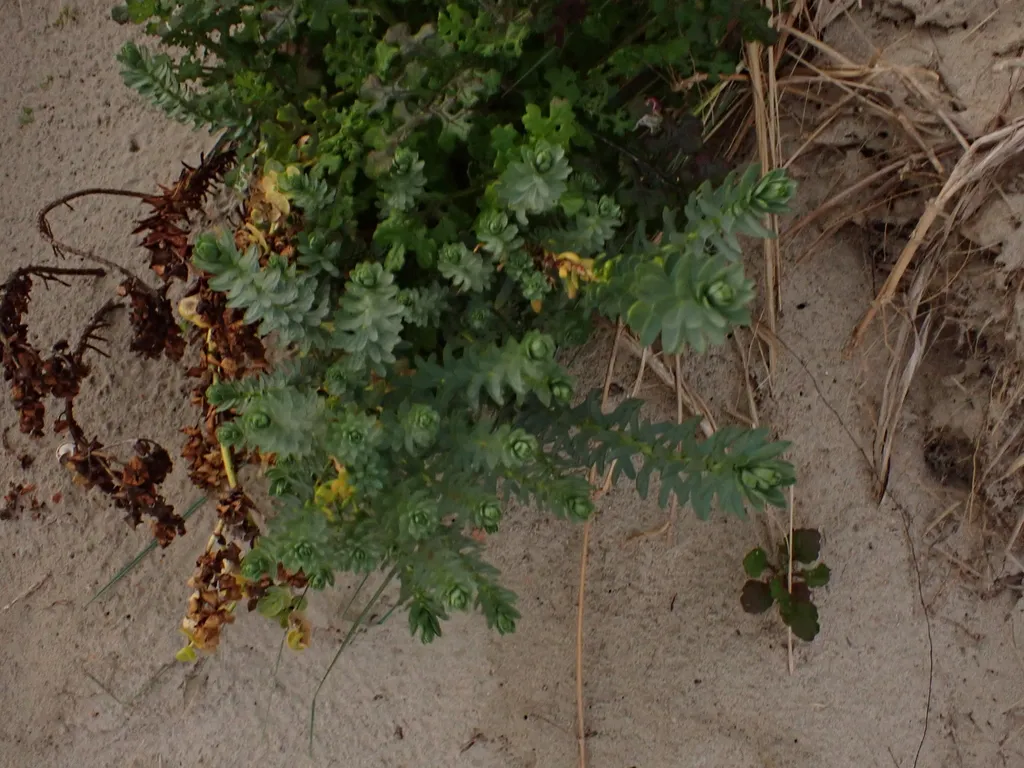
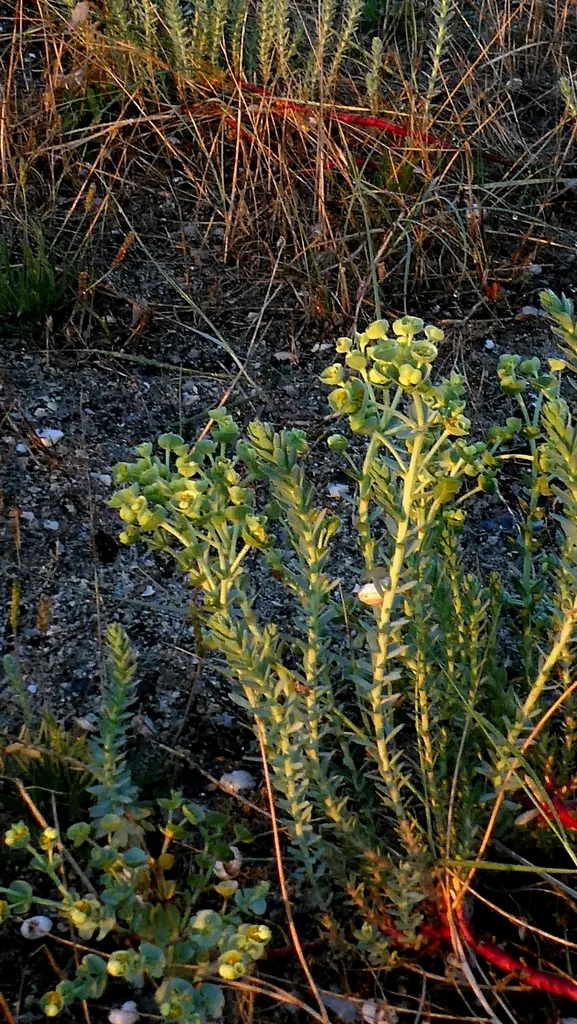
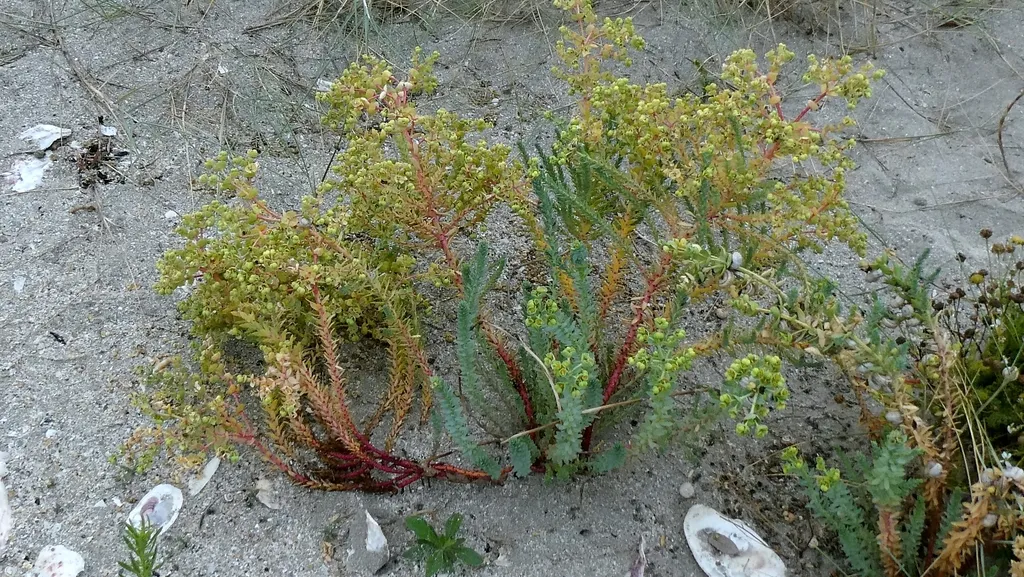
A succulent sub-shrub to 70cm with upright stems clothed in small, bluish green leaves with terminal clusters of green flowers. It is a British native, found exclusively on sand dunes
Scientific classification
- Species
- sea spurge (Euphorbia paralias)
- Genus
- Euphorbia
- Family
- Euphorbiaceae
- Order
- Malpighiales
- Class
- Magnoliopsida
- Phylum
- Magnoliophyta
- IRRITANT to skin/eye, harmful if eaten. Wear gloves and other protective equipment when handling]
- Toxicity
- Herbaceous Perennial
- Plant type
- 0.5-1 metres
- Height
- 0.1-0.5 metres
- Spread
- Deciduous
- Foliage
- Clump forming
- Habit
- Spring · Summer · Autumn
- Season of interest
- Full sun
- Sunlight
- Information to be completed
- Ideal temperature









sea spurge pictures
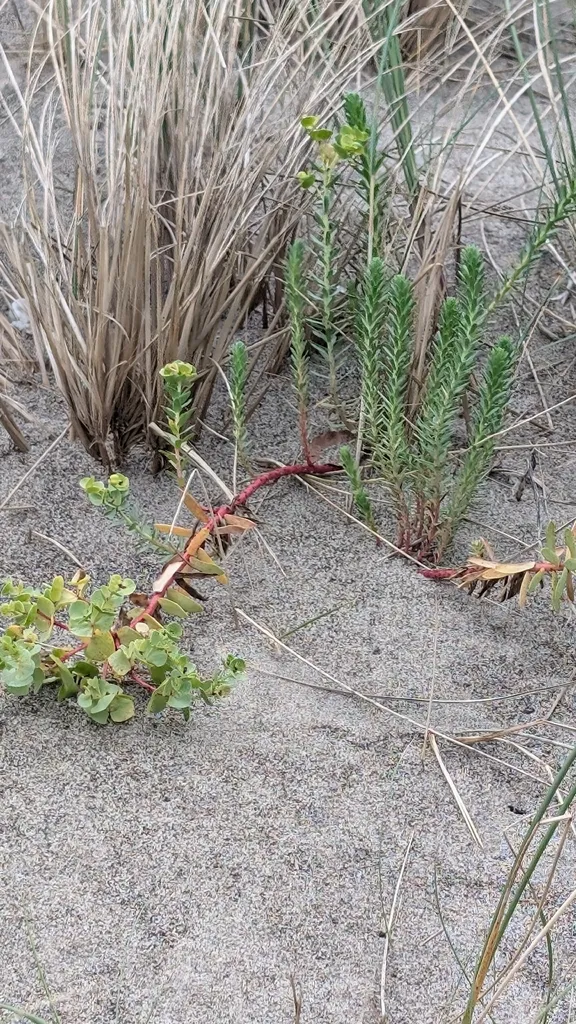
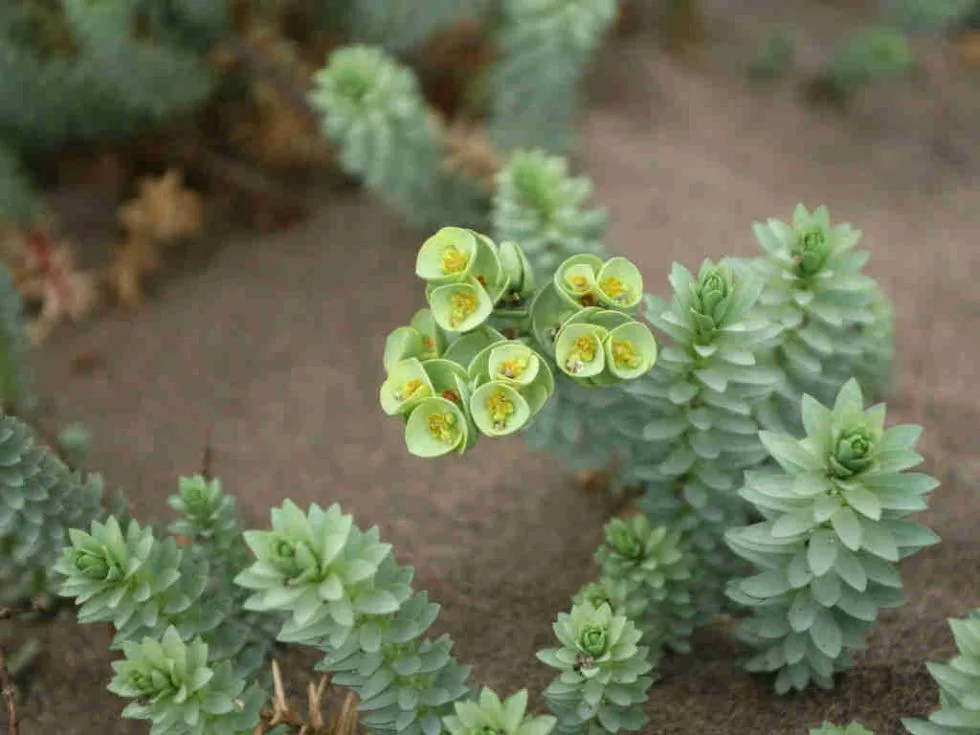
Distribution of sea spurge
Distribution map
- Native
- Introduced
- Cultivated
Locally extinct or doubtful records are excluded from native and introduced layers.
Source:WCVP v16 · Royal Botanic Gardens, Kew · CC BY 3.0 · Boundaries:WGSRPD / TDWG
Toxicity
IRRITANT to skin/eye, harmful if eaten. Wear gloves and other protective equipment when handling]
sea spurge care guide
- Moderate regular watering, avoid prolonged drought or waterlogging
- Watering
- Full sun
- Sunlight

Watering
Moderate regular watering, avoid prolonged drought or waterlogging
Fertilizing
 Fertilizing
Balanced feed in spring and light repeat in growth season
Pruning
 Pruning
No pruning required
Propagation
 Propagation
Propagate by seed
Growing
 Growing
Requires very well drained soil in a sunny, open position. See Euphorbia for further advice
Common pests and diseases
Diseases
Generally disease-free
Pests
Generally pest-free
Explore the plant health library →




