
Anemonella thalictroides f. rosea
Also known as: Information to be completed
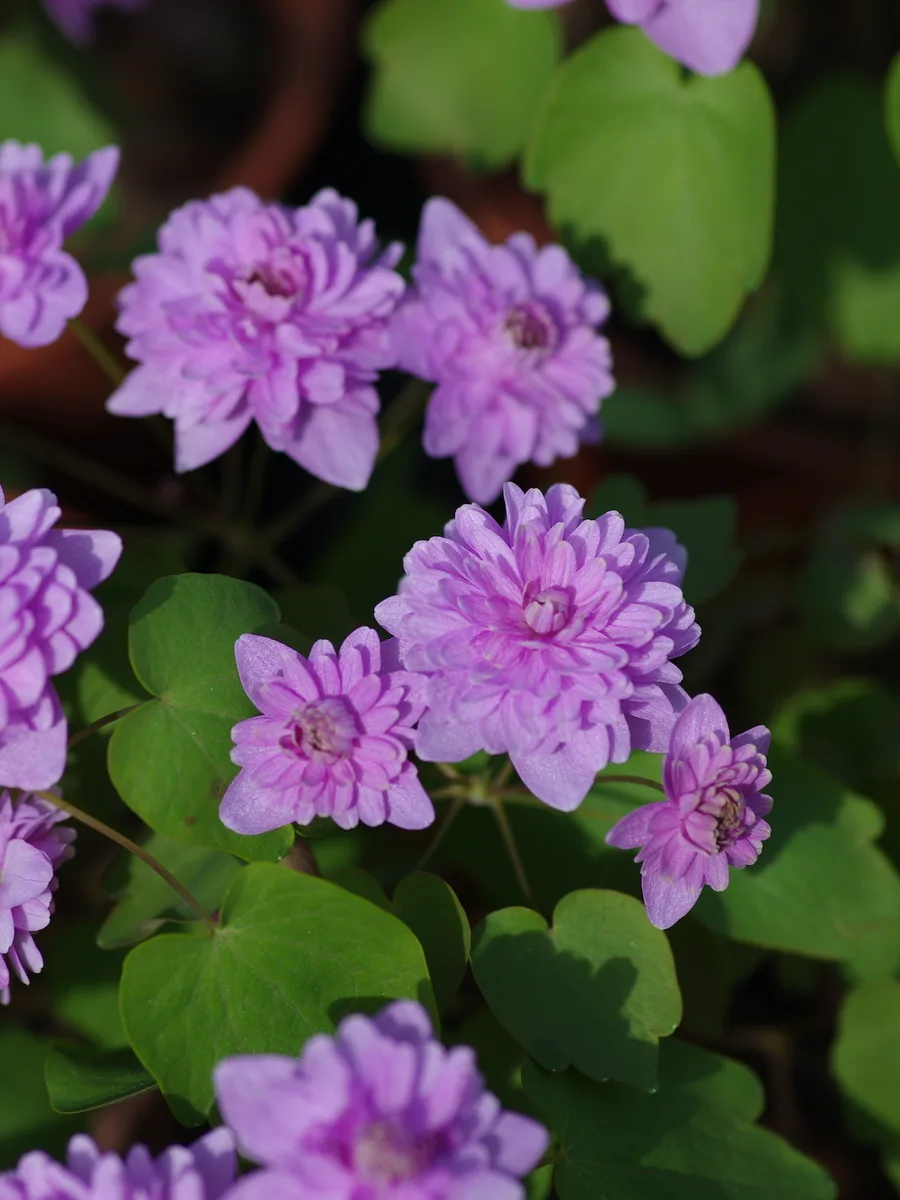
A small clump-forming perennial with attractive, delicate, mid-green foliage. The single, pale pink, anemone-like flowers appear in early March and can last until early summer.
Scientific classification
- Species
- Anemonella thalictroides f. rosea (Anemonella thalictroides f. rosea)
- Genus
- Anemonella
- Family
- Ranunculaceae
- Order
- Ranunculales
- Class
- Magnoliopsida
- Phylum
- Magnoliophyta
- Information to be completed
- Toxicity
- Herbaceous Perennial
- Plant type
- 0.1-0.5 metres
- Height
- 0.1-0.5 metres
- Spread
- Deciduous
- Foliage
- Bushy
- Habit
- Spring · Summer
- Season of interest
- Partial shade
- Sunlight
- Information to be completed
- Ideal temperature









Anemonella thalictroides f. rosea pictures
Distribution of Anemonella thalictroides f. rosea
Distribution map
- Native
- Introduced
- Cultivated
Source:WCVP v16 · Royal Botanic Gardens, Kew · CC BY 3.0 · Boundaries:WGSRPD / TDWG
Anemonella thalictroides f. rosea care guide
- Moderate regular watering, allowing brief slight drying between soakings
- Watering
- Partial shade
- Sunlight

Watering
Moderate regular watering, allowing brief slight drying between soakings
Fertilizing
 Fertilizing
Balanced perennial feed every four weeks from spring through summer
Pruning
 Pruning
No pruning required
Propagation
 Propagation
Propagate by seed sown in containers in a cold frame as soon as ripe. Divide young plants in early spring
Growing
 Growing
Grow in moist, moderately fertile, humus-rich soil in part shade. Tubers may rot in very wet soils
Common pests and diseases
Diseases
Generally disease-free
Pests
May be susceptible to slugs
Explore the plant health library →




