
Canna 'Madeira'
Also known as: Information to be completed
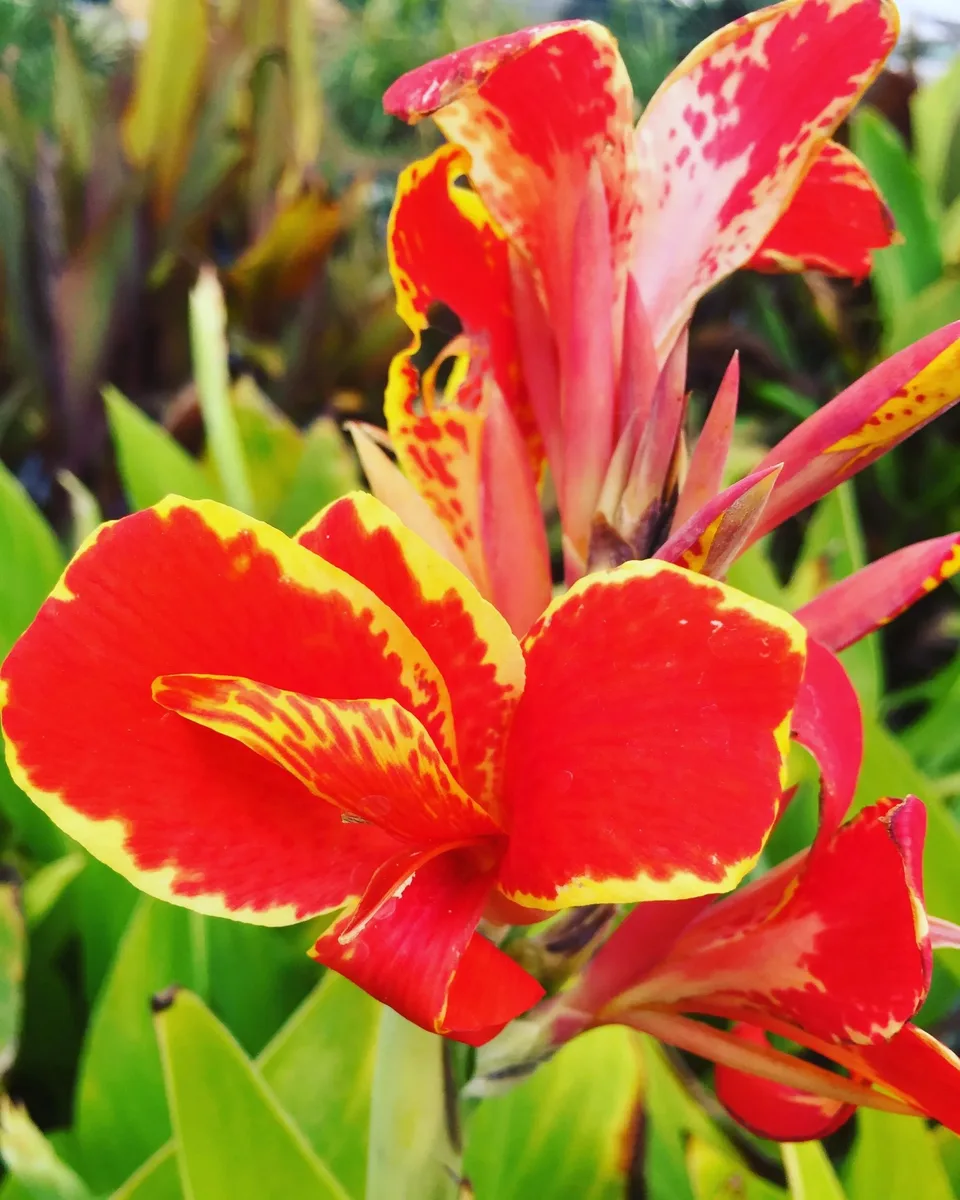
A free-flowering, clump-forming perennial to 1.5m tall, with large, mid-green leaves, bearing spikes of showy bright orange-red flowers with a yellow margin, appearing from midsummer to autumn. A good plant for a large container or tropical border
Scientific classification
- Species
- Canna 'Madeira' (Canna 'Madeira')
- Genus
- Canna
- Family
- Cannaceae
- Information to be completed
- Toxicity
- Herbaceous Perennial · Conservatory Greenhouse
- Plant type
- 1-1.5 metres
- Height
- 0.1-0.5 metres
- Spread
- Deciduous
- Foliage
- Clump forming
- Habit
- Spring · Summer · Autumn
- Season of interest
- Full sun
- Sunlight
- Information to be completed
- Ideal temperature









Canna 'Madeira' pictures
Distribution of Canna 'Madeira'
Distribution map
Information to be completed
Information to be completed
Culture
Information to be completed
Toxicity
Information to be completed
Quick identification of Canna 'Madeira'
Information to be completed
Canna 'Madeira' care guide
- Steady damp soil layer, drain all surplus water after irrigation
- Watering
- Full sun
- Sunlight
- Information to be completed
- Ideal temperature

Watering
Steady damp soil layer, drain all surplus water after irrigation
Fertilizing
 Fertilizing
Tropical canna liquid bloom feed biweekly warm growing months
Pruning
 Pruning
No pruning required, deadhead flowers to prolong flowering
Propagation
 Propagation
Propagate by division in spring
Growing
 Growing
Grow in a border or container in a sheltered site with full sun. Water freely in dry spells and apply a balanced liquid feed monthly. In cold regions, lift the rhizomes in autumn once frost has blackened the foliage and store in barely moist compost in frost-free conditions. In areas that are frost-free or almost so, leave in situ and protect with a deep dry mulch. See canna cultivation for further information
People also ask
Information to be completed
Common pests and diseases
Diseases
May be susceptible to canna viruses
Pests
May be susceptible to slugs and snails, aphids, glasshouse red spider mites and caterpillars
Explore the plant health library →




