
Rhododendron luteum 'Golden Comet'
Also known as: Information to be completed
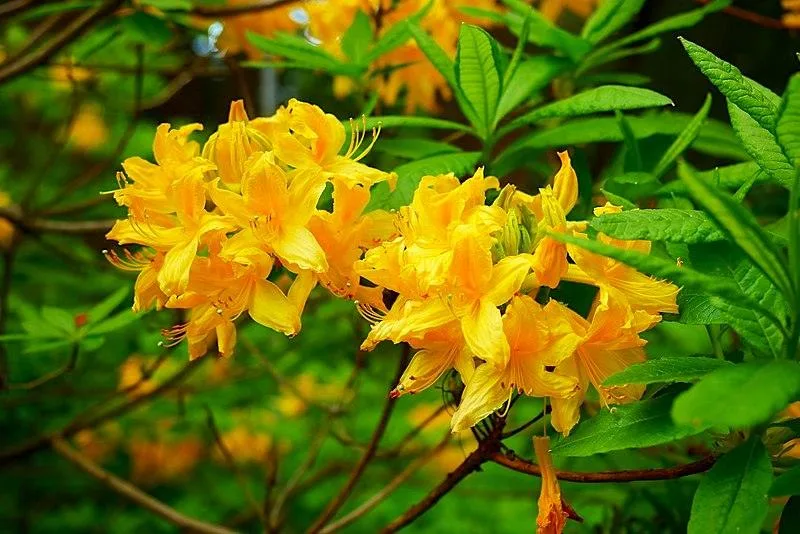
A deciduous azalea to about 1.8m high, with an upright to spreading habit. Leaves are narrowly elliptic, mid green and covered with tiny white hairs, and turn brilliant red in autumn. Produces clusters of up to 30 fragrant, tubular to funnel-shaped, vivid yellow flowers from green buds, from early to late spring
Scientific classification
- Species
- Rhododendron luteum 'Golden Comet' (Rhododendron luteum 'Golden Comet')
- Genus
- Rhododendron
- Family
- Ericaceae
- Order
- Ericales
- Class
- Magnoliopsida
- Phylum
- Magnoliophyta
- Harmful if eaten. Wear gloves and other protective equipment when handling
- Toxicity
- Shrubs
- Plant type
- 1.5-2.5 metres
- Height
- 1-1.5 metres
- Spread
- Deciduous
- Foliage
- Columnar upright
- Habit
- Autumn · Spring · Summer
- Season of interest
- Full sun · Partial shade
- Sunlight
- Information to be completed
- Ideal temperature









Rhododendron luteum 'Golden Comet' pictures
Toxicity
Harmful if eaten. Wear gloves and other protective equipment when handling
Rhododendron luteum 'Golden Comet' care guide
- Even consistent dampness, use low-lime soft water for watering
- Watering
- Full sun · Partial shade
- Sunlight

Watering
Even consistent dampness, use low-lime soft water for watering
Fertilizing
 Fertilizing
Acidic rhododendron feed monthly spring until flowering ceases
Pruning
 Pruning
Little pruning is needed. Remove diseased, damaged, crowded or crossing shoots and unwanted growth. If needed, prune lightly after flowering.
Propagation
 Propagation
See cultivation notes
Growing
 Growing
This plant is listed on Schedule 9 of the UK Wildlife & Countryside Act as an invasive non-native species. Although not banned from sale, it is an offence to plant or cause these to grow in the wild IN ENGLAND AND WALES. Gardeners possessing them should undertake measures to control them. See RHS advice on invasive non-native species for further information
Common pests and diseases
Diseases
May be susceptible to powdery mildews, honey fungus, silver leaf and Phytophthora, as well as more specific Rhododendron diseases
Pests
May be susceptible to vine weevil, rhododendron and azalea whitefly, rhododendron leafhopper, Pieris lacebug, scale insects, caterpillars and aphids
Explore the plant health library →




