
Himalayan blue poppy 'Jimmy Bayne'
Also known as: Information to be completed
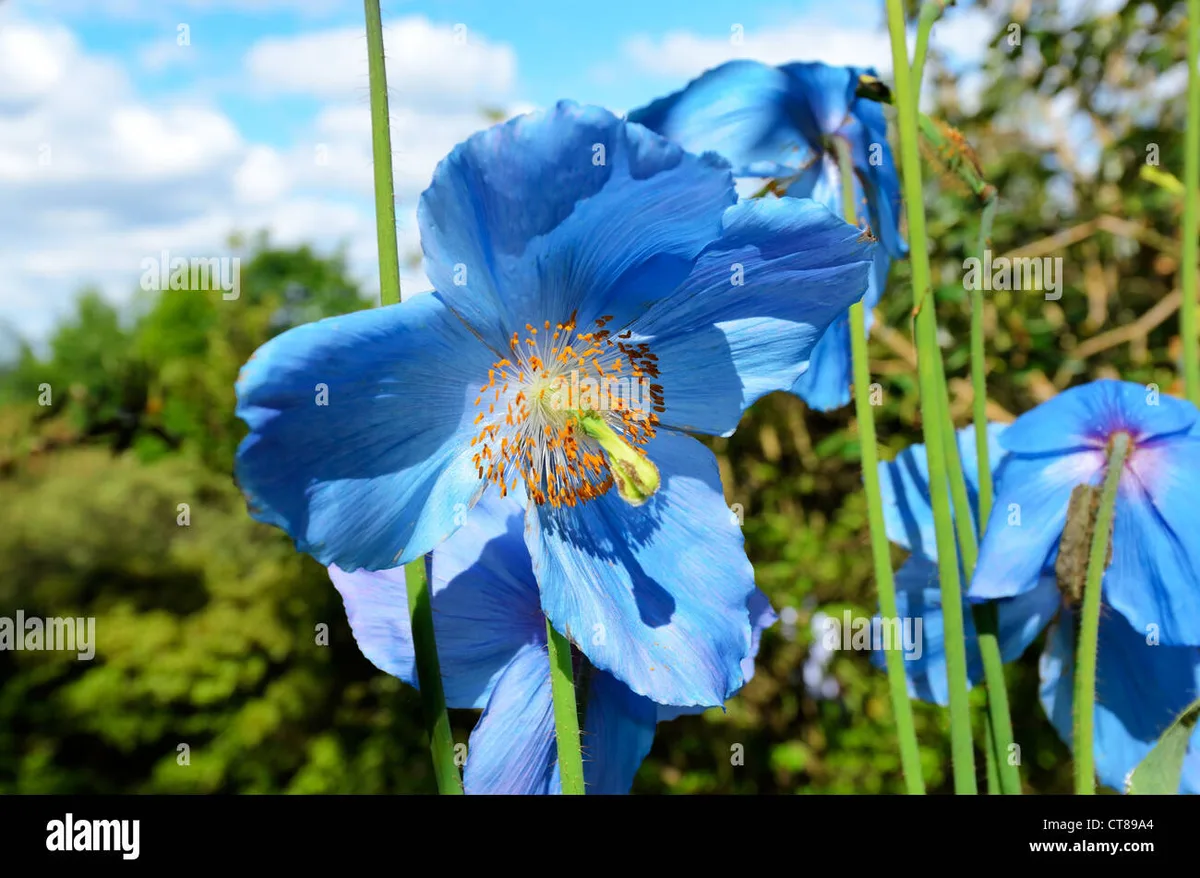
Jimmy Bayne' is a perennial to around 1m in height, with lance-shaped leaves to 30cm long. Early spring foliage is pale green, tinged pink with brown bristles. Startlingly blue flowers appear in early to midsummer. They are borne in clusters of four to five, facing downwards and outwards. Spreads by rhizomes and offsets
Scientific classification
- Species
- Himalayan blue poppy 'Jimmy Bayne' (Meconopsis 'Jimmy Bayne')
- Genus
- Meconopsis
- Family
- Papaveraceae
- Order
- Ranunculales
- Class
- Magnoliopsida
- Phylum
- Tracheophyta
- Information to be completed
- Toxicity
- Herbaceous Perennial
- Plant type
- 0.5-1 metres
- Height
- 0.1-0.5 metres
- Spread
- Deciduous
- Foliage
- Clump forming
- Habit
- Spring · Summer · Autumn
- Season of interest
- Partial shade
- Sunlight
- Information to be completed
- Ideal temperature









Himalayan blue poppy 'Jimmy Bayne' pictures
Himalayan blue poppy 'Jimmy Bayne' care guide
- Cool evenly moist soil, protect roots from hot dry sunlight exposure
- Watering
- Partial shade
- Sunlight

Watering
Cool evenly moist soil, protect roots from hot dry sunlight exposure
Fertilizing
 Fertilizing
Weak acidic flowering feed monthly through cool growing seasons
Pruning
 Pruning
Cut down to the base in late autumn
Propagation
 Propagation
Propagate by division of rhizomes or by potting up offsets
Growing
 Growing
Only suitable for particular sites: the soil needs to be neutral to slightly acid, moist but well-drained and enriched with leaf mould or humus to prevent stagnation, in a partially shaded site with shelter from cold, dry winds. Thrives in areas with cool damp summers
Common pests and diseases
Diseases
May be affected by a downy mildew
Pests
May be attacked by slugs and snails
Explore the plant health library →




