
Lonicera japonica 'Red World'
Also known as: Information to be completed
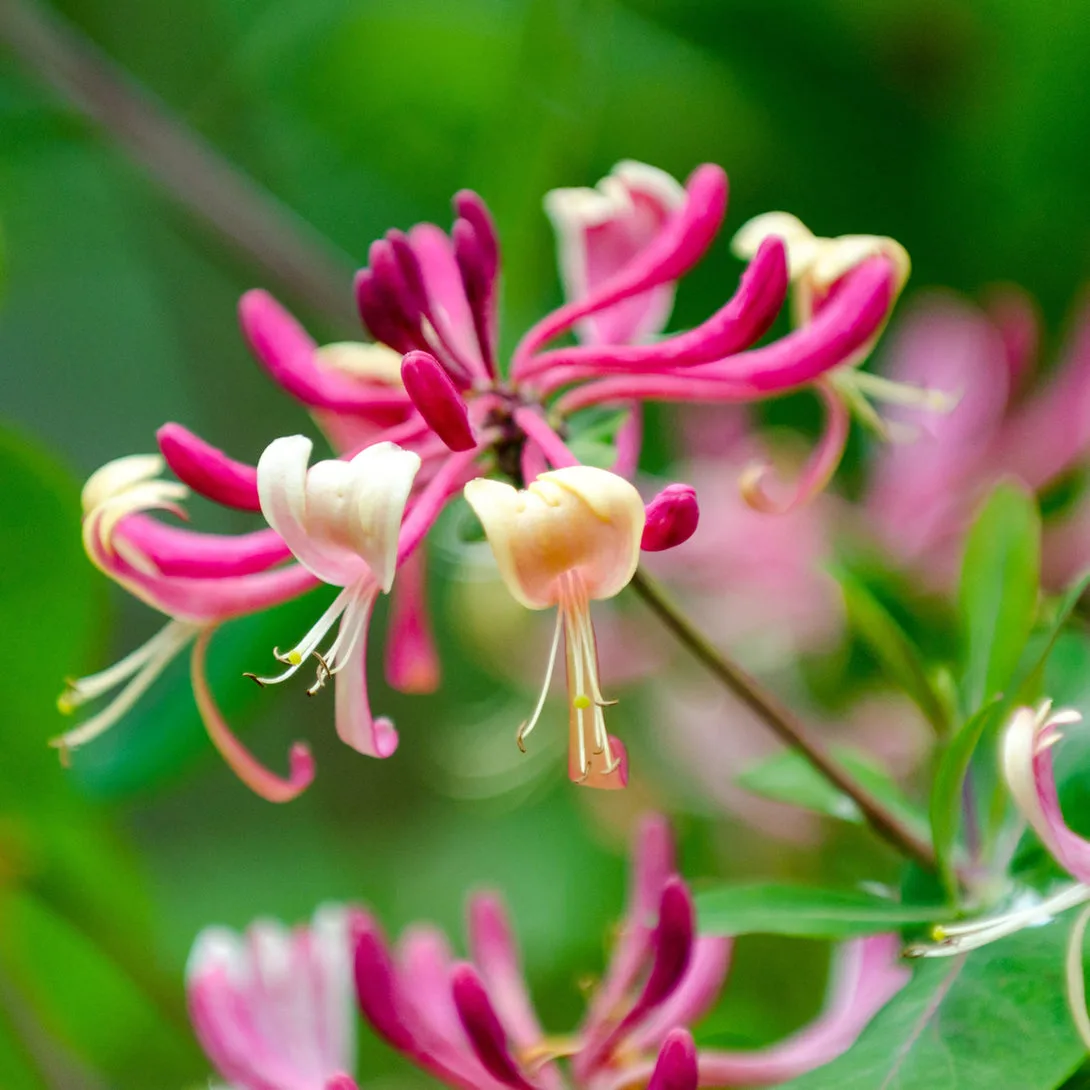
A vigorous, woody, semi-evergreen twining climber about 8-10m tall, with dark green leaves to 8cm long, flushed purple-bronze in winter. Tubular 2-lipped, very fragrant, rich pink flowers with a creamy-white throat are produced in pairs from deep red buds, over a long season from spring to late summer, followed by blue-black berries
Scientific classification
- Species
- Lonicera japonica 'Red World' (Lonicera japonica 'Red World')
- Genus
- Lonicera
- Family
- Caprifoliaceae
- Order
- Dipsacales
- Class
- Magnoliopsida
- Phylum
- Magnoliophyta
- Fruit are ornamental - not to be eaten. Wear gloves and other protective equipment when handling
- Toxicity
- Climber Wall Shrub
- Plant type
- 8-12 metres
- Height
- 2.5-4 metres
- Spread
- Semi evergreen
- Foliage
- Climbing
- Habit
- Spring · Summer · Autumn · Winter
- Season of interest
- Full sun · Partial shade
- Sunlight
- Information to be completed
- Ideal temperature









Lonicera japonica 'Red World' pictures
Toxicity
Fruit are ornamental - not to be eaten. Wear gloves and other protective equipment when handling
Lonicera japonica 'Red World' care guide
- Moderate regular watering, deep soak only during prolonged hot spells
- Watering
- Full sun · Partial shade
- Sunlight

Watering
Moderate regular watering, deep soak only during prolonged hot spells
Fertilizing
 Fertilizing
Balanced evergreen shrub feed applied once per early spring yearly
Pruning
 Pruning
Routine pruning is unnecessary; shorten overlong shoots to fit the available space. Prune after flowering has finished.
Propagation
 Propagation
Propagate by layering, softwood cuttings, semi-ripe cuttings, leaf-bud cuttings and hardwood cuttings
Growing
 Growing
This plant is listed on Schedule 9 of the UK Wildlife & Countryside Act (Northern Ireland) as an invasive non-native species. Although not banned from sale, it is an offence to plant or cause these to grow in the wild IN NORTHERN IRELAND. Gardeners possessing them should undertake measures to control them. See RHS advice on invasive non-native species for further information\r\n\r\nClimbing honeysuckle grows best in partial shade but tolerates full sun, and thrives in any fertile, moist but well-drained soil. See honeysuckle (climbing) cultivation
Common pests and diseases
Diseases
May be susceptible to powdery mildews, fungal leaf spot, silver leaf and honey fungus (rarely)
Pests
May be susceptible to honeysuckle aphids, Thrips and glasshouse whitefly
Explore the plant health library →




