
Apium graveolens (Secalinum Group)
Also known as: Information to be completed
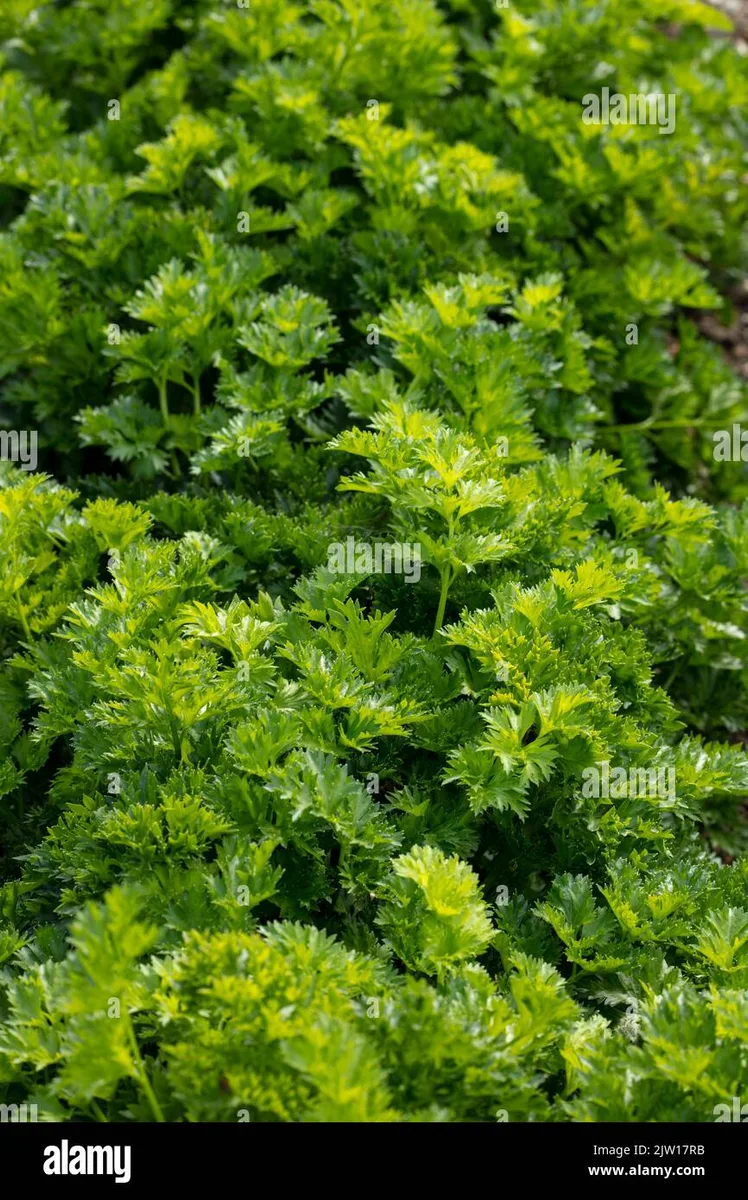
A hardy leaf celery grown for its edible aromatic leaves and slender stems often used in salads, as a garnish and for flavouring soups and stews. Divided mid- to dark green leaves with lobed or coarsely-toothed segments are borne on fine, hollow stems. Tiny creamy-white flowers are borne in small clusters on branching stems in summer
Scientific classification
- Species
- Apium graveolens (Secalinum Group) (Apium graveolens (Secalinum Group))
- Genus
- Apium
- Family
- Apiaceae
- Order
- Apiales
- Class
- Magnoliopsida
- Phylum
- Magnoliophyta
- Harmful to skin with sunlight. Wear gloves and other protective equipment when handling
- Toxicity
- Annual Biennial · Herbs - Culinary
- Plant type
- Information to be completed
- Height
- Information to be completed
- Spread
- Deciduous
- Foliage
- Columnar upright
- Habit
- Spring · Summer · Autumn
- Season of interest
- Full sun · Partial shade
- Sunlight
- Information to be completed
- Ideal temperature









Apium graveolens (Secalinum Group) pictures
Toxicity
Harmful to skin with sunlight. Wear gloves and other protective equipment when handling
Apium graveolens (Secalinum Group) care guide
- Moderate regular watering, allowing brief slight drying between soakings
- Watering
- Full sun · Partial shade
- Sunlight

Watering
Moderate regular watering, allowing brief slight drying between soakings
Fertilizing
 Fertilizing
Balanced perennial feed every four weeks from spring through summer
Pruning
 Pruning
No pruning required
Propagation
 Propagation
Propagate by seed. See sowing vegetable seeds
Growing
 Growing
Grow in fertile, moist but well drained soil in full sun or light shade. See celery cultivation for more advice
Common pests and diseases
Diseases
May be susceptible to celery leaf spot
Pests
May be susceptible to slugs and snails and and celery leaf miner
Explore the plant health library →




