
McCabe rhododendron
Also known as: Information to be completed
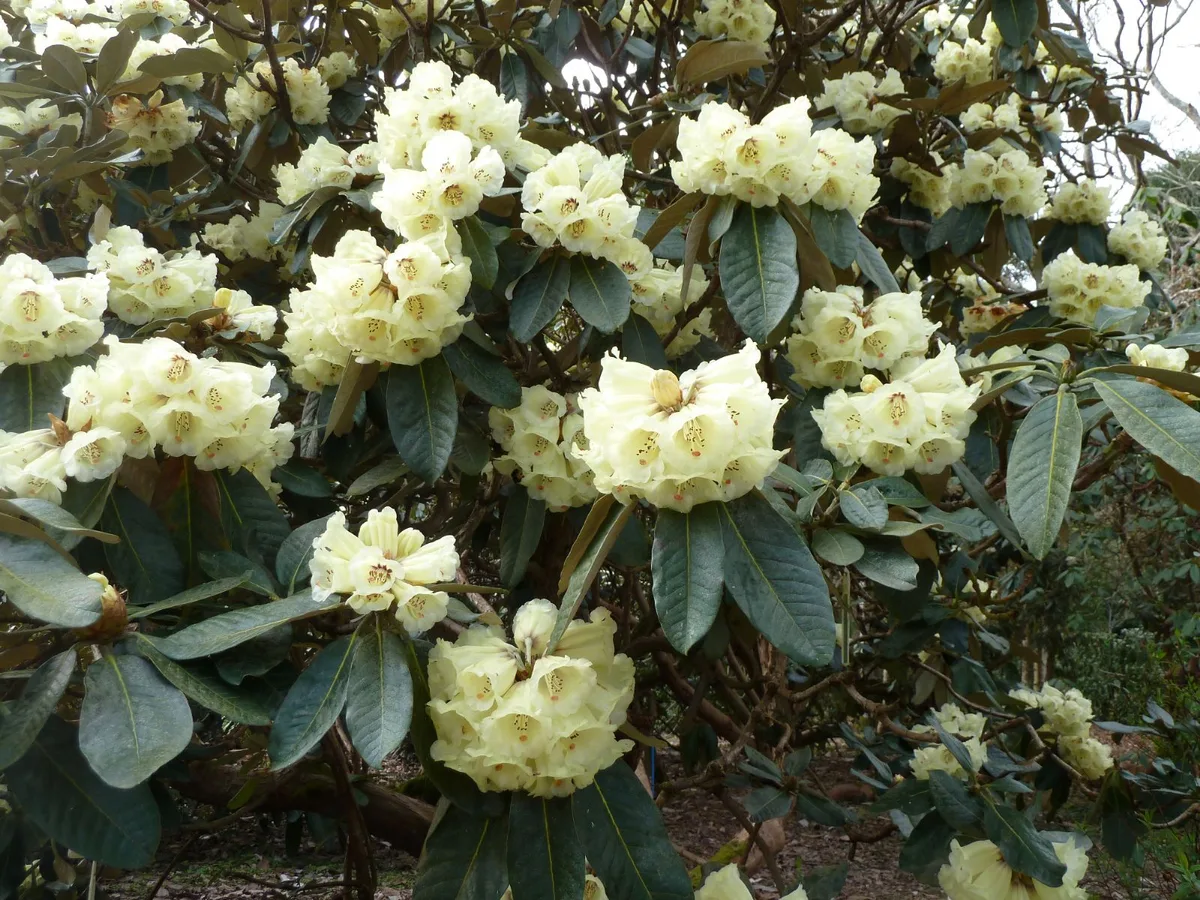
R. macabeanum is a very large evergreen shrub or tree with magnificent glossy dark green leaves that are up to 30cm in length and greyish-white beneath. Flowers bell-shaped, pale to deep yellow with a purple blotch, in large, dense rounded trusses, early to mid spring
Scientific classification
- Species
- McCabe rhododendron (Rhododendron macabeanum)
- Genus
- Rhododendron
- Family
- Ericaceae
- Order
- Ericales
- Class
- Magnoliopsida
- Phylum
- Magnoliophyta
- Harmful if eaten. Wear gloves and other protective equipment when handling
- Toxicity
- Shrubs
- Plant type
- 8-12 metres
- Height
- wider than 8 metres
- Spread
- Evergreen
- Foliage
- Bushy
- Habit
- Spring · Summer · Autumn · Winter
- Season of interest
- Partial shade
- Sunlight
- Information to be completed
- Ideal temperature









McCabe rhododendron pictures
Distribution of McCabe rhododendron
Distribution map
- Native
- Introduced
- Cultivated
Source:WCVP v16 · Royal Botanic Gardens, Kew · CC BY 3.0 · Boundaries:WGSRPD / TDWG
Toxicity
Harmful if eaten. Wear gloves and other protective equipment when handling
McCabe rhododendron care guide
- Keep acidic root zone moist and cool, never soggy
- Watering
- Partial shade
- Sunlight

Watering
Keep acidic root zone moist and cool, never soggy
Fertilizing
 Fertilizing
Ericaceous feed in spring and lightly after bloom
Pruning
 Pruning
Usually little pruning is needed. Lightly shape if necessary, removing dead, damaged or diseased shoots. Prune after flowering.
Propagation
 Propagation
Propagate by semi-ripe cuttings in late summer, layering in autumn or grafting in late summer or late winter
Growing
 Growing
Spectacular foliage plant, grow in moist but well-drained, leafy, humus-rich acid soil, in part shade with shelter, best in woodland conditions; see rhododendron cultivation
Common pests and diseases
Diseases
May be susceptible to various Rhododendron diseases including powdery mildews, rhododendron petal blight, rhododendron bud blast, silver leaf and honey fungus
Pests
May be susceptible to vine weevil, rhododendron and azalea whitefly, rhododendron leafhopper, pieris lacebug, scale insects, caterpillars and aphids
Explore the plant health library →




