
Papaver 'Shasta'
Also known as: Information to be completed
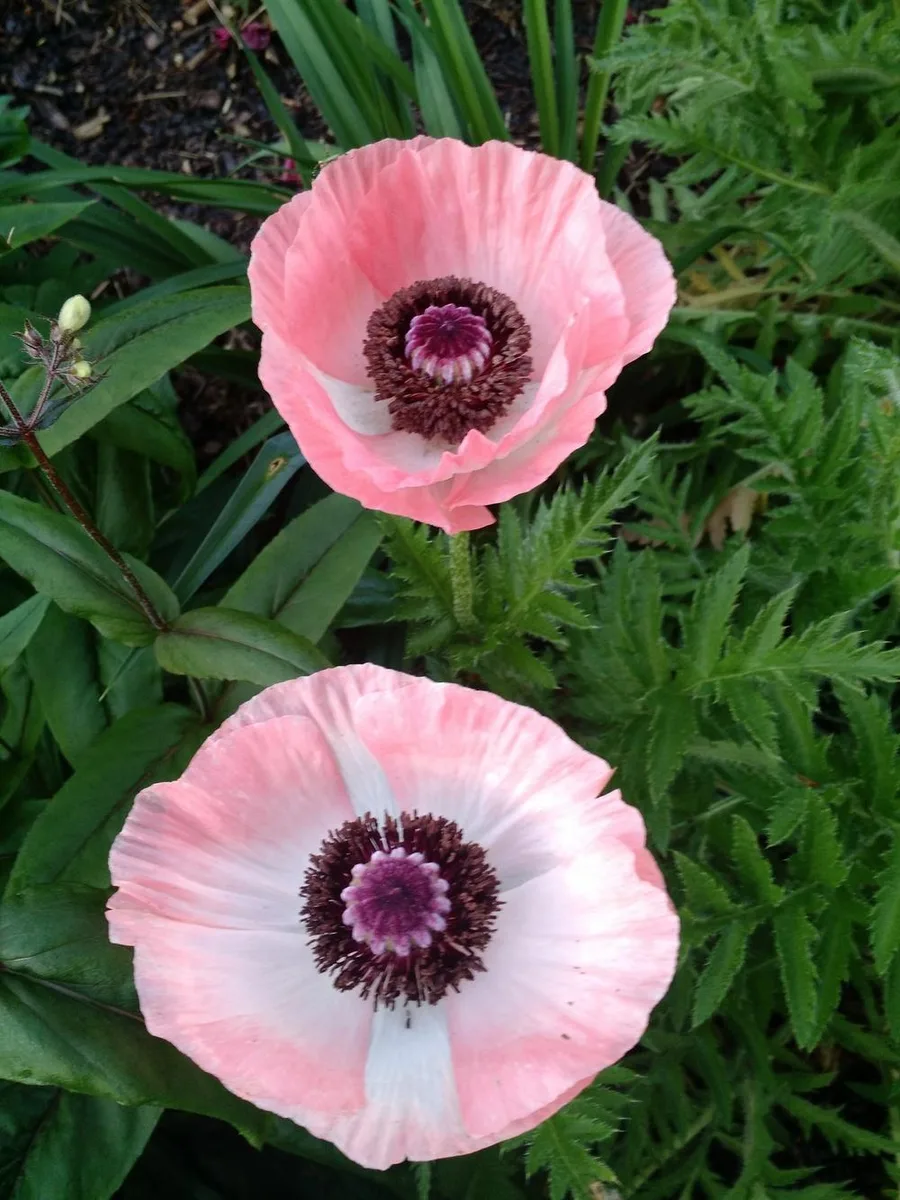
A perennial poppy, to 90cm high, with bristly stems and finely divided, hairy green leaves. In late spring to early summer, large, cup-shaped flowers are produced, with ruffled, near white petals flushed with pale rose at the base, and a striking dark purple centre
Scientific classification
- Species
- Papaver 'Shasta' (Papaver 'Shasta')
- Genus
- Papaver
- Family
- Papaveraceae
- Information to be completed
- Toxicity
- Herbaceous Perennial
- Plant type
- 0.5-1 metres
- Height
- 0.5-1 metres
- Spread
- Deciduous
- Foliage
- Bushy · Columnar upright
- Habit
- Spring · Summer
- Season of interest
- Full sun · Partial shade
- Sunlight
- Information to be completed
- Ideal temperature









Papaver 'Shasta' pictures
Distribution of Papaver 'Shasta'
Distribution map
Information to be completed
Information to be completed
Culture
Information to be completed
Toxicity
Information to be completed
Quick identification of Papaver 'Shasta'
Information to be completed
Papaver 'Shasta' care guide
- Consistently moist soil during leaf growth, cut water post-bloom period
- Watering
- Full sun · Partial shade
- Sunlight
- Information to be completed
- Ideal temperature

Watering
Consistently moist soil during leaf growth, cut water post-bloom period
Fertilizing
 Fertilizing
Weak flowering poppy feed biweekly before flower bud formation stage
Pruning
 Pruning
Cut spent flowering stems back to the ground, cut back foliage as it fades
Propagation
 Propagation
Propagate by division in spring, or by root cuttings in late autumn and early winter
Growing
 Growing
Will thrive in most soils, as long as there is good drainage, but a moderately fertile, humus-rich soil that is not too acidic is ideal. Position in full sun and provide support, as stems can flop after heavy rain (see staking: perennials)
People also ask
Information to be completed
Common pests and diseases
Diseases
May be susceptible to downy mildews, powdery mildews, fungal wilts and verticillium wilt
Pests
May be susceptible to aphids
Explore the plant health library →




