
clematis 'Pamiat Serdtsa'
Also known as: Information to be completed
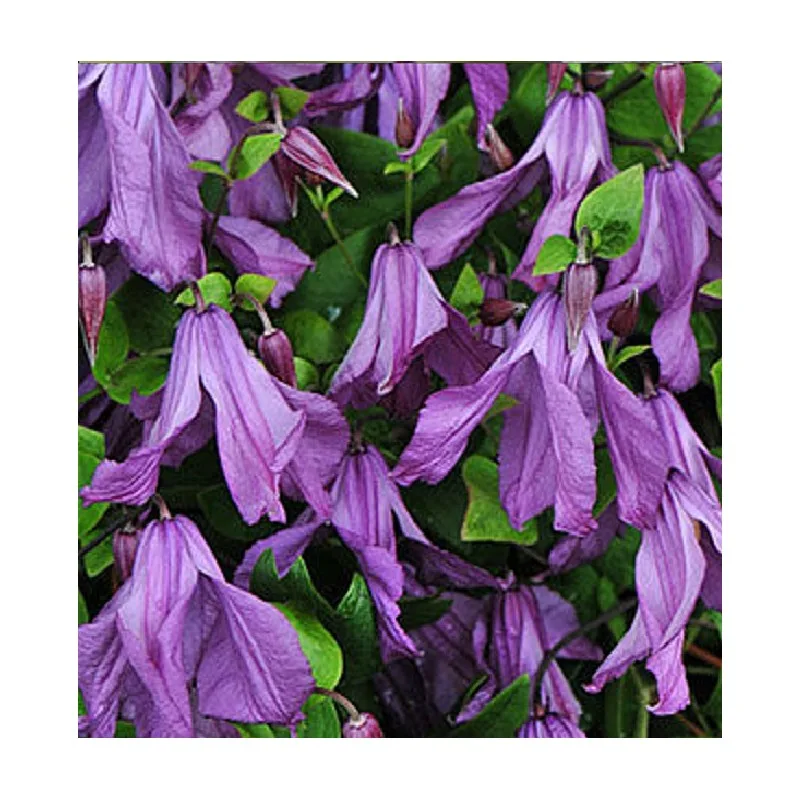
A deciduous perennial climber with dark green leaves. Medium, nodding, purple satin-sheen bell-shaped flowers with slightly recurved petals and pale yellow anthers are produced from June through to September
Scientific classification
- Species
- clematis 'Pamiat Serdtsa' (Clematis 'Pamiat Serdtsa')
- Genus
- Clematis
- Family
- Ranunculaceae
- Order
- Ranunculales
- Class
- Magnoliopsida
- Phylum
- Tracheophyta
- Skin irritant. Wear gloves and other protective equipment when handling
- Toxicity
- Climber Wall Shrub · Herbaceous Perennial
- Plant type
- 1-1.5 metres
- Height
- 0.5-1 metres
- Spread
- Deciduous
- Foliage
- Climbing
- Habit
- Spring · Summer · Autumn
- Season of interest
- Full sun · Partial shade
- Sunlight
- Information to be completed
- Ideal temperature









clematis 'Pamiat Serdtsa' pictures
Toxicity
Skin irritant. Wear gloves and other protective equipment when handling
clematis 'Pamiat Serdtsa' care guide
- Deep watering with cool roots, avoid soggy crown
- Watering
- Full sun · Partial shade
- Sunlight

Watering
Deep watering with cool roots, avoid soggy crown
Fertilizing
 Fertilizing
Low nitrogen feed in spring, higher potash before flowering
Pruning
 Pruning
In late winter or early spring as buds start growing, cut old stems to the lowest healthy bud pair, about 15–30 cm above the soil. Herbaceous types may be cut near ground level in early spring or late autumn.
Propagation
 Propagation
Propagate by division or by taking basal softwood cuttings, in spring
Growing
 Growing
Plant herbaceous clematis in moisture-retentive, well-drained soil in full sun, with the roots and base of the plant in shade. Plant with the crown of the clematis level with the soil. Ideal for growing through plants in the herbaceous border. See clematis cultivation
Common pests and diseases
Diseases
May be susceptible to honey fungus (rarely), clematis wilt and clematis slime flux
Pests
May be susceptible to aphids
Explore the plant health library →




