
Brussels sprout 'Bosworth'
Also known as: Information to be completed
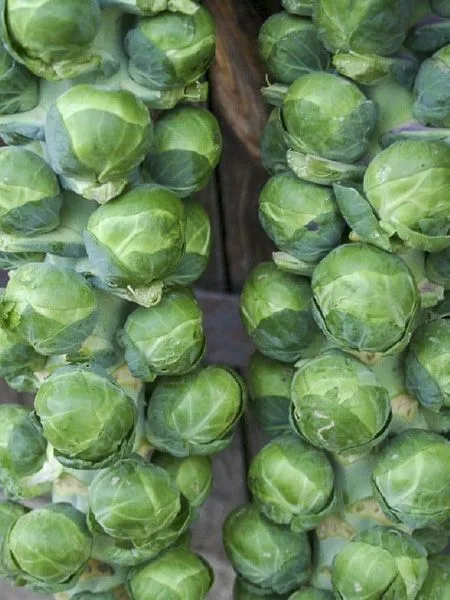
An F1 hybrid, 80cm high, with medium to large, dark green leaves, and solid, sweet-tasting, oval sprouts, 4cm long and 3cm across, which are well-spaced and easy to pick, and are still good even when harvested in late winter. Brussels sprouts, Brassica oleracea (Gemmifera Group), are biennials usually grown as annual vegetables, the swollen buds as well as the leaves being edible.
Scientific classification
- Species
- Brussels sprout 'Bosworth' (Brassica oleracea 'Bosworth')
- Genus
- Brassica
- Family
- Brassicaceae
- Order
- Brassicales
- Class
- Magnoliopsida
- Phylum
- Tracheophyta
- Information to be completed
- Toxicity
- Annual Biennial
- Plant type
- 0.5-1 metres
- Height
- 0.1-0.5 metres
- Spread
- Evergreen
- Foliage
- Columnar upright
- Habit
- Spring · Summer · Autumn · Winter
- Season of interest
- Full sun
- Sunlight
- Information to be completed
- Ideal temperature









Brussels sprout 'Bosworth' pictures
Distribution of Brussels sprout 'Bosworth'
Distribution map
- Native
- Introduced
- Cultivated
Source:WCVP v16 · Royal Botanic Gardens, Kew · CC BY 3.0 · Boundaries:WGSRPD / TDWG
Brussels sprout 'Bosworth' care guide
- Keep soil consistently moist for tender leafy growth, never hard dry
- Watering
- Full sun
- Sunlight

Watering
Keep soil consistently moist for tender leafy growth, never hard dry
Fertilizing
 Fertilizing
Nitrogen-rich vegetable feed every two to three weeks active growth
Pruning
 Pruning
No pruning required
Propagation
 Propagation
Propagate by seed sown under cover in early spring; if plants are allowed to flower and seed, the seedlings will not come true because 'Bosworth' is an F1 hybrid. See sowing vegetable seeds or sowing seeds indoors
Growing
 Growing
Sow seed thinly, about 1-2cm deep and in rows 15cm apart, with shelter from for example cloches or a coldframe, in late winter, or directly outdoors in a seedbed in early spring; thin seedlings to at least 3cm apart, and when they are 10-15 cm high, in early summer, transplant young plants to growing positions, 60cm apart, in fertile, moist but well-drained soil, preferably neutral or alkaline and medium or heavy, in a sunny site sheltered from the wind; harvest sprouts from autumn onwards; for more advice, see Brussels sprouts cultivation
Common pests and diseases
Diseases
May be susceptible to, like other brassicas, to many diseases, including club root, especially in acidic soil; 'Bosworth' is said to have some resistance to downy mildew and ringspot
Pests
May be susceptible to, like other brassicas, to many pests, including cabbage root fly, caterpillars of small and large cabbage white butterflies, aphids, flea beetles, slugs and snails, and by birds, especially pigeons
Explore the plant health library →




