
little owl
Also known as: owl eyes
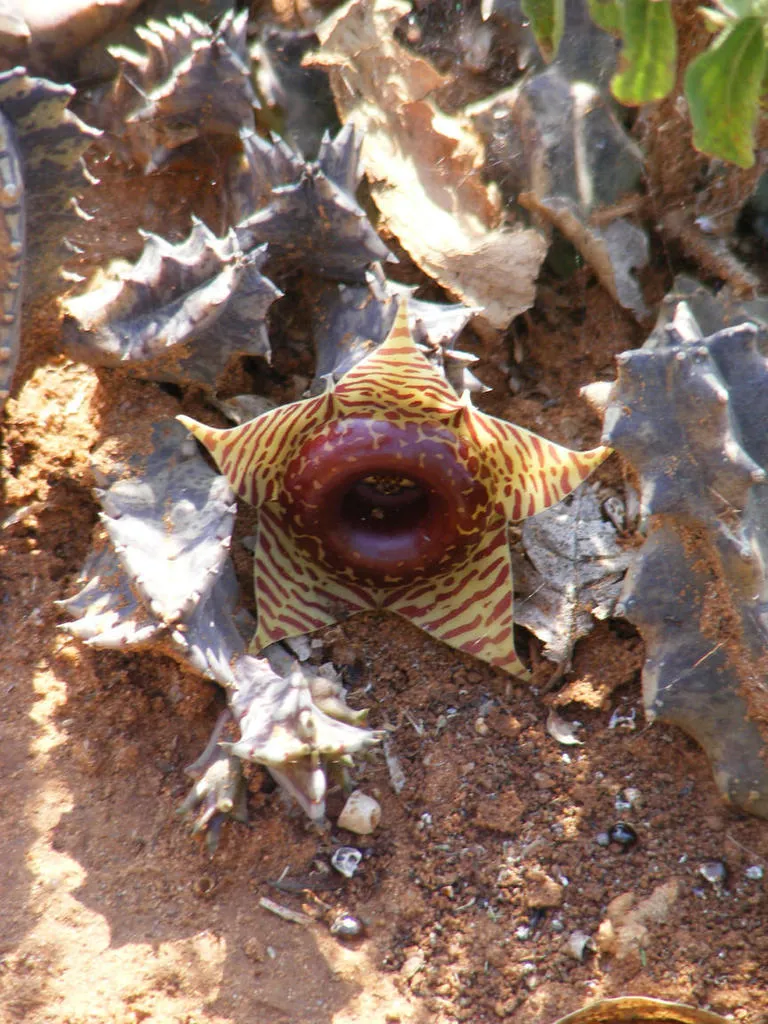
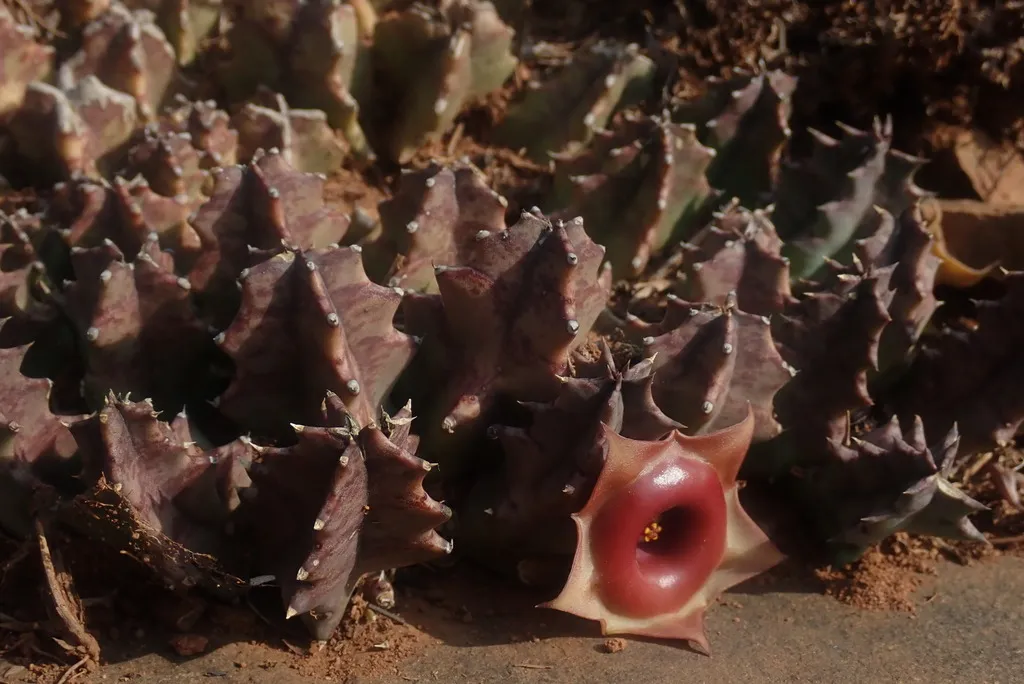
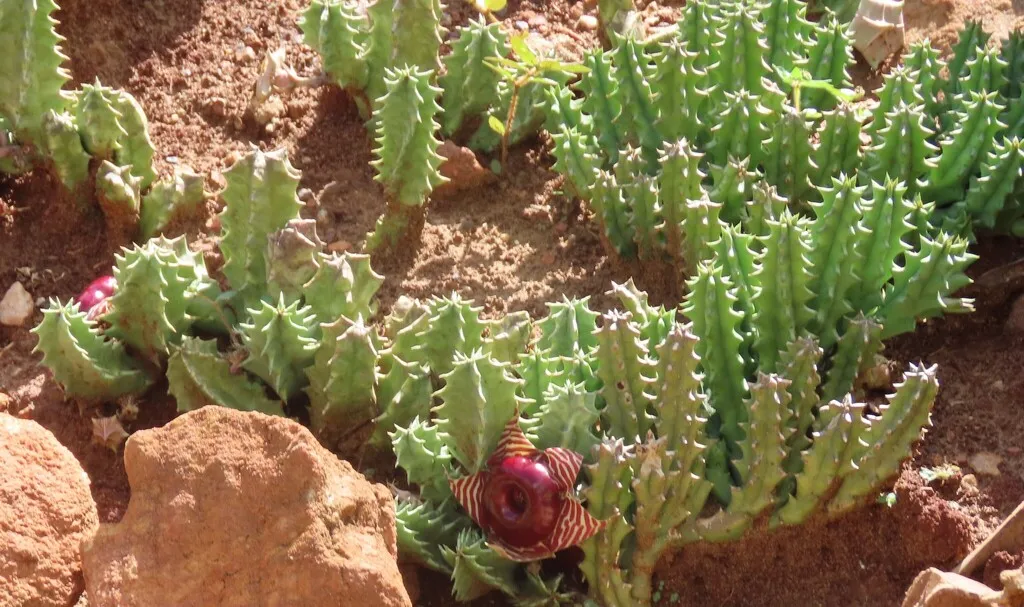
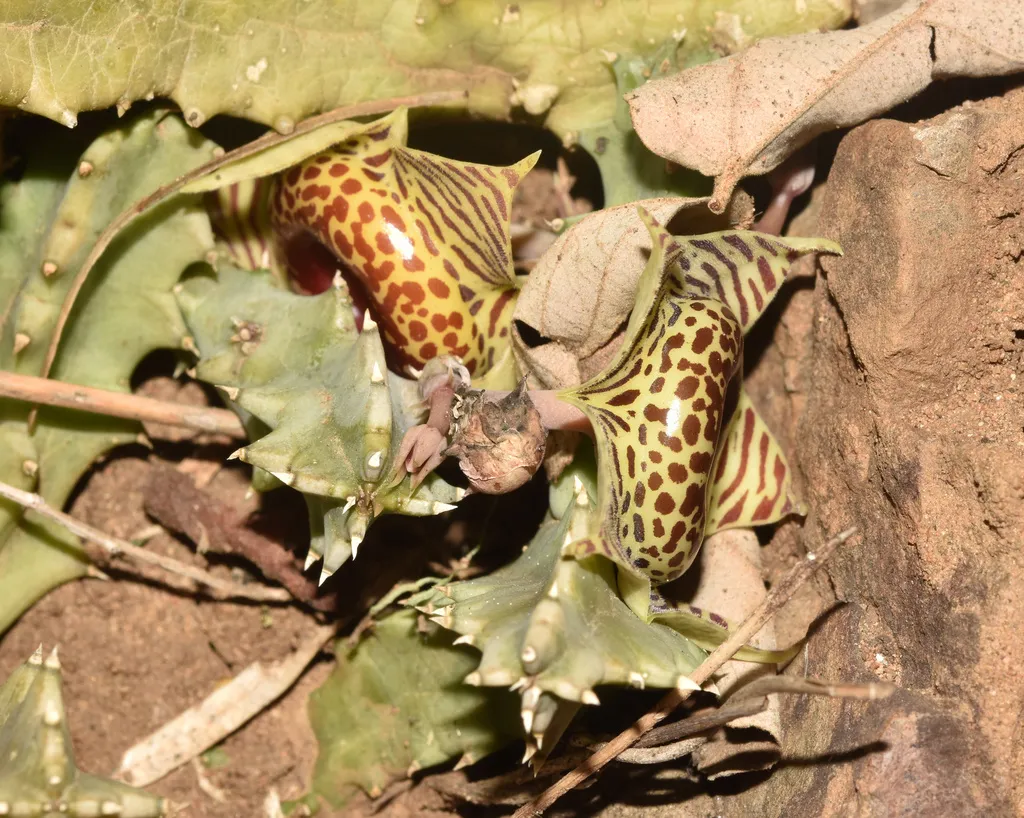
A clump-forming succulent producing 4- or 5-angled, grey-green stems to 6cm long, edged with conical spines. In late summer it bears succulent, star-shaped flowers, the points of which are yellow with burgundy stripes; these are set around a raised, glossy, wine-red ring. Huernia flowers have an unpleasant smell to attract pollinating flies
Scientific classification
- Species
- little owl (Huernia zebrina)
- Genus
- Huernia
- Family
- Apocynaceae
- Order
- Gentianales
- Class
- Magnoliopsida
- Phylum
- Magnoliophyta
- Information to be completed
- Toxicity
- Cactus Succulent
- Plant type
- Up to 10 cm
- Height
- 0.1-0.5 metres
- Spread
- Evergreen
- Foliage
- Clump forming
- Habit
- Spring · Summer · Autumn · Winter
- Season of interest
- Partial shade · Full sun
- Sunlight
- Information to be completed
- Ideal temperature









little owl pictures
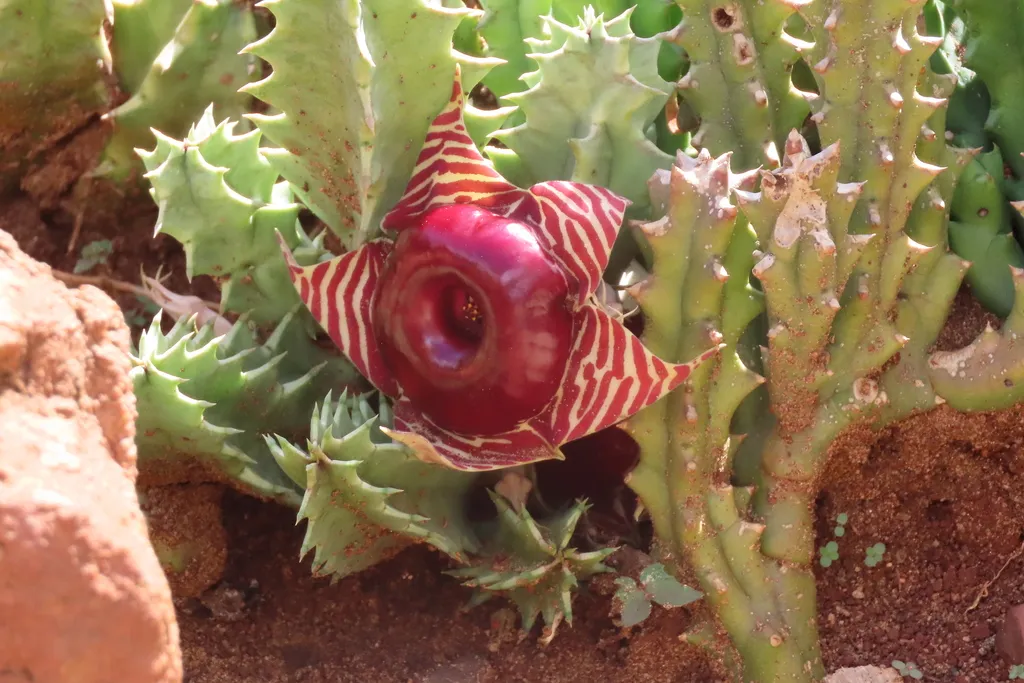
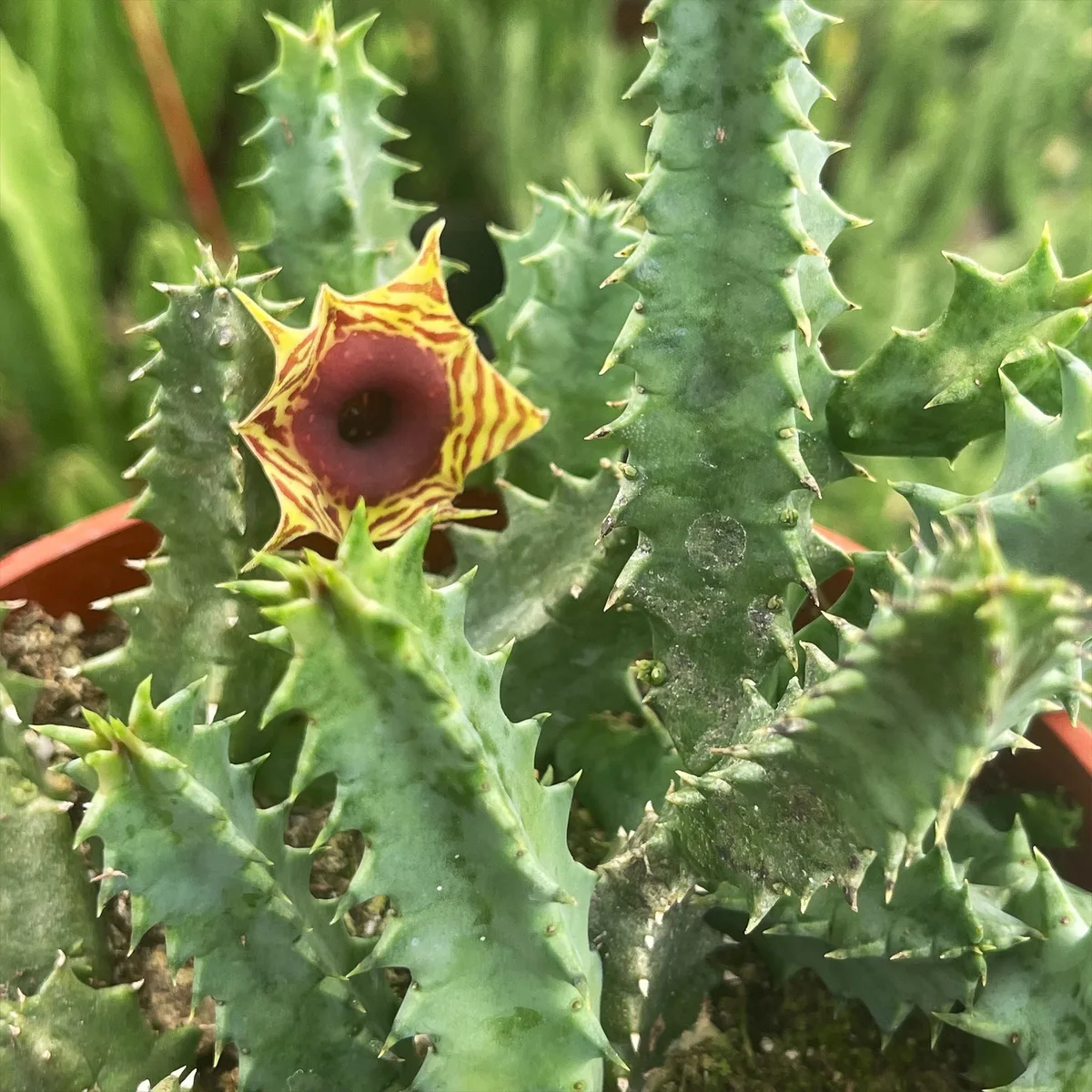
Distribution of little owl
Distribution map
- Native
- Introduced
- Cultivated
Source:WCVP v16 · Royal Botanic Gardens, Kew · CC BY 3.0 · Boundaries:WGSRPD / TDWG
little owl care guide
- Moderate regular watering, allowing brief slight drying between soakings
- Watering
- Partial shade · Full sun
- Sunlight

Watering
Moderate regular watering, allowing brief slight drying between soakings
Fertilizing
 Fertilizing
Balanced perennial feed every four weeks from spring through summer
Pruning
 Pruning
No pruning required
Propagation
 Propagation
Propagate by sowing seed at 19-24°C in spring; root stem section cuttings in spring or summer
Growing
 Growing
Grow in cactus compost with added leaf mould in full light with shade from hot sun. In growth, water moderately and apply a half-strength, low-nitrogen fertiliser monthly; keep almost dry in winter
Common pests and diseases
Diseases
May be susceptible to stem rot if overwatered
Pests
Generally pest-free
Explore the plant health library →




