
eye-hurt
Also known as: strawberry blite; strawberry spinach; Indian paint; Indian strawberry
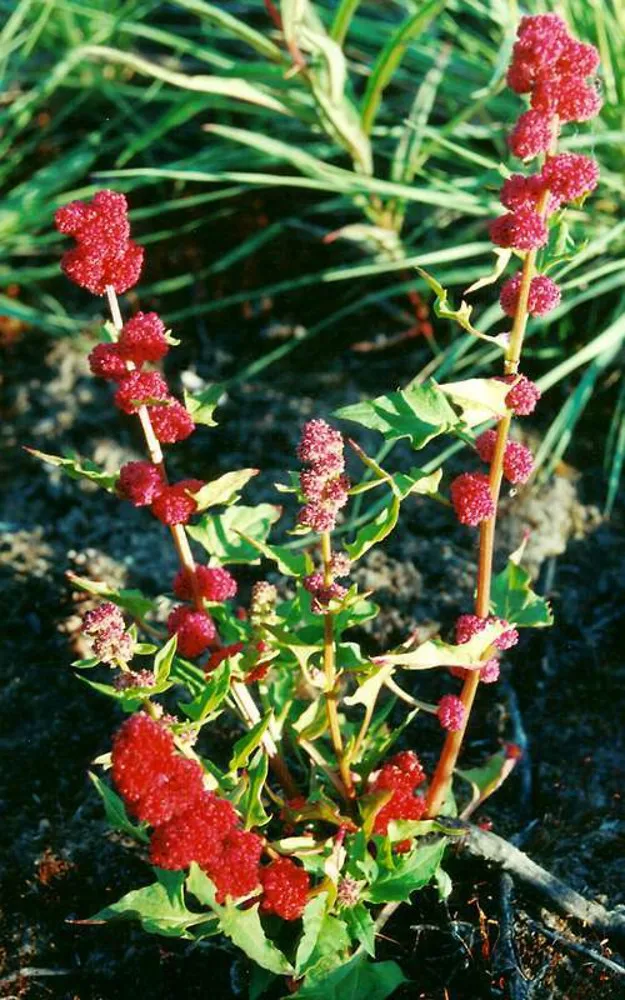
An upright annual to around 60cm tall with triangular leaves and tiny pale green flowers borne in clusters along the stem in summer which are followed by edible, bright red fruits resembling strawberries
Scientific classification
- Species
- eye-hurt (Chenopodium capitatum)
- Genus
- Chenopodium
- Family
- Amaranthaceae
- Information to be completed
- Toxicity
- Annual Biennial · Herbs - Culinary
- Plant type
- 0.5-1 metres
- Height
- 0.1-0.5 metres
- Spread
- Deciduous
- Foliage
- Columnar upright
- Habit
- Spring · Summer · Autumn
- Season of interest
- Full sun · Partial shade
- Sunlight
- Information to be completed
- Ideal temperature









eye-hurt pictures
Distribution of eye-hurt
Distribution map
Europe
Information to be completed
Culture
Information to be completed
Toxicity
Information to be completed
Quick identification of eye-hurt
Information to be completed
eye-hurt care guide
- Moderate regular watering, avoid prolonged drought and stagnant waterlogging
- Watering
- Full sun · Partial shade
- Sunlight
- Information to be completed
- Ideal temperature

Watering
Moderate regular watering, avoid prolonged drought and stagnant waterlogging
Fertilizing
 Fertilizing
Balanced perennial feed every four weeks spring through summer growth
Pruning
 Pruning
No pruning required
Propagation
 Propagation
Propagate by seed
Growing
 Growing
Grow in a moist but well-drained, moderately fertile soil in full sun or partial shade
People also ask
Information to be completed
Common pests and diseases
Diseases
Generally disease-free
Pests
Generally pest-free
Explore the plant health library →




