
pink star grass
Also known as: Information to be completed
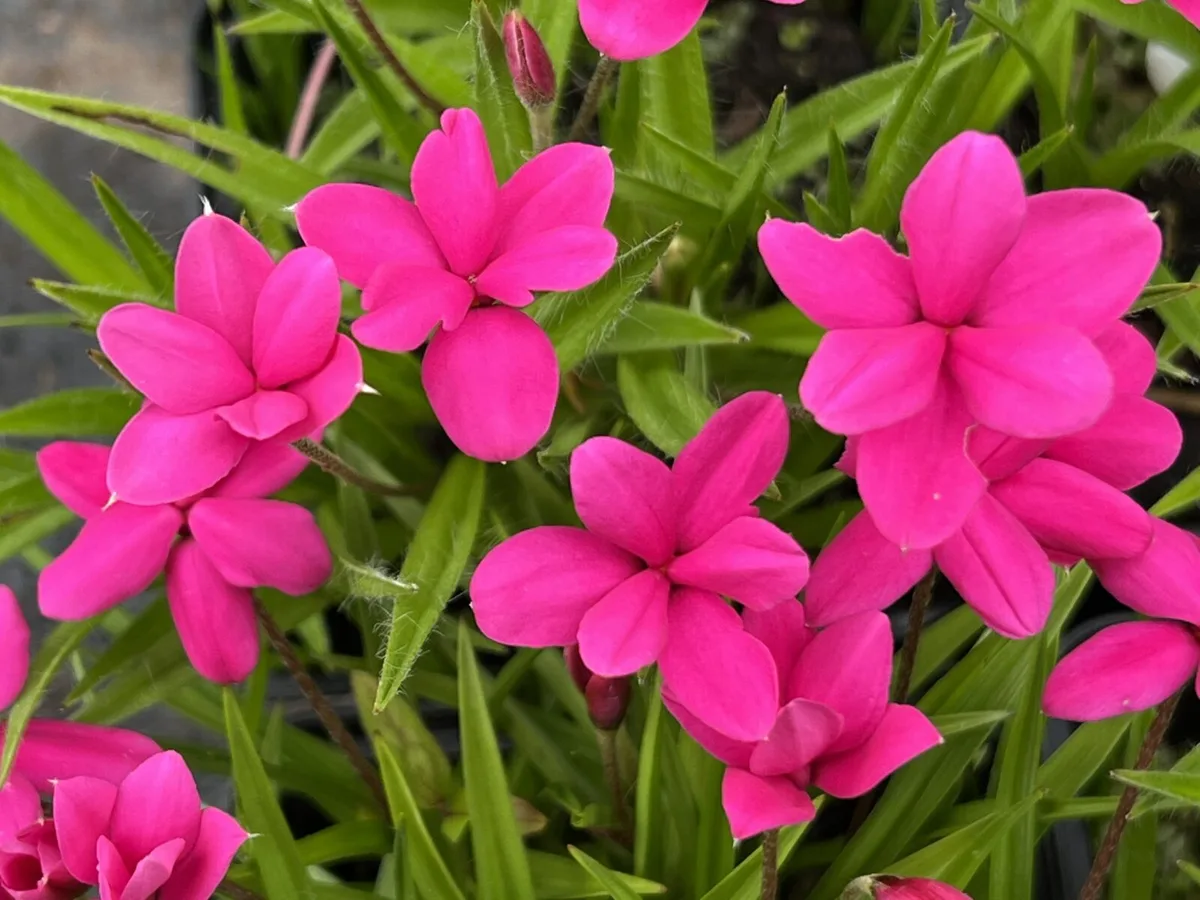
R. milloides is a low-growing, clump-forming perennial to 15cm, with upright, narrow, keeled and folded leaves up to 17cm long. The six-petalled, star-shaped flowers are dark red, dark pink or white, up to 3.5cm across and carried over a long period in summer
Scientific classification
- Species
- pink star grass (Rhodohypoxis milloides)
- Genus
- Rhodohypoxis
- Family
- Hypoxidaceae
- Order
- Asparagales
- Class
- Liliopsida
- Phylum
- Magnoliophyta
- Information to be completed
- Toxicity
- Alpine Rockery · Herbaceous Perennial
- Plant type
- 0.1-0.5 metres
- Height
- 0.1-0.5 metres
- Spread
- Deciduous
- Foliage
- Clump forming
- Habit
- Spring · Summer · Autumn
- Season of interest
- Full sun
- Sunlight
- Information to be completed
- Ideal temperature









pink star grass pictures
Distribution of pink star grass
Distribution map
- Native
- Introduced
- Cultivated
Source:WCVP v16 · Royal Botanic Gardens, Kew · CC BY 3.0 · Boundaries:WGSRPD / TDWG
pink star grass care guide
- Moderate regular watering, allowing brief slight drying between soakings
- Watering
- Full sun
- Sunlight

Watering
Moderate regular watering, allowing brief slight drying between soakings
Fertilizing
 Fertilizing
Balanced perennial feed every four weeks from spring through summer
Pruning
 Pruning
No pruning required
Propagation
 Propagation
Propagate by seed sown in pots as soon as ripe or in spring, germinate at 6-12°C. Propagate by division in late autumn
Growing
 Growing
Grow in well-drained, moderately fertile, humus-rich, neutral to acid soil in full sun. Protect from excessive winter wet; can be grown in pots in an alpine house
Common pests and diseases
Diseases
Generally disease free
Pests
Prone to glasshouse red spider mite and thrips when grown in an alpine house
Explore the plant health library →




