
dwarf white lupin
Also known as: Information to be completed
A compact, bushy annual, 20-60cm high, with palmate leaves divided into up to 9 narrow leaflets. Stems and leaf undersides are coated with downy silvery hairs. Whorls of pea-like white flowers are borne on upright stems in late spring and early summer
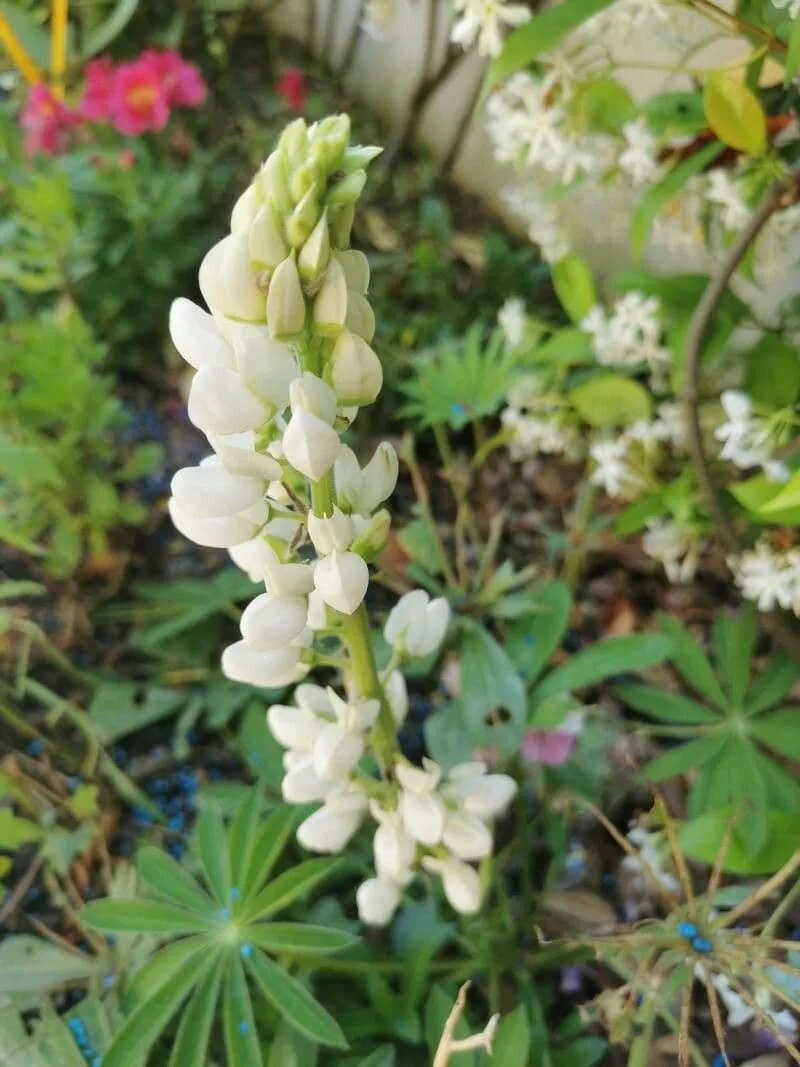
Scientific classification
- Species
- dwarf white lupin (Lupinus nanus 'Albus')
- Genus
- Lupinus
- Family
- Fabaceae
- Order
- Fabales
- Class
- Magnoliopsida
- Phylum
- Magnoliophyta
- Harmful if eaten. Wear gloves and other protective equipment when handling
- Toxicity
- Annual Biennial
- Plant type
- 0.5-1 metres
- Height
- 0.1-0.5 metres
- Spread
- Deciduous
- Foliage
- Bushy · Columnar upright
- Habit
- Spring · Summer · Autumn
- Season of interest
- Full sun
- Sunlight
- Information to be completed
- Ideal temperature









dwarf white lupin pictures
Distribution of dwarf white lupin
Distribution map
- Native
- Introduced
- Cultivated
Source:WCVP v16 · Royal Botanic Gardens, Kew · CC BY 3.0 · Boundaries:WGSRPD / TDWG
Toxicity
Harmful if eaten. Wear gloves and other protective equipment when handling
dwarf white lupin care guide
- Water moderately, allowing the soil to dry slightly between waterings.
- Watering
- Full sun
- Sunlight

Watering
Water moderately, allowing the soil to dry slightly between waterings.
Fertilizing
 Fertilizing
Apply a balanced fertilizer monthly during the growing season.
Pruning
 Pruning
Deadhead to encourage more flowers, unless seeds are required
Propagation
 Propagation
Propagate by seed
Growing
 Growing
Grow in light, ideally slightly acidic, well-drained soil in full sun
Common pests and diseases
Diseases
May be susceptible to powdery mildews, lupin anthracnose and virus diseases
Pests
May be susceptible to lupin aphid, slugs and snails
Explore the plant health library →




