
black mint
Also known as: Information to be completed
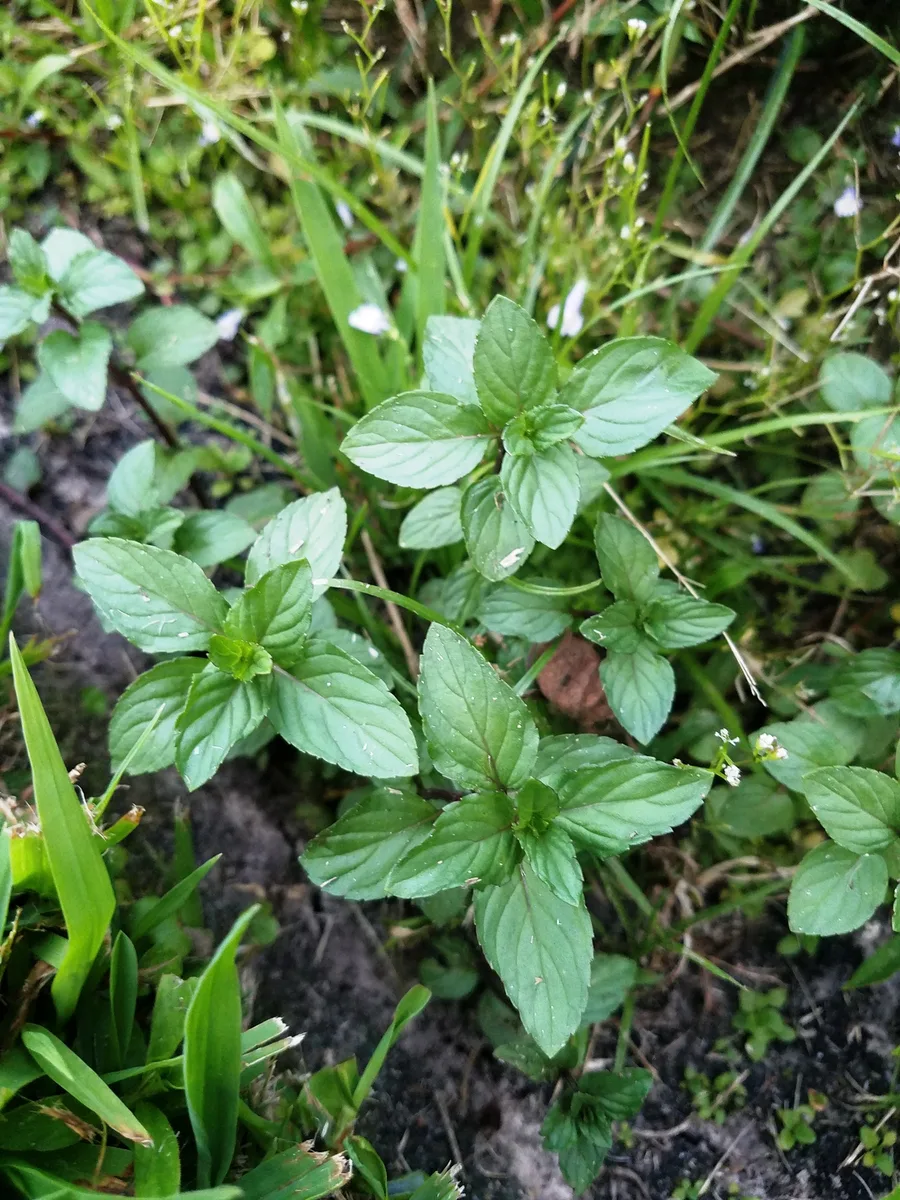
A herbaceous perennial which dies down over winter, with slightly hairy green leaves held in pairs on a dark purplish stem. The flowers are small, pale mauve, and grow in ball-shaped clusters forming a spike in late summer. There are numerous cultivated selections with a range of minty scents from chocolate to lemon
Scientific classification
- Species
- black mint (Mentha × piperita var. vulgaris)
- Genus
- Mentha
- Family
- Lamiaceae
- Order
- Lamiales
- Class
- Magnoliopsida
- Phylum
- Tracheophyta
- Information to be completed
- Toxicity
- Herbs - Culinary · Herbaceous Perennial
- Plant type
- 0.5-1 metres
- Height
- 0.1-0.5 metres
- Spread
- Deciduous
- Foliage
- Bushy
- Habit
- Autumn · Spring · Summer
- Season of interest
- Partial shade
- Sunlight
- Information to be completed
- Ideal temperature









black mint pictures
Distribution of black mint
Distribution map
- Native
- Introduced
- Cultivated
Source:WCVP v16 · Royal Botanic Gardens, Kew · CC BY 3.0 · Boundaries:WGSRPD / TDWG
black mint care guide
- Moderate regular watering, avoid prolonged drought or waterlogging
- Watering
- Partial shade
- Sunlight

Watering
Moderate regular watering, avoid prolonged drought or waterlogging
Fertilizing
 Fertilizing
Balanced feed in spring and light repeat in growth season
Pruning
 Pruning
No pruning required
Propagation
 Propagation
Propagate by division or by cuttings at any time of year
Growing
 Growing
Grow in a poor, moist soil in full sun. Grow in moist but well drained soil in full or partial sun. May have the potential to become a nuisance; restrict the root run in a deep container and plunge into the ground, or plant in a well chosen site where it can grow unrestricted. See mint cultivation for more information
Common pests and diseases
Diseases
Generally disease-free
Pests
Generally pest-free
Explore the plant health library →




