
Ruscus aculeatus 'Lanceolatus'
Also known as: Information to be completed
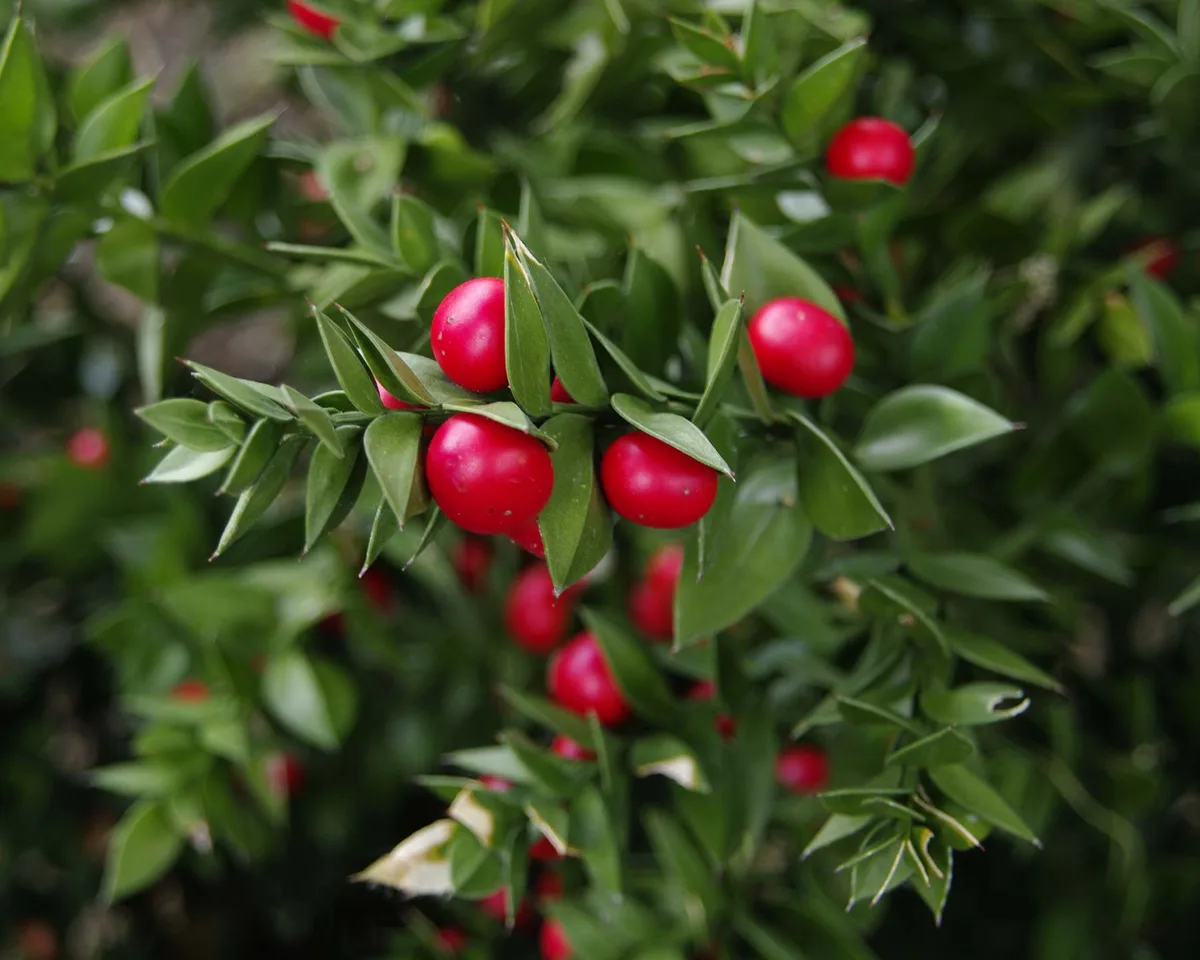
An evergreen, clump-forming shrub to around 1m tall made up of flexible stems; long, narrow, sharply-tipped, dark green 'leaves' borne on the upper parts of the stems are actually flattened shoots named cladodes. Tiny, greenish, star-shaped flowers may be followed by red, berry-like fruits
Scientific classification
- Species
- Ruscus aculeatus 'Lanceolatus' (Ruscus aculeatus 'Lanceolatus')
- Genus
- Ruscus
- Family
- Asparagaceae
- Order
- Asparagales
- Class
- Liliopsida
- Phylum
- Magnoliophyta
- Fruit are ornamental - not to be eaten. Wear gloves and other protective equipment when handling
- Toxicity
- Shrubs
- Plant type
- 0.5-1 metres
- Height
- 0.5-1 metres
- Spread
- Evergreen
- Foliage
- Bushy
- Habit
- Spring · Summer · Autumn · Winter
- Season of interest
- Full shade · Full sun · Partial shade
- Sunlight
- Information to be completed
- Ideal temperature









Ruscus aculeatus 'Lanceolatus' pictures
Distribution of Ruscus aculeatus 'Lanceolatus'
Distribution map
- Native
- Introduced
- Cultivated
Source:WCVP v16 · Royal Botanic Gardens, Kew · CC BY 3.0 · Boundaries:WGSRPD / TDWG
Toxicity
Fruit are ornamental - not to be eaten. Wear gloves and other protective equipment when handling
Ruscus aculeatus 'Lanceolatus' care guide
- Moderate regular watering, allowing brief slight drying between soakings
- Watering
- Full shade · Full sun · Partial shade
- Sunlight

Watering
Moderate regular watering, allowing brief slight drying between soakings
Fertilizing
 Fertilizing
Balanced perennial feed every four weeks from spring through summer
Pruning
 Pruning
Cut out dead stems to the base in spring
Propagation
 Propagation
Propagate by seed or by division
Growing
 Growing
Will grow in almost any garden situation, except waterlogged ground, including dry shade
Common pests and diseases
Diseases
May be susceptible to honey fungus in gardens where it is present but insufficient data to determine degree of susceptibility
Pests
Generally pest-free
Explore the plant health library →




