
African lily 'Sylvine'
Also known as: Information to be completed
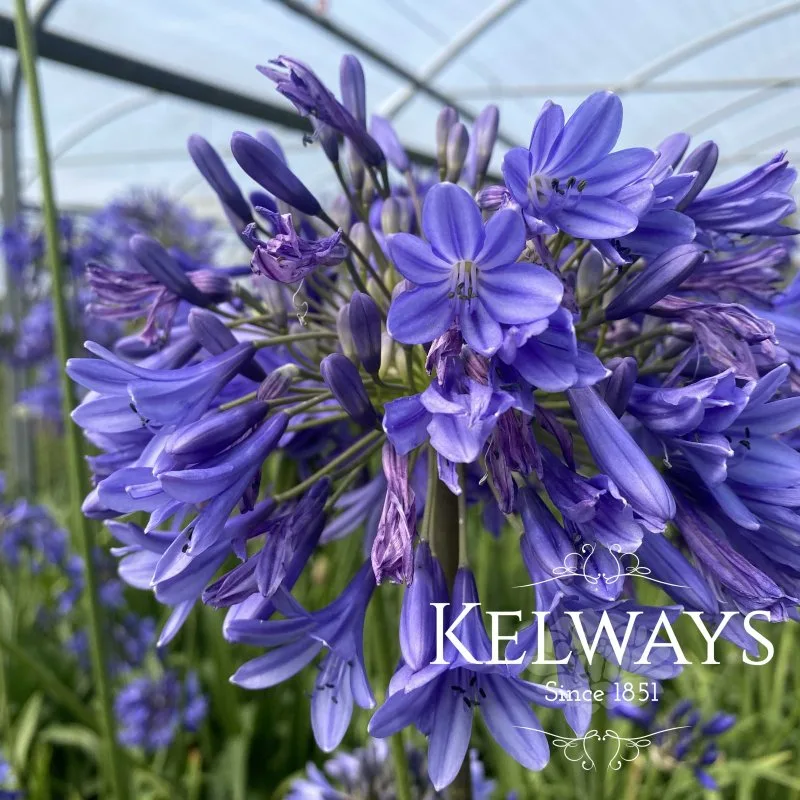
A compact, clump-forming, herbaceous perennial to about 70cm, with strap-shaped leaves. Rounded heads of funnel-shaped flowers, of mid-blue petals with deep blue midribs, are produced in late summer and early autumn
Scientific classification
- Species
- African lily 'Sylvine' (Agapanthus 'Sylvine')
- Genus
- Agapanthus
- Family
- Asparagaceae
- Order
- Asparagales
- Class
- Liliopsida
- Phylum
- Magnoliophyta
- Harmful if eaten. Wear gloves and other protective equipment when handling
- Toxicity
- Herbaceous Perennial
- Plant type
- 0.5-1 metres
- Height
- 0.5-1 metres
- Spread
- Deciduous
- Foliage
- Clump forming
- Habit
- Spring · Summer · Autumn
- Season of interest
- Full sun
- Sunlight
- Information to be completed
- Ideal temperature









African lily 'Sylvine' pictures
Toxicity
Harmful if eaten. Wear gloves and other protective equipment when handling
African lily 'Sylvine' care guide
- Water thoroughly then wait partial dryness before next watering round
- Watering
- Full sun
- Sunlight

Watering
Water thoroughly then wait partial dryness before next watering round
Fertilizing
 Fertilizing
Low-concentration balanced liquid fertilizer monthly in warm seasons
Pruning
 Pruning
No pruning required; seedheads can provide good winter structure
Propagation
 Propagation
Propagate by division in spring
Growing
 Growing
In mild areas, grow in well-drained soil in a sunny, sheltered position. Otherwise, grow in a container and position in full sun. Water during the growing season and liquid feed monthly from spring to flowering. Overwinter containers in a cold greenhouse to protect from frost. See agapanthus cultivation
Common pests and diseases
Diseases
May be susceptible to a virus
Pests
May be susceptible to slugs and snails
Explore the plant health library →




