
pea (sugarsnap) 'Cascadia'
Also known as: Information to be completed
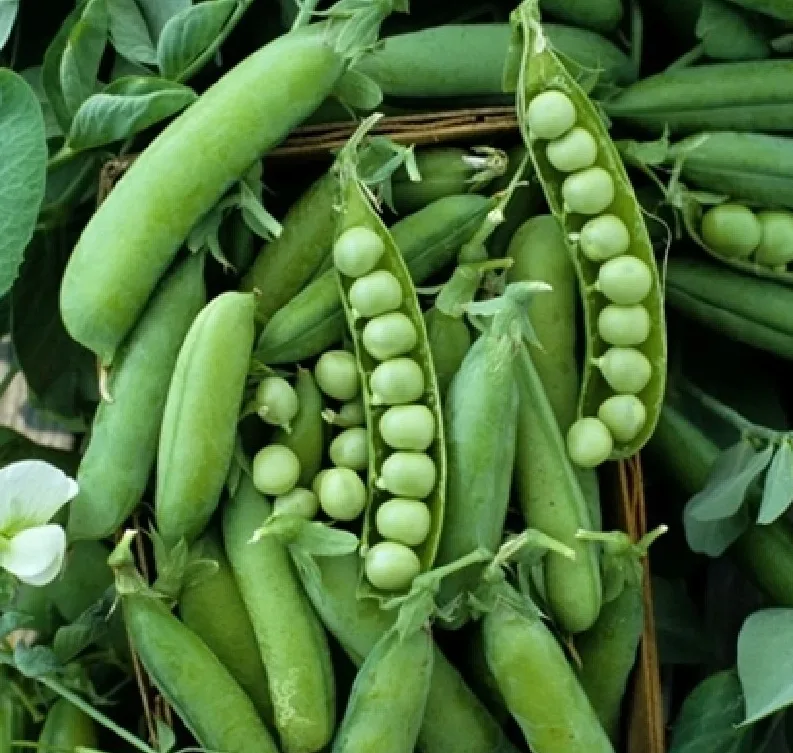
A quick-maturing, fairly compact, sugar-snap pea to about 1m, with white flowers in late spring and summer, followed by short, stout, light green, thick-walled, edible pods cropping from early summer to early autumn, depending on sowing date
Scientific classification
- Species
- pea (sugarsnap) 'Cascadia' (Pisum sativum 'Cascadia')
- Genus
- Pisum
- Family
- Fabaceae
- Order
- Fabales
- Class
- Magnoliopsida
- Phylum
- Magnoliophyta
- Information to be completed
- Toxicity
- Annual Biennial
- Plant type
- 0.5-1 metres
- Height
- 0.5-1 metres
- Spread
- Deciduous
- Foliage
- Climbing
- Habit
- Spring · Summer · Autumn
- Season of interest
- Full sun · Partial shade
- Sunlight
- Information to be completed
- Ideal temperature









pea (sugarsnap) 'Cascadia' pictures
Distribution of pea (sugarsnap) 'Cascadia'
Distribution map
- Native
- Introduced
- Cultivated
Source:WCVP v16 · Royal Botanic Gardens, Kew · CC BY 3.0 · Boundaries:WGSRPD / TDWG
pea (sugarsnap) 'Cascadia' care guide
- Maintain steady moist soil until pod ripening, cut water late ripen stage
- Watering
- Full sun · Partial shade
- Sunlight

Watering
Maintain steady moist soil until pod ripening, cut water late ripen stage
Fertilizing
 Fertilizing
Low nitrogen vegetable feed once before spring flowering buds form
Pruning
 Pruning
No pruning required
Propagation
 Propagation
Propagate by seed. See sowing vegetable seeds
Growing
 Growing
Peas grow best in rich, well-drained, neutral or alkaline soils in a sunny position, supportd with pea sticks or pea netting. See pea cultivation
Common pests and diseases
Diseases
May be susceptible to pea moth, pea and bean weevil, birds and mice
Pests
May be susceptible to powdery mildews
Explore the plant health library →




